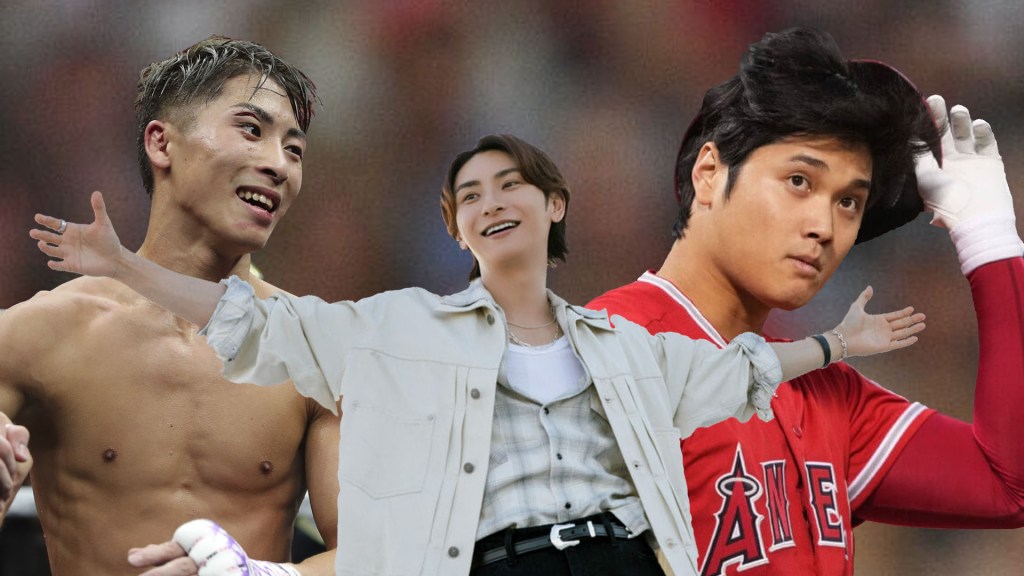
Shohei Ohtani
In Little League baseball, the best player on each team was usually the pitcher. It was an observable rule of thumb, similar to the one which held that the worst player in the entire league was me. Unfortunately, I was probably the only Asian player that year – or rather, those years, because I played baseball for far longer than I understood why. So, then, you grow up and observe that it’s different in Major League baseball, that the pitcher usually doesn’t even bat! And by that point, mercifully, the Asian kid is no longer playing sports. Enter Shohei Ohtani, widely considered the best player in professional baseball – maybe ever. For starters, when it comes to his upcoming free agency, the number being bandied about for a contract is half a billion dollars, the highest in history.
The current highest belongs to fellow Angels phenom Mike Trout, also one of the greats. In fact, I first heard of Shohei Ohtani not long ago by seeing a YouTube video pop up in the algorithm: “Shohei Ohtani vs. Mike Trout: Final At Bat in the USA vs. Japan 2023 WBC Championship.” It starts with a broadcaster’s words: “impossible theatre.” I haven’t followed baseball since I was that foggy-brained child, so I had to piece all the context together against the Dark Knight theme playing in the background. Basically, this All-Star game was accidentally engineered to have the perfect ending, with the league’s two best players facing off. Trout’s at bat, Ohtani’s pitching. Japan’s up by one at the top of the ninth. Two outs, full count. Then comes the slider, and Trout chases it – strike three. The stadium roars. Wow. Is baseball… exciting?
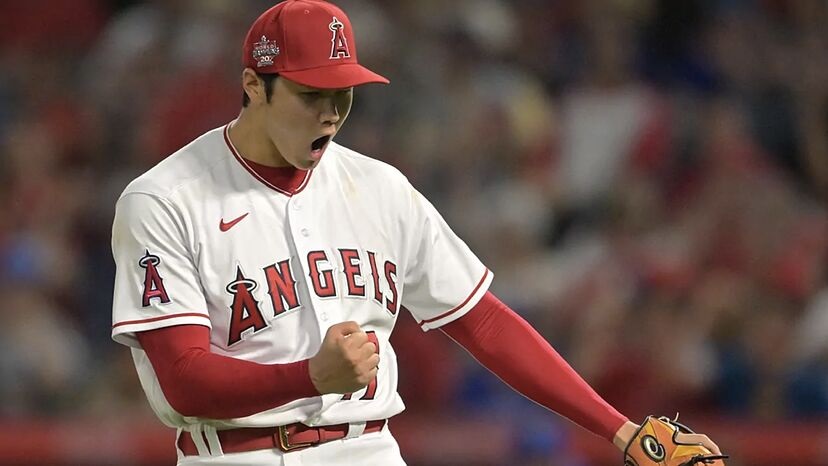
If it is, that’s in no small part due to Shohei Ohtani. After clicking that one video, I was deluged by further chronicles, not only strikeouts, but also his home runs. Yes, he bats, too! New videos, new home runs, practically every game this season. The comments on these videos are full of superlatives, and one of the ideas expressed is how “I stopped caring about baseball a long time ago, but this young man is bringing me back on board!” He’s filling up the seats, bringing over Japanese fans, and I think there’s an awareness that it isn’t just the spectacle of a strikeout or a home run, it’s his character. Like Bong Joon-ho on the awards circuit now four years ago (Jesus), Ohtani is an outside element shaking up the status quo – casually.
Yes, it’s a stereotype that Japanese people are more polite than Americans, but literally everyone is. Why do you think we rag on the French all the time? It’s projection. Other videos that begin clogging up the feed are cuts demonstrating his friendliness on the field – he doesn’t throw fits, doesn’t showboat, doesn’t break bats. Even if pitching against a player who breaks a bat by accident, he’ll step off the mound to pick up the pieces. He picks up trash in the dugout and on the field, goofs around with his teammates, even makes a girl blush on the sidelines. He’s always smiling. And like Keanu, he donates the odd earnings to his staff. The color commentators seem to have a good time wrapping their heads around the guy.
He’s a once-in-a-lifetime player, but nothing is ever certain. He could be injured tomorrow and the course of his career could change. He might just stay with the Angels and never play a World Series game (evidently, they’re somewhere in that “50 feet of crap”). And especially with Asian athletes, we’ve had our fair share of disappointments, whether Dice-K or Linsanity. (If you’re wondering, Ohtani also has a nickname: “Shotime”).
Naoya Inoue
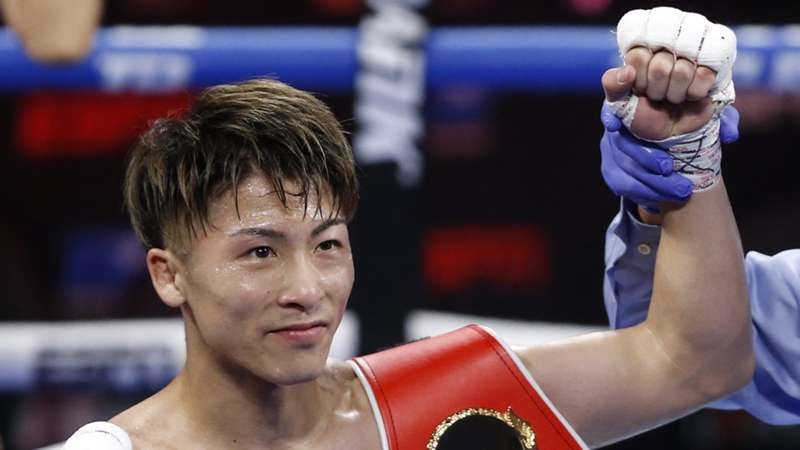
Then there’s Naoya Inoue. His nickname? “The Monster,” and man, does he live up to it. Or does he? Just as Ohtani is considered the best of the best, Inoue is being called the best pound-for-pound fighter in all of boxing. Of his 25 professional fights, he’s won a whopping 25, and 22 of those were knockouts. That’s really scary. But then you see him in the ring, and he’s not, like, a monster – he’s a surgeon. I can’t really read combat sports, especially when it isn’t MMA and I can see that the guy turning red between the other guy’s ankles is probably gonna lose, so the subtleties of boxing are lost on me – and yet, with the way he moves, I can at least tell that the subtleties are there. He draws you into his mindset, because it’s obvious he’s thinking through it, working his way up to the sleight of hand that ends in a devastating punch to the liver. It’s a hell of a thing to witness in slow-motion, because there’s a delayed reaction. The other guy can throw a punch before the brain tells the body to shut down.
Heading into the fight last weekend (which put a YouTube video in my algorithm), Inoue said that he was “pushing the boundaries of my build, my limits,” but as ESPN writer Mike Coppinger notes, this is a sport where one actually can, and he hasn’t yet. So far, Inoue has been moving up in weight classes, but at what point does his 5’5” frame hold him back from victory? This is a constant conversation in the fighting world, whether MMA or Bruce Lee’s athleticism or the legitimacy of Shaolin monks! How much does size matter? How much can be offset by skill or the mental game?
This is a question that’s never more acute than when we’re talking about women. If you stumble on a video of a woman defeating a man in hand-to-hand combat (whether in a movie or in a sports context), you’ll get calls of “fake” and discussions about how men have muscle mass, and the bigger opponent will always win. If you stumble upon a video of a woman defeating a man as the bigger opponent, then you get discussions about technique.
Shinjiro Atae
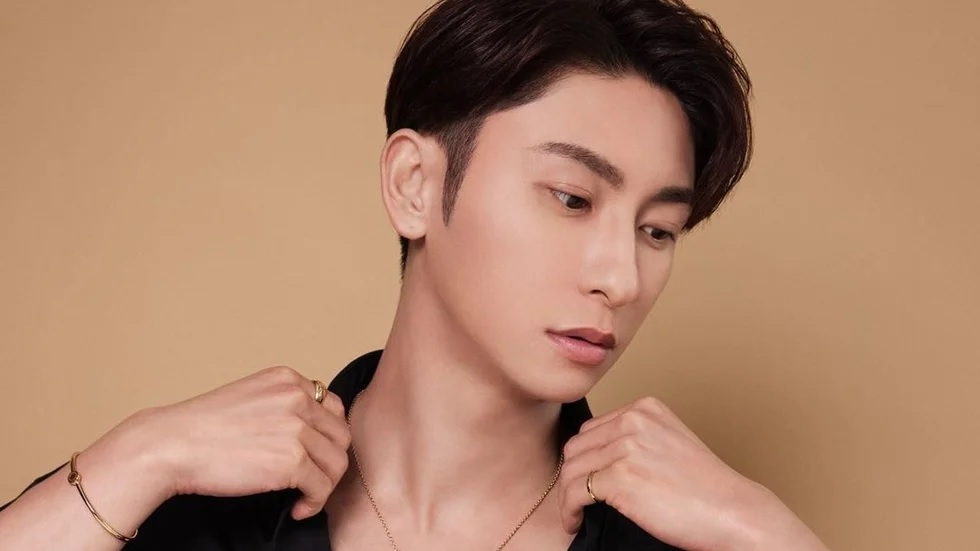
Anyways, before this gets away from me, our third story involves exceptionalism of a different kind, one that isn’t as linear. Ohtani and Inoue are the measurable, quantifiable best, but we know that stars aren’t made by statistics alone. There will always be a better baseball player, but there will never be another Shohei Ohtani. Just today, The New York Times reported that Shinjiro Atae, a J-pop idol, has come out as gay. “I respect you and believe you deserve to hear this directly from me,” he read from a letter on stage in front of 2,000 fans. “For years, I struggled to accept a part of myself. But now, after all I have been through, I finally have the courage to open up to you about something. I am a gay man.”
Japan is polite. Japan is cool. Japan is totally unexpected, not kid’s stuff. But Japan is also more conservative than we might expect from its pop culture exports – no doubt spearheaded by the generally left-leaning creative types. And even within that export, there are issues of LGBTQ+ representation and the male gaze. It was a tremendous act of courage for Atae, who waited till 2023 – when same-sex marriage remains illegal – out of fear that the ensuing falderal would’ve ended his career. However, his fans, his bandmates, and his mother all accepted him, but what really pulled at my heartstrings in this story is where he learned it was okay to buck his own culture and open up about his sexuality: America.
Per the New York Times, “The decision to open up about his sexuality, he said, evolved over seven years of living in Los Angeles, where he saw how freely gay couples could show affection in public and built an extensive support network. ‘Everyone was so open,’ he said. ‘People would talk about their vulnerabilities. In Japan, people think it’s best not to talk about those things.’”
Starting this blog came from recognizing that my world can be bigger than the U.S., and if America is the main character of the world, it’s a Mary Sue. Two years ago, I decided to finally leave it behind, to reclaim my birthplace – South Korea – and spurn what was, through adult eyes, the Empire. Why stay? After all the violence committed in the Middle East in my name, and all the lies scuttling what should be a devastating portrait of recent history, I can’t feel good here. And, well, I’m still here, because while I haven’t gotten the message yet, South Korea is increasingly making it clear that it doesn’t want me (sad violin). And yet, one of the reasons why America is so difficult, and so shameful, is because we’re in the thick of it. All these speculations about Civil War II are because we’re battling about issues that so many other countries have yet to face. Yes, there’s racism in America, but that’s because there are races, in significant enough number to have conversations.
Of course, gay marriage was first legalized in the Netherlands a whopping 14 years before it was in the United States. And then it was Belgium, Spain, Canada, South Africa, Uruguay – and we’re not even into the 2010s. But at the very least, we had our shit together just enough for when Shinjiro Atae came. It’s funny, I didn’t expect all these stories about awesome Japanese guys to happen back-to-back-to-back, but they were just what I needed. Their greatness, and their representation of a foreign country, in maybe a roundabout fashion or perhaps through an exchange of culture, helps me feel better about being in this old country of mine – and being me.
 With Eyes East