The Ghost in the Shell | Episode 4

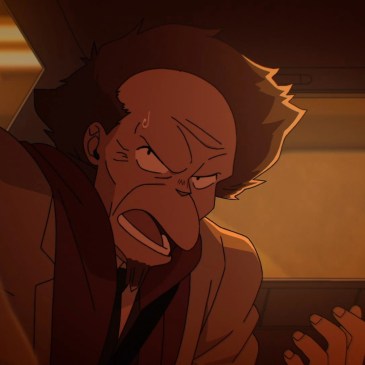
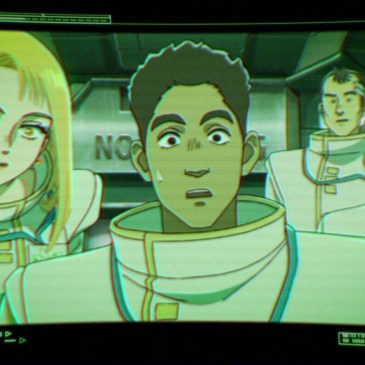
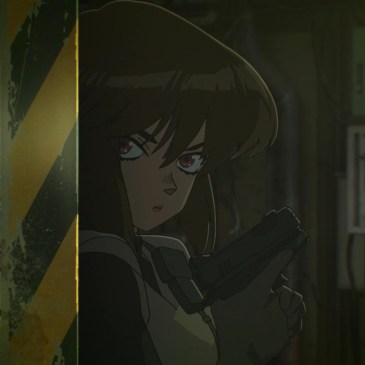
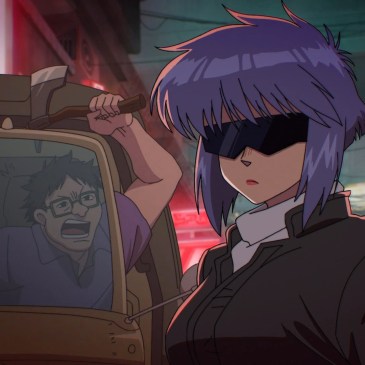
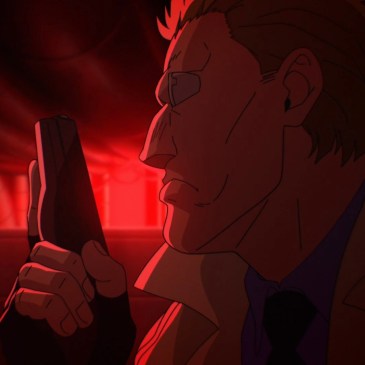
Ghost in the Shell 2! It’s Ghost in the Shell 2! Now, dear readers, how long will I make it into this post without mentioning Ghost in the Shell 2? Oh, I see. Let’s call this the elephant in the forest, because Mamoru Oshii’s 2004 sequel undoubtedly colored my experience with the fourth episode. Both pull from the “Robot Rondo” chapter in the manga, all three dealing with a potential robot uprising, like something out of a pulp sci-fi novel, as Batou notes here. It seems that even in 1989, this was well-trodden territory. And while Ghost in the Shell 2: Innocence retains several key elements, like an attack in an alley (and Batou’s Power Glove), a yakuza connection, and even the doomed shipping inspector, it adds a layer of techno-philosophy derived from the writing of Donna Haraway atop the basic science fiction setup. In the end, we’ll learn that child trafficking victims being “ghost dubbed” into sex robots were sabotaging the machines to lash out and attract police attention, a morally grey solution to yet another instance of systemic child abuse that Masamune Shirow views with distance. Innocence Batou’s chief objection, however, is that the sex robots had ghosts, too, a conclusion which helps him accept the Major’s mysterious, transformative fate. … More The Ghost in the Shell | Episode 4

The Ghost in the Shell | Episode 3

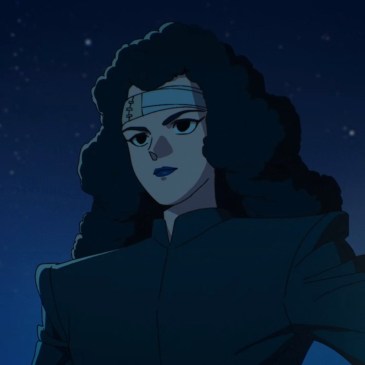
With the promise of next week’s episode being “Robot Rondo” and only that, I’m wondering if episodes two and three are a kind of toll, accidents of format and adaptation that anticipate better later material. The fireball premiere aside, I’m enjoying The Ghost in the Shell about as much as I enjoy the manga, whose darker, serialized final arc appealed more than its, let’s say, standalone episodes. This leaves “Junk Jungle ii + Megatech Machine i + ii” a curious piece of television. Not entirely satisfying on its own, but certainly interesting. As with its predecessor, it features elements which were adapted previously, into Mamoru Oshii’s 1995 film, that gorgeous, thought-provoking classic of science fiction cinema. By contrast, this latest rendition feels like scattered, disorganized notes scrawled by a mad genius concerned with technical detail and the implications of future technology, in need of fastidious cleanup by a different mad genius more concerned with spirituality and the human soul. … More The Ghost in the Shell | Episode 3

Human Vapor | Monster Movie Perfection

As the first part of this post is a recommendation, like “I give Human Vapor two thumbs up!” I ought to try for a hook. Perhaps a description of the gory opening scene, a live broadcast where our journalist heroine Kyoko Kono watches her interviewee lifts in the air, smoke swirling into his nose and mouth, and explode. A sensational set piece punctuated by Kyoko splattered with blood, it was not, however, my introduction to the show. Once again, I’m honor-bound to acknowledge the algorithm. Scrolling on whichever one it was, I recognized the term “Human Vapor” as the title of an old Toho movie, and my curiosity about the prospect of its reimagining for Netflix was piqued by a neat-looking teaser trailer. Hazmat suits and journalists and the military in secret labs and boardrooms and underground mines, it was so much of what I love about Japanese monster movies. A dash of gooey body horror with the vapor transformation, and the only piece missing was the loud, brassy score doubtlessly inspired by the work of Akira Ifukube (the trailer was auto-playing on mute). Altogether, it looked like an exciting, rare new series, with surprising implications behind the scenes. … More Human Vapor | Monster Movie Perfection

The Ghost in the Shell | Episode 2

The first weeklong wait between episodes was brutal. I watched the first episode about three times, as well as the first two episodes of Stand Alone Complex, and if it wasn’t for Human Vapor (another Japanese procedural with a twist), I’d be in nonstop Ghost mode. So, was the second episode, “Super Spartan ii + Junk Jungle i,” worth all the teeth-gnashing? This one’s tricky, and surely trickier than the satisfying premiere, laying bare the broader shortcomings with this particular adaptation project. One couldn’t be blamed for assuming that each chapter of the manga might translate to an episode of the anime, but possibly because of the “Prologue” being a short but crucial chapter, everything is bumped forward a bit. For example, episode two opens with the final pages of the “Super Spartan” chapter, meaning it properly concludes the first episode before beginning the “Junk Jungle” chapter after the opening credits, itself left unfinished pending episode three. Perhaps a future short chapter evens things out, but in the meantime, this awkward timing ensures that “Super Spartan ii + Junk Jungle i” doesn’t feel like an episode of television, just “the next part of the story,” and it isn’t even clear what the story is yet. … More The Ghost in the Shell | Episode 2

The Ghost in the Shell | Episode 1

The Ghost in the Shell is so much. For reasons within and without, it feels precious and rare like a gemstone in every second, every frame. It is true there hasn’t been a recent installment, the latest now six years old, but it’s also an example of anime, a craft initially defined by limited movement in comparison to Western animation, and yet Science Saru adapts Masamune Shirow’s kinetic manga with buttery-smooth animation, an active camera, and generous colors. The only visual element withheld is the gore, the opening body explosion covered in a digital mosaic – which somehow makes it more obscene – leading to the splat of a bloody stick-figure against the wall. Where traditional adaptations pare back the farcical, even manic quality of the source material, opting instead for deadly serious meditations which, honestly, better fit the subject matter, The Ghost in the Shell is paced with a punchline rhythm, and is altogether a carousel of great faces. One of the small joys of the manga is the candid glimpses of characters in repose, where Batou might be wearing an enormous grin or otherwise be looking silly (or pervy). This is practically the animating philosophy at the heart of 2026’s Ghost in the Shell, if the first episode is any indication. … More The Ghost in the Shell | Episode 1

K-Drama Report: Undercover Miss Hong, Part IV

One of the great ironies in my life is that I spend so much time on media criticism but have never successfully recommended anything to anyone. Well, there was that time a friend asked if he should take a date to either Renfield or The Super Mario Bros. Movie, and later thanked me profusely for the latter choice – myself having seen neither. I’d say I’ve also become calcified against recommendations, but there was no “become,” truthfully. For me, the science of picking a movie is so delicate and mood-based, a fast-closing window that, nine times out of ten, results in no movie being selected. How is external opinion supposed to factor into that sort of non-thinking? And so, the concept of the recommendation has retreated to an abstract use: “Would I recommend this, theoretically?” as part of the critical evaluation. It’s a question that’s surprisingly complicated with Undercover Miss Hong, being a pitch-perfect television show start to finish. I loved it, I thought about it a lot, but I struggle to identify concrete terms for the basis of a recommendation, assuming phrases like “It’s really good” don’t suffice. I asked this question last time, basically “How can perfection not be enough?” and with the show’s conclusion, I’ll try to answer. And for the record, it’s not because I feel, emotionally, that the show deserves the indignity of my criticism, but because it might be an interesting exercise. Might. … More K-Drama Report: Undercover Miss Hong, Part IV

K-Drama Report: Undercover Miss Hong, Part III

Previously on “K-Drama Report: Undercover Miss Hong,” I noted that Lee Yong-gi’s actor Jang Do-ha previously starred with Park Shin-hye in The Judge from Hell, but didn’t know which character. To my surprise, he was Judge Bit-na’s first victim, whom she beat and tortured for twenty minutes straight. Going from that domestic abuser guy – recalcitrant, to the last – to happy-go-lucky Jang Do-ha, fawning over Hong Keum-bo… actually has a twisted sort of logic. It’s like, you know, she trained him. I’d also suggested that the show was twelve episodes long, so the revelation of its true form – sixteen episodes! – was jaw-dropping. After episode nine, it appeared the story was preparing for a climactic finish, when in reality, it was only pivoting – hard. We’ll have to do a little rewind back to that point, since it’s been a few weeks, but in the meantime, and on this eve of the weekend’s finale (for real this time), I just have to say that it’s been a pleasure. Undercover Miss Hong is extremely entertaining, and while it started out good, it’s only gotten better. The characters disarm with over-the-top comedy before revealing deeper, sympathetic layers; enough to bruise, not eviscerate, like my last experience with a K-drama. I’ve come to the edge of tears, which I didn’t expect. All the while, I’m desperate to see what Hong and the girls will do next, standing as they are against the skyscraping Hanmin monolith (monolithic Hanmin skyscraper?). Which reminds me: this is the rare K-drama where I do not “skip intro.” I love that main theme. … More K-Drama Report: Undercover Miss Hong, Part III

K-Drama Report: Undercover Miss Hong, Part II

In a surprisingly literal way, Undercover Miss Hong is like candy. Its 1990s Seoul is made up of brightly-lit night exteriors and pastel office sets which look positively set-like. I mean, utterly unconvincing, as if all the harshness or potential frictions of “reality” were duly sanded away. The entire cast is gorgeous – the computer nerd Lee Yong-gi has his hair frizzed up to obscure actor Jang Do-ha’s boyish good looks (shucks, apparently, he was in The Judge from Hell, but I don’t remember) – and every expository punchline is delivered loudly, underscored by upbeat, triumphant music or upbeat, suspenseful music. This is the manner of a cartoon. Facial expressions are big and made bigger by crash zooms, body language is gesticulation and flailing. Cliffhangers are earth-shattering until their immediate, pat resolution next episode, like an old Republic serial. There’s an ease to the viewing, and most certainly a comfort. None of this description should be taken as negative criticism. It’s candy, after all. I don’t believe that the fireworks nature of the show comes at the expense of anything, like complexity, for example. The financial technobabble is persuasive, even set against the unpersuasive backdrops (which I privately enjoy because I love sets, when environments feel fully designed), and the unraveling mystery is a weave of character and plot and social commentary, with aha moments only raising the stakes. … More K-Drama Report: Undercover Miss Hong, Part II

K-Drama Report: Undercover Miss Hong (2026)

I’m going to do something potentially dangerous here, which is to begin coverage of a K-drama after its first episode. Hold my hand as we embark – ew, clammy. My policy generally is to only write when I have something to say, because you only get one life and you can’t spend it writing hundreds or thousands of words on “meh.” The white-collar jury is still out on Undercover Miss Hong, so with this post, I wanted to talk about the first episode and how it functions as a first episode. In American television, we have “pilots,” a term that might’ve lately been broadened to simply mean “premiere,” but which used to be an internal document for a studio ahead of a full season order. The result, aside from hundreds or thousands of television shows never seeing the green light, was that TV shows from their second episode on might look and feel radically different. Crazy Ex-Girlfriend is a good example, because its pilot was initially made for Showtime before being picked up by The CW, so edits were made for adult content. Of course, you have legendary stories like Game of Thrones and all its tinkering, and the pilot might even be redone if it’s raggedy enough, like It’s Always Sunny in Philadelphia. These days, I feel like quality control is more important (A-list actors probably don’t tolerate the dreaded “pilot season”). So, you wouldn’t have, like, a pilot for FX’s Shogun in quite the same way. That was meant to be a limited series regardless. Moral of the story: first episodes kind of suck. … More K-Drama Report: Undercover Miss Hong (2026)

K-Drama Report: Genie, Make a Wish (2025)

I’ll try to be brief, since I missed the window on this one, big-time. Genie, Make a Wish is part romance, part fantasy, part sadomasochist fantasy, part Dubai tourism ad, and all around, a great K-drama. Aww. Consider this post to be a follow-up to my report on 2022’s Anna, and another benchmark in the twin journeys of watching everything starring its two leads, Bae Suzy and the utterly enchanting Jung Eun-chae (Jeongnyeon: The Star is Born is next) taking me into 2026. This is my third Suzy drama, after her moody turns in Doona! and Anna, and now it appears she’s no longer trying to beat the “idols can’t act” rap by playing an emotionless psychopath. And look, I get it. An idol in film and television is an interloper, leveraging fame when an actor with lesser name recognition might’ve done a better job. Of course, Bae Suzy would’ve only been a famous idol for a few months before she debuted as an actress, and it was so early on in her career that she could arguably be considered a child actress. Alarmingly, she was only 15 when she joined Miss A, and starred alongside IU and Eunjung in Dream High roughly when I was graduating high school (Suzy is one year younger than me). I suppose the argument isn’t that Bae Suzy shouldn’t act because she’s an idol, but that she shouldn’t because she can’t. … More K-Drama Report: Genie, Make a Wish (2025)