Spoilers for the entire series

Beautifully directed and powerfully acted, in a roundabout way, this ultimately inconclusive series proves to me that K-drama storytelling is storytelling. Now, a phrase like that is always gonna sound defensive, but I’ve had reason to doubt the form ever since annyeong. I mean, we all sort of agree that “K-dramas” are a single thing, which is the opposite of how we talk about anime. There is no “Belladonna of Sadness to Clannad” range to the K-drama, and its assessment requires a different language. It isn’t “That first kiss was so formulaic,” but “How good was The First Kiss?” However, The First Kiss isn’t just two people kissing, nor is a K-drama just a series of sympathetic faces and crying and swooning. These things require careful construction, and it’s only when that build-up isn’t there that I realize how much I’ve missed it – not unlike an act-two low point. What’s so frustrating here, then, is that Doona! comes so close. It had such potential, starting with a killer hook.
Doona! is the ultimate K-pop fantasy. It’s about a guy, Lee Won-jun, who attracts the amorous attention of a former idol, but in terms of tone and genre, the show doesn’t follow logically from that premise, no matter how often the fantasy is compounded. For example, Won-jun also attracts the amorous attention of a girl from high school and a third girl from earlier in his childhood, both of whom are beautiful and converge upon his idol-stricken college life. And what, by the way, does Won-jun do to warrant such attention? I know not. He’s quiet and ordinary, like a dating sim character meant for ease-of-identification for the user, and this wouldn’t have been my instinct in telling this story. I imagined, especially given how the English title ends with an exclamation point, that Doona! would be, you know, zany, but it hardly spares a single zane. The colors are muted like a period piece, the scale is zoomed all the way in for maximum intimacy, and most of the show is close-up shots of Bae Suzy smoking cigarettes.

However surprising it was, I love this mood. It’s the same depressed feeling as one of my all-time favorite movies, Ghost in the Shell 2, where smiles have gone extinct, like there’s been some great calamity not two hours previous. In the case of Ghost in the Shell, the protagonist of the previous film has seemingly died, and in the case of Doona!, the titular character’s flashy career ended under mysterious, probably bad circumstances. Meanwhile, Won-jun is leaving home for the first time, which means leaving behind a sick sister. It’s raining as his Doona-obsessed friend drives him out of town.
If anything, Doona! is a deconstruction of the fantasy. K-pop fans probably struggle to see themselves in Won-jun, because upon first sight of Doona, he’s still standing. To refer again to storytelling instincts, Won-jun doesn’t even recognize her. He’s not a Doona fan! Wouldn’t that be the fantasy? That would be like having a pirate movie set on land – why would she even need to be an idol? Well, certainly they’re able to build a relationship without any baggage, and this gets to the heart of the show.
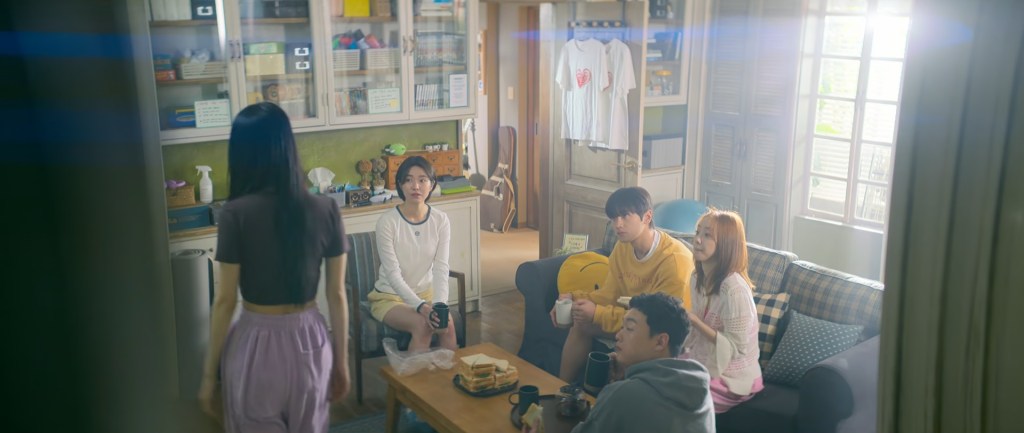
Little by little, we learn the circumstances behind Doona’s exit from show business, though we understand early on that she’s depressed and directionless. She kind of forces a relationship with Won-jun by teasing him and getting into trouble. These early scenes had me reflecting on Doona! as a possible first step in a greater pop-cultural push to demystify the K-pop idol – to finally tell that story. Doona’s new friends help her catch a stalker, she dissociates when she hears a phone camera shutter click, and there’s drama with her fellow members, notably Im Ha-yeon, played by Go Ah-sung (the little girl from The Host). I wonder how much creative input Bae Suzy had on the story, being a former idol herself, and how much of the show is true. Regardless, she navigates these scenes with a mix of vulnerability and grit, and then releases that tension during the pursuit of Won-jun. That’s when she bears her predatory eyes and dangerous smile, seeming at once active and detached. She’s the kind of person who pauses before replying “Hello,” as if she didn’t hear, didn’t care, or just wants to see you sweat.

The girl from Won-jun’s high school is Kim Jin-joo, and first of all, she’s played by Shin Ha-young, not Oh Ha-young. The above screenshot is from the official Netflix website, and is not photoshopped. Come on, guys. As we learn in flashbacks, Won-jun had feelings for Jin-joo in high school, but Jin-joo rebuffed him via text, and that put an ellipsis on their friendship. Years later, Jin-joo shows up enrolled at Won-jun’s college, and he shows up at her coffee-shop job looking for work. Despite that she’s friendly with a guy, we’re shocked – shocked! – to learn that she harbors feelings for Won-jun, and the reason for the rebuffal was more complicated than he realizes. Jin-joo’s purpose in the narrative, and by extension Ha-young’s subtly heartbreaking performance, is to provide the cost for the burgeoning Doona/Won-jun relationship. Before The First Kiss, we’re fully invested in Won-jun and Jin-joo because there’s so much history and it’s painfully incomplete.
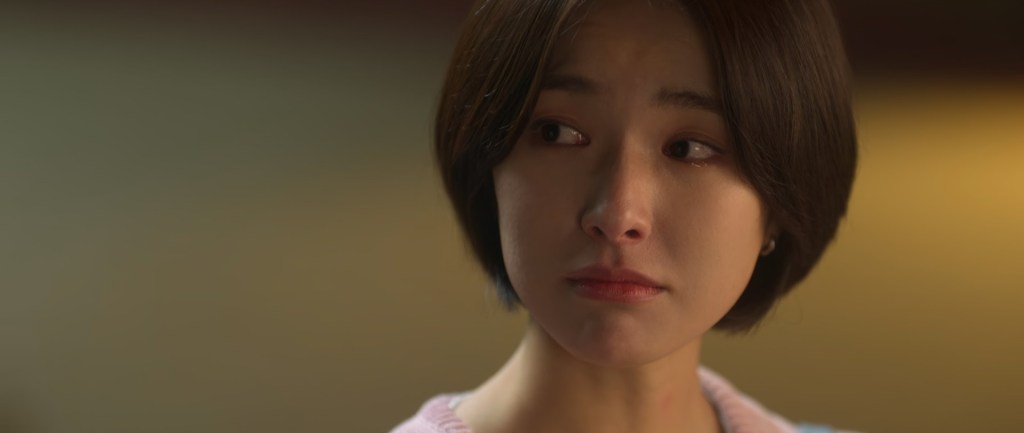
There’s a “Let the Best Woman Win” scene where Jin-joo sits down at Doona’s favorite smoking spot and says that, indeed, she has history on her side. But how can anyone compete with an idol? The show isn’t called Jin-joo! It’s a brilliant stroke of storytelling, because this edge of the love triangle (quadrangle?) is the correct one. This is the relationship that should be, and Doona is the disrupting element. Why would a celebrity even be interested in this loser Won-jun? She could have anyone – first “famous” and then, at least, “with prospects.” Won-jun is paying his way through college with part-time gigs, which shouldn’t leave a lot of time for drinking and barbeque, but this is a K-drama after all. More than that, Doona is in a strange place in her life, one we imagine – and even hope – is temporary. I certainly don’t like the idea of an idol who makes it big and then quits. That’s really sad. Will Doona restore her public image, or let the haters win? And once she does achieve such victory, will there be any room for Won-jun?
It’s as if she’s a tourist in the world of ordinary people, and Won-jun is just a taste of that life. But that isn’t what Doona is telling us, in her private moments, with her eyes, with her body language. Won-jun’s essential trait is kindness, and I think that’s something missing in Doona’s life. In flashbacks, we see Ha-yeon telling her off, and a manager dismissing her concerns about mental health. Doesn’t Doona deserve happiness, too? And this is the tension of Doona!, though the show itself is hardly stressful. It moves at a slow pace because there aren’t enough characters to really have subplots. It’s sad because Doona is sad, and we’re then immersed in the emotional reality of this young romance. The stakes are actually quite low, to the point where this could’ve been a comedy (Choi I-ra, the third romantic option, didn’t get the memo), but it isn’t to the players involved. Maybe more so than deconstructed, it’s an earned fantasy.
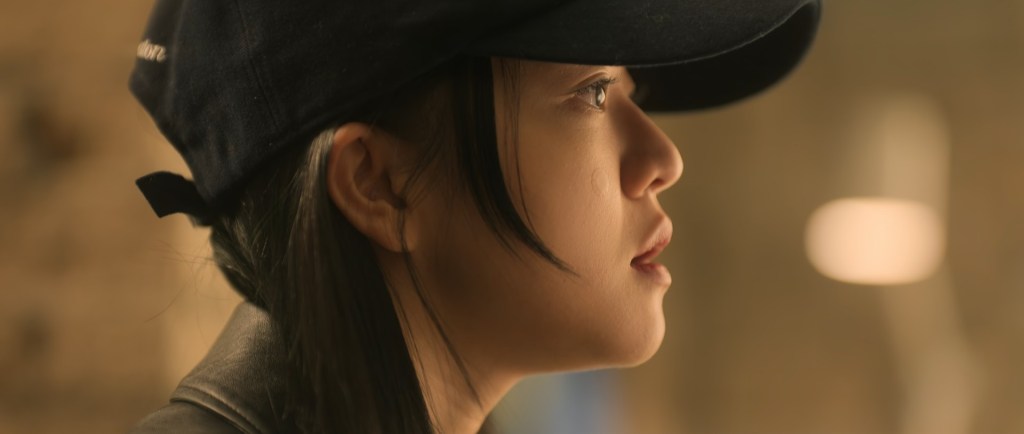
Unfortunately, after the show peaks with the resolution of the love triangle, the new conflict taking us into act three is comparatively lightweight and, I think, contrived. Won-jun and Doona enjoy their domestic bliss in relative secrecy, among their found family (the kind that would gather for the Twenty-Five Twenty-One beach episode teased in the opening credits but which doesn’t happen in the show…?), and one day Doona is notified of a lawsuit by her old agency. The window is suddenly closing for a comeback, and the manager, Park In-wook, played more dimensionally by Lee Jin-wook than the character strictly requires, demands that Doona dump Won-jun.
Apparently, the scandal of a relationship would make it harder for Doona to come back, though this simultaneously characterizes In-wook as an overbearing authority figure (so, is he right or wrong, show?). In dramatic terms, however, it isn’t proven that Doona’s celebrity lifestyle is incompatible with Won-jun. They don’t try to make it work and fail, which would really drive the wedge home. Instead, we get a situation where Won-jun tells Doona he wants to break it off, and then he cries about it. That’s always the worst scene. You’re the one who dumped her! By that point, I’m farther from Won-jun than I’ve ever been. It’s like he never appreciates what he has, or even acknowledges the absurdity. How could you ever break an idol’s heart, or refuse her in any way, or make a demand of her, or not come running when she calls? I mean, that would be the real conflict: the power imbalance. They met as mere mortals, and then suddenly, she returns to Olympus. Suddenly, he’s too afraid to be himself around her.
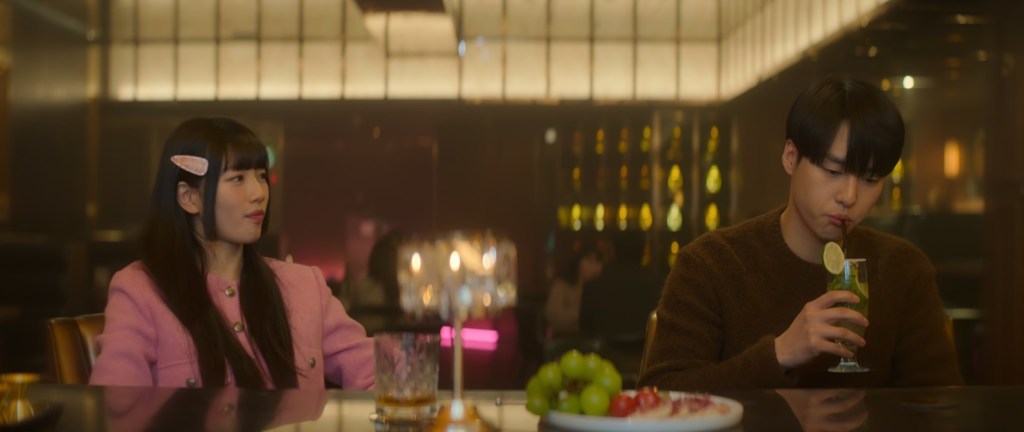
We never really get to know Won-jun. And it’s strange, because there’s such a humanity introduced to the show by the filmmakers that feels at odds with its webcomic origins. Like, there are cheeky “webcomicy” aspects of Doona!, for example, the introduction of the roommate characters (one of whom has no arc) and especially Choi I-ra, and then on the other hand, there’s Go Ah-sung who nearly runs away with the show in only two scenes. Her performance as Doona’s would-be rival, who lays down her regrets and allows herself a moment to exist in Doona’s afterlife is so powerful and so real. How that access to the human heart stops before it reaches the protagonist feels like another missed opportunity.
I’m very new to Bae Suzy, but unlike the usual dorks of the hallyu world, she exudes such cool, both on-screen and off. Yang Se-jong does his best with the minimalist Won-jun, and in the end, I have to give MVP to Shin Ha-young. She may have had the advantage of playing “the other woman,” but my God, she was devastating. Her face, smiling through tears, is the image that’s stuck with me, somehow even more so than Suzy with those bangs. It’s a great-looking show, and it actually had me thinking back to those terms “mouthfeel” and “gamefeel” so popular a few years ago, but in this case something like “watchfeel.” It just feels good, and so I want it to be good. Short one script that’s fully dramatically satisfying, we’re left with a K-drama that’s both incomplete and completely worth watching. K-drama storytelling may be storytelling, but that doesn’t mean this K-drama viewer is discerning enough to care.

 With Eyes East