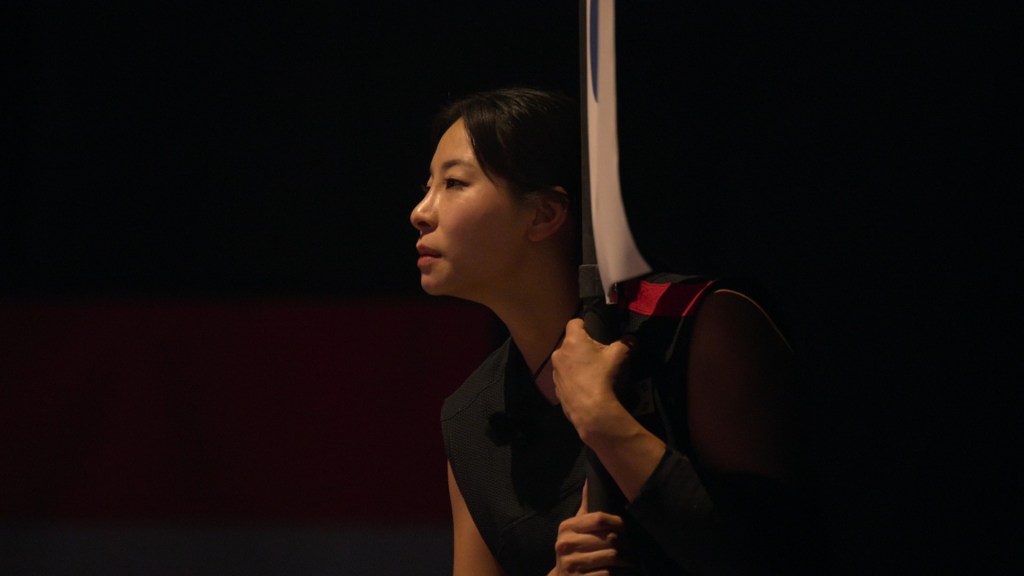
Spotlight on the women of Physical: Asia from someone who’s totally chill about it
We’re on the precipice of the season finale of Physical: Asia, but have already witnessed bracing human drama through punishing feats of endurance. Robyn almost drowned, James put 110 pounds on his back, and Alexandra pushed herself farther than anyone I’ve ever seen. It’s the signature appeal of its mothership series, Physical: 100, though this wasn’t obvious to me at first. Jang Ho-gi’s Netflix reality show premiered in January 2023, a self-proclaimed search for the “perfect physique” between one-hundred South Korean contestants – athletes, soldiers, bodybuilders – in challenges like “how long can you hang on this metal bar?” and “how far can you carry these sandbags?” Even as the set pieces scaled up to elaborate excess, the challenges felt oddly accessible, deferring spectacle to the contestants’ performances (even when they appeared to be static). And while often incredible, the contestants were additionally impressive for being so unlike the archetypal reality show character. They were polite and friendly with each other, and so interested in proving themselves that they’d rather compound an obstacle than weasel around it. Of course, none of this would’ve been enough to entice ol’ Harrison “gives up on movies and TV shows after mere minutes” Chute. No, the last essential ingredient of Physical: 100’s freshman season was Jang Eun-sil.
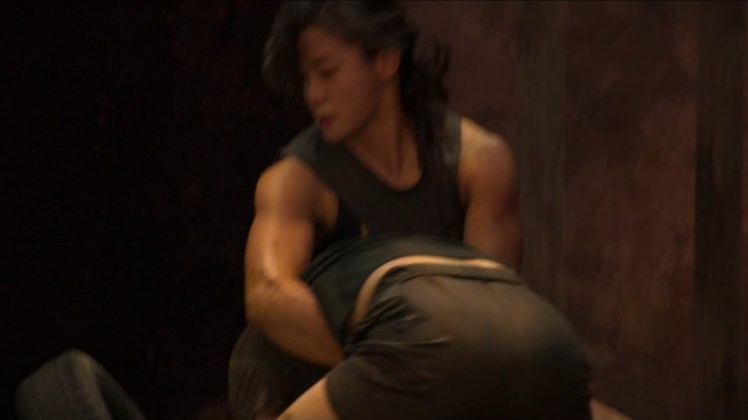
Sorry, Sarge
I’d so rarely seen a “hard body” like Eun-sil’s that her appearance in a competition against men was something best summed up by Anna Torv’s line in the trailer for fellow Netflix show Mindhunter: “[The myth of male physical supremacy is] virtually impossible to study, yet you have found a way in near-perfect laboratory conditions. That’s what makes this so exciting and potentially so far-reaching.” Not to mention so goddamn nerve-racking. By the way, the actual quote was something to do with psychopaths, but the term “near-perfect laboratory conditions” became stuck to Physical: 100 in my mind, because the show felt like an experiment on the frontier of a nameless science. Eun-sil-noona is a wrestler, and she impressed early on by thrashing a special forces soldier, Kang Eun-mi, who’d go on to play the heel in a similar show called Siren: Survive the Island. From there, Eun-sil was voted to be the only woman among ten team captains, and her team was made up of castaways, including a disproportionate amount of female contestants and even an injured guy. Despite her reluctance to lead – wrestling is hardly a team sport in practice – Eun-sil proved herself an admirable captain, executing a solid strategy and inspiring the best in her fellow contestants, ultimately getting the team within striking distance when everyone else had counted them out.
Because Eun-sil’s fate as a contestant became so linked to that of the other women’s, she seemed to carry the female gender on her shoulders in our laboratory experiment. In an indirect way, this was proven by the second season, which saw the women blown out long before the finals. If only Eun-sil had been there! And yet, curiously, by the time she returns for Physical: Asia – replacing a potential third season of 100 in the 2025 slot and expanding the contestant pool to other countries – I find I don’t need her. At least, not so desperately. Her success or failure this time isn’t the end-all for women in my secret agenda running parallel to the show’s. God, that first season was so stressful, and novel for it, but this season is fun. I’m having a good time. So, what changed?
Years ago, on Questions: We Don’t Have Answers, Donovan and I were talking about the term “daddy” – I’m sure we had a good reason – and I mused about its equal and opposite: “mommy”? Would a guy ever use the word “mommy” in a relationship? Before I could even shudder at the thought, the Internet alighted with the “muscle mommy” seemingly overnight, and the algorithm pretty quickly had me figured out. Instagram, actually, was my introduction to Jang Eun-sil, mere days before the premiere of Physical: 100. Soon enough, I was seeing hard bodies everywhere on the endless scroll. Within South Korea alone, I’ve picked up favorites like former ssireum wrestler Hae-min (or “Mink Fit”) and Crossfitter Seong-eun, who hosts a relaxing YouTube channel. All over the world, women start channels to track their fitness journeys and share their calorie intake and, of course, lift. There’s an audience for this; Donovan has previously testified to the inspirational power of Physical: 100 and, presumably, online fitness content, something I myself am woefully immune to. I mean, when I meet my muscle-mommy soulmate, I need to be as lean and pick-up-able as possible. Still not comfortable with that word, though.
To make a dreadfully long story short, I’d spent my whole life bristling at the apparently scientific fact that “men are stronger than women” for reasons good, suspicious, and better left unexamined, and it had all been theory until Physical: 100 (and a smattering of other things). I was sure to insert my fevered musings into the end of a feature on this very blog, Sisters of Mulan Part II: “Does muscle mass equate to strength? Surely, but so does speed and skill. So we got to ask, what are we talking about here?” I mean, that’s downright clairvoyant, with Physical: 100 still three years out. The funny thing about the show is how the ultimate winner arrives with basically no fanfare. Everyone else is gone, and the announcer says, “The search for the perfect physique continues,” a favorite of ours on the podcast. We see over and over again how the real competition is between the individual player and their own limits. It’s a beautiful idea that makes for breathtaking drama, and it helps maintain the generally pleasant atmosphere. More than that, though, you run a season of Physical: 100 with the same contestants multiple times, you’re bound to get different outcomes. As Eun-sil knows, luck is a major factor (bad luck, in her case), as well as willpower and strategy and teamwork – all of these variables which complicate the too-often simplified concept of “strength.”
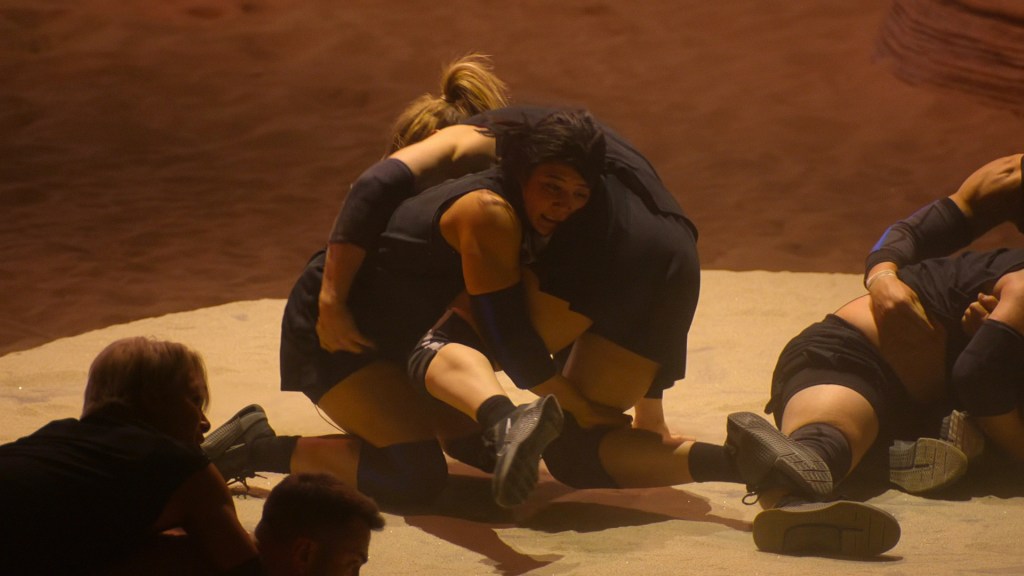
Still, muscle mass and size remain the outsize factors, even on our current season. I note “size” because Choi Seung-yeon is built like a tank, but she is shorter than all the men. In Quest 1, this put a target on the women contestants. Unlike the opening quests of previous seasons, this was a contact sport, as teams had to race to claim and defend territories, introducing the Filipino “jeepney blitz” to the global lexicon. At some point, a male contestant literally shouts to “target the women!” but players like Turkey’s Yasemin Adar Yiğit (who is certainly not short) and Japan’s Nonoka Ozaki were never liabilities. In fact, it was Ozaki’s ability to trip up the half-foot-taller Yasemin which put the Japanese wrestler on my radar (where everyone wants to be). Eun-sil didn’t manage to do anything especially notable, but she did once again prove herself a natural leader. As Seung-yeon later recalls, on a video reacting to the show, she pretty much did whatever Eun-sil told her. And how could you not?
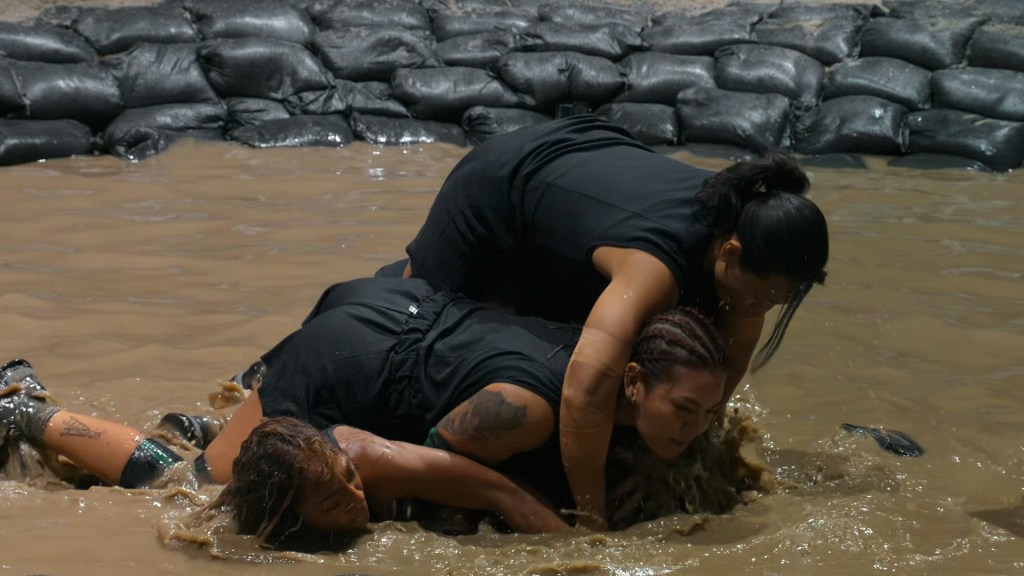
Quest 2 eases us back into familiar theming with the show’s pirate fixation, as contestants shuttle sandbags and crates from one end of the pirate ship to the other. While the team captain is technically Kim “Stun Gun” Dong-hyun, he elects to get down in the sand, leaving Eun-sil on lookout, manning or – per the theme of this post – womanning the zip line component of the challenge. She becomes the de facto shot caller, helping Team Korea to victory and the greatest overall weight haul. After the gladiatorial spectacle of the redemption quest, which saw highlights from Robyn, holding out in that sandy puddle long after I would’ve cried “time-out, time-out, time-out” and Lara, dragging two opponents over the line for a photo finish (recreated later with Eun-sil and Mark Mugen), we reach Eun-sil’s biggest moment yet, in Quest 3. To be honest, though, I kind of hated how Team Korea approached this one. There are four events which test different facets of “strength,” and unlike Team Mongolia, who matched their athletes’ abilities to each challenge, Korea decided it could only beat Australia with tricky strategy. They’d prioritize the tie-breaking hurdle race with their heavy hitters – Dom Tomato says, “Big mistake” – and that meant burning off the women on challenges they wouldn’t have won anyway. They were working around the implicit weakness of the female players – with Eun-sil’s full cooperation.
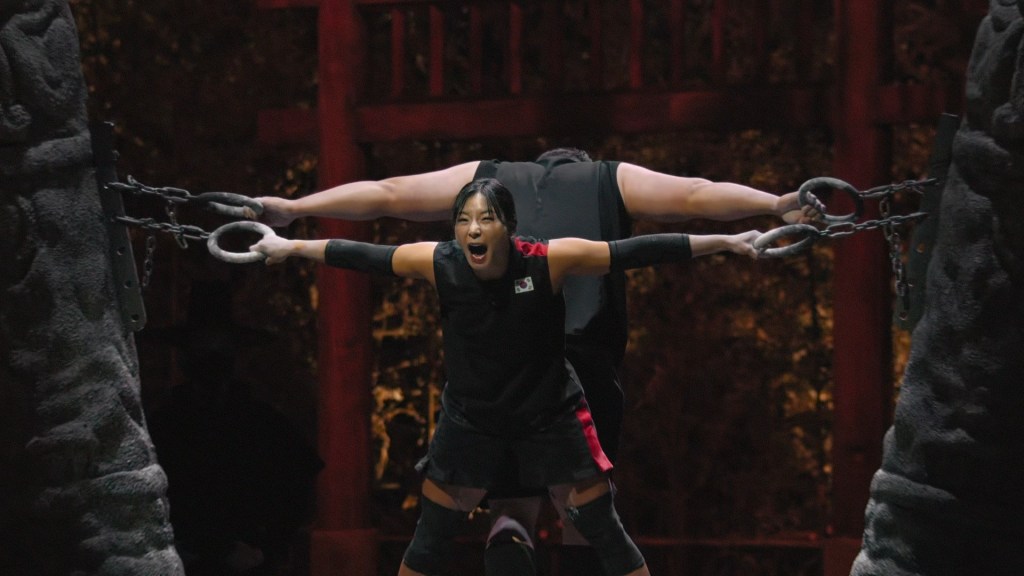
Eun-sil and her wrestling dongsaeng Min-jae step up for the totem challenge, which required both contestants to hold up heavy pillars. Once again, Eun-sil is the shot caller, from the beginning with the “hook grip” technique. They manage to outlast Team Philippines, but eventually let go before Team Australia. On Instagram, I repeatedly saw the image of Eun-sil, back-to-back with Min-jae, holding up those pillars, as well as her antagonizing Robert Whittaker, whose comeback, “I fucking live here” was an instant classic. The real star of this first heat in Quest 3, though, was Alexandra Milne of Team Australia. Fun fact: Milne is half-Filipina, maybe consistent with all the Australian accents on Team Philippines (or was it only Justin Coveney? Super underrated, that guy was awesome). She went for the hanging challenge, and wanted to redeem herself for an earlier perceived failure. Outlasting Seung-yeon but not the wow-getting Mark Mugen (who was apparently born in Tokyo, so I don’t know what to think anymore), she came back from near falls and after the two-hour mark, started crying – coincidentally, I did, too. Absolutely brutal to watch, but it was an amazing performance. And it was, actually, the first time I looked back at myself.
Specifically, I saw how much Alexandra was pushing herself – as had so many other athletes – and wondered, “Have I ever done something like that?” In my life, have I ever pushed myself past my limits, whether physical or mental or, I suppose, spiritual? It was an instant gateway to the next, even more existential question: What’s the hardest thing I’ve ever done? And I may or may not have started spiraling, but it was a new spiral. That’s all you can ask for these days. When I’ve faced obstacles, have I risen to the occasion or snuck around like some clever boy? How many lessons have I then avoided, how much growth denied? Surely, I’m not still hung up on the same anxieties as I was even five years ago…
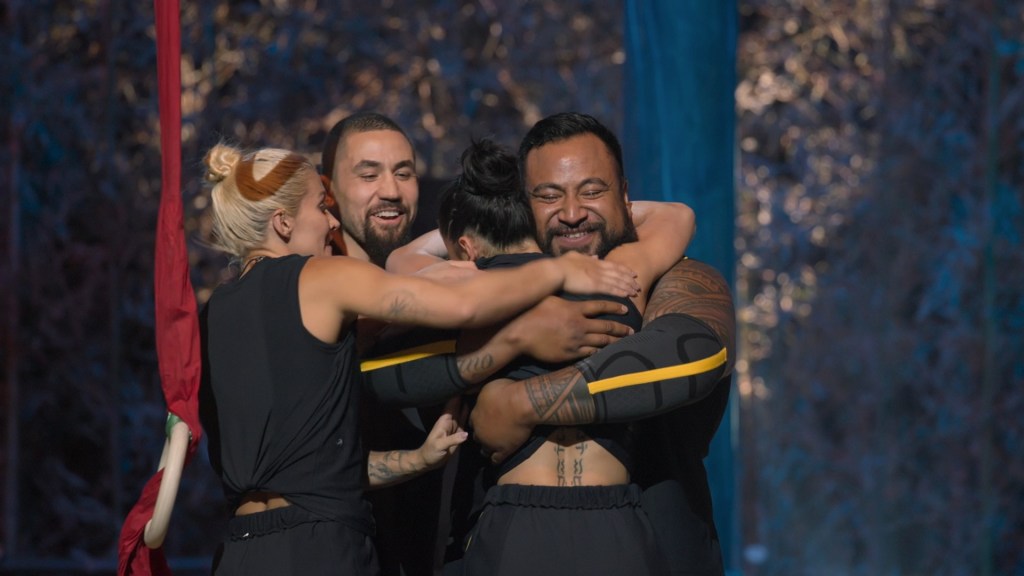
I didn’t expect Physical to finally reach me in this way, but it’s probably because the contestants’ motives have been subtly altered, to the point of near abstraction. In Physical: 100, it’s that they’re pushing themselves because they want to be the best they can be, and as a non-athlete, that’s never crossed my mind. In Physical: Asia, it’s technically that they’re pushing themselves to represent their respective countries, but really, they’re doing it for their team. As we watch the eliminated contestants smash their torsos, we hear about guilt along with regret. It’s emotional each time. This is more relatable to me, as a thought like “I don’t want to disappoint them” is easier to understand than “I don’t want to disappoint myself.” When it comes to being the boss of myself, I’m definitely the fun boss.
Team Korea’s strategy-first strategy continues into Quest 4, though they’re not alone in this. While Team Australia puts up the best players for the job – the excruciating battling ropes – Stun Gun and Eun-sil decide to burn off the girls again. Interestingly, Team Japan decides to do this, too. Going into the arena, Nonoka Ozaki had a big grin on her face, because she trains on these ropes all the time. She was the first name floated during the strategy meeting, but they ultimately elected to post Captain Yushin Okami, judoka Soichi Hashimoto, and the madman Yoshio Itoi. Even if it was the ultimately correct combination – scoring a second-round victory and automatically advancing Team Japan to Quest 5 – I couldn’t help but notice that Ozaki looked disappointed. She’d also wanted to redeem herself, after a third-place loss on the hanging rings challenge. Meanwhile, Eun-sil and Seung-yeon brought up the rear, never gassing out but unable to bring the same speed as the male competitors. Notably, Eun-sil chalked up the disappointing performance to a problem with technique. And now I seriously wonder how Ozaki would’ve done.
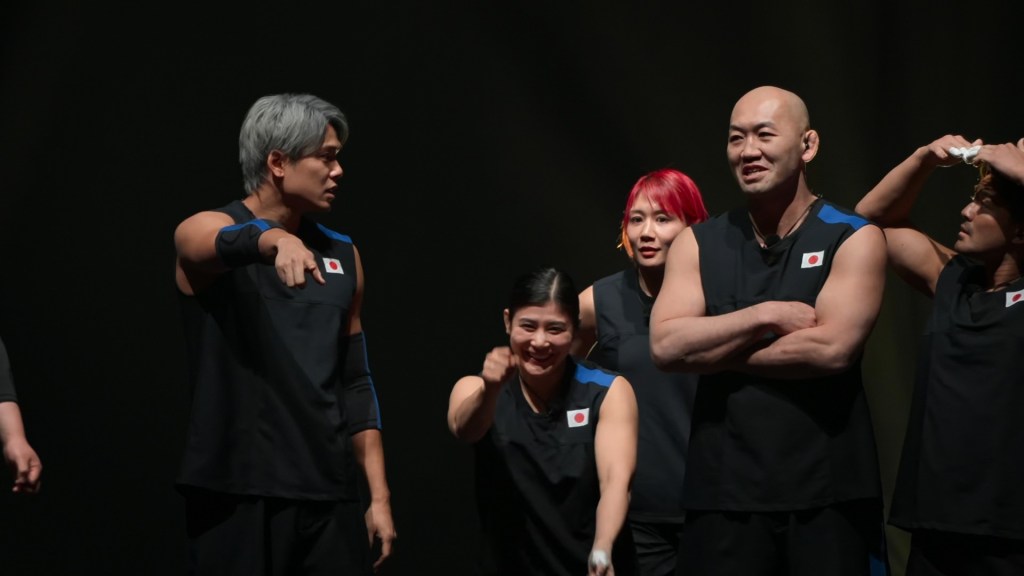
Showing off the skills
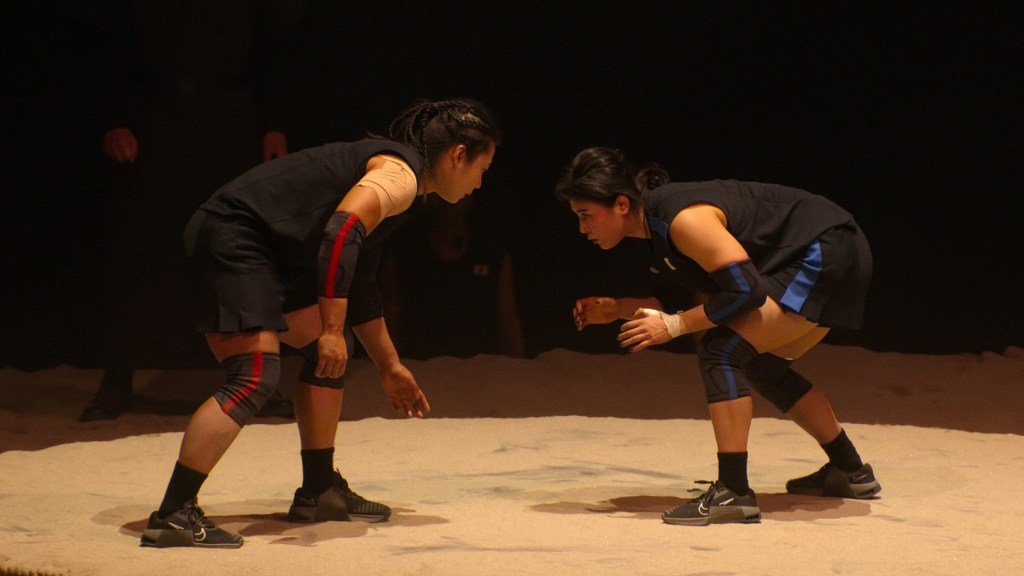
As with Eun-sil before, I’ve now watched a few of Ozaki’s matches, courtesy of the United World Wrestling YouTube channel, and she exhibits the same machine perfection as other Japanese athletes like Naoya Inoue and Shohei Ohtani. Those two perform like a magic show, making professional-level play look easy. In Ozaki’s hands, the apparently basic “leg lace” maneuver looks like a hack, driving up the scoreboard with repeated alligator death rolls. I mean, so far, Team Japan are the masters of technique and efficiency, if Australia has the raw power and Korea the sometimes-effective strategy. I can’t wait to see more from Ozaki in the final episodes, not only because she’s as cheery and charming as everyone on Team Japan, but also because she represents a crucial aspect of the laboratory experiment.
At 22 years old, Nonoka Ozaki is part of the next generation. Unlike Eun-sil – or myself, I guess – she was born into a world where women’s wrestling was an Olympic sport. She came up through the star-making JOC Elite Academy and went on to score a Bronze medal at the 2024 summer Olympics and four gold medals across the World Wrestling and Asian Wrestling Championships. Why is all this important? This year, science writer Starre Vartan published a book entitled The Stronger Sex: What Science Tells Us about the Power of the Female Body, and in the opening chapters, discusses training volume – tonnage. It’s only logical that if you’ve been lifting all your life, you’re probably pretty strong, and it’s inarguable that social factors discourage young girls from physical activity (unless you grew up in Mongolia, and Adiyasuren Amarsaikhan crushed the totem challenge). As a result, Vartan writes, “girls start their athletics journey with a significant deficit in strength and athleticism compared with the boys.” She talks to Sophia Nimphius, who notes that “What you do through your pubertal years changes your musculoskeletal system. Those changes are lifelong, and there is some evidence to say that you have an increased ability to adapt in that stage.” Nimphius had earlier spoken at a FIFA conference, where she’d pointed out that soccer academies start training boys and girls at 13, which is late for girls.
This fact of our biology is something I wish I’d appreciated as a kid, and the evidence was right in front of me. We had computer class in middle school, where we’d tuck our hands on the keyboard in a drawer and figure out how to type without looking. It was really hard at first, and the teacher was a dick, but obviously, it’s become second nature. I’ve scored multiple jobs with my stunning 90WPM typing rate (89, adjusted for errors). How I wish that wasn’t my only marketable skill. The more you do something, the easier it becomes. Sometimes I think about the miracle of language, and how we generate words almost automatically, and yet the prospect of learning a second (or additional, for you non-Americans) language seems impossible. There’s clearly a gap between my expectations for the mind and body and their actual potential. As far as my own domain, looking back at that Mulan post from five years ago, I’m confident that I’m a better writer today than I was then, and maybe that means I’ll be better five years from now.
Vartan – who happens to be Australian – also speaks with journalist Maggie Mertens at the launch party for her book Better Faster Farther: How Running Changed Everything We Know About Women, and she notes that the first generation of athletes born after the 1996 founding of the WNBA is now coming of age as adult players. “That’s how you get a Caitlin Clark – that and a lot of practice,” Mertens says. Nonoka Ozaki is the equivalent in women’s wrestling, another star in the making, now with the international attention that comes from competing on Physical: 100. Hopefully, fewer controversies, though. Wrestling is interesting, too, because it’s a sport where arm muscles (generally speaking, favored in men’s bodies) are less important than a strong core, legs, and hips. It may be scientific fact that boys develop more muscle than girls during puberty – packing on mass – but that might not prevent Nonoka Ozaki from slamming you into the mat repeatedly. Or Yui Susaki or Umi Ito or Akari Fujinami. And with that, I can sleep at night.
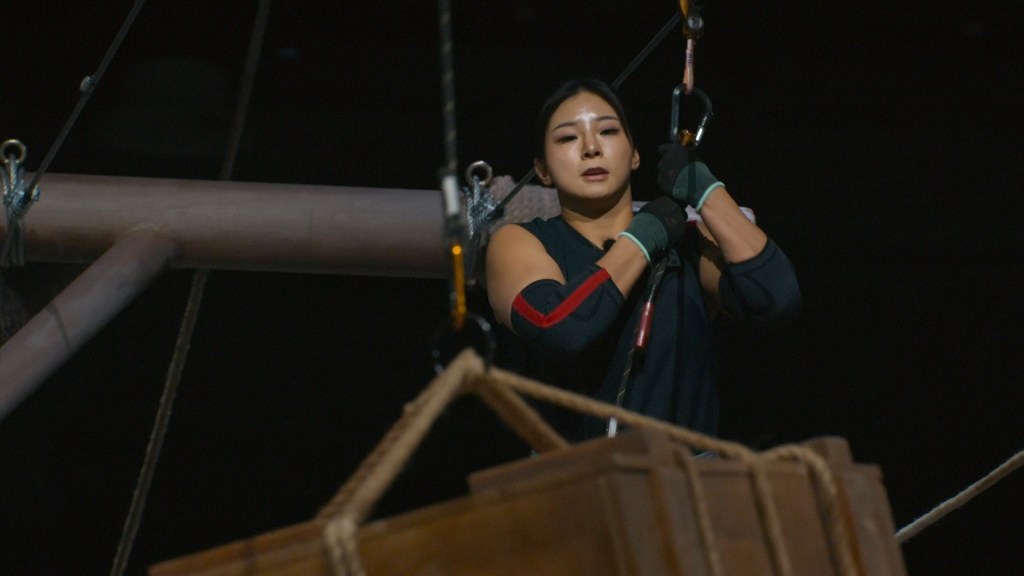
Now, where does this leave Eun-sil? Still in the game, certainly, but all this talk about a new generation would seem to render her obsolete, or imperfect, even. Whether or not she’d been doing physical activity from birth, she didn’t have the same encouragement and resources that younger athletes like Ozaki and Caitlin Clark did. Or should I say, Ozaki didn’t have the systemic discouragement. In this most general sense; I’d be foolish to think she didn’t have her share of difficulties as a woman in sports. I mean, we were all totally normal about Caitlin Clark last year, right? That note, though, about the “puberty window” was pretty eye-opening. It suggests that if a woman my age (early 30s) and with my lifestyle (sedentary) wanted to start building up and training for Physical: 100, she’d never achieve the “perfect physique,” right? She wouldn’t have the muscle memory, the thousands of reps. To be honest, I’d kind of used this idea as a safety net. “Of course women are underrepresented in X male-dominated field! They haven’t had the opportunity to be truly equal.” That’s only starting to change in sports, but what about those apparently “imperfect” trailblazers who came before?
In this way, I think Eun-sil could be the last of her kind. Seemingly all our narratives about the great female athletes are also stories about sexism, that they had to fight two battles simultaneously (and before this post sounds too utopian, I realize we have a long way to go). I think Quest 3’s totem challenge, and the renewed viral fame it brought Eun-sil, was only the latest example of her athletic greatness, and therefore, how such greatness is not measured solely by physical achievement or numbers on the board. She showed tremendous leadership and willpower, and a lot of that probably comes from being an underdog in life. In the last post of the 2023 Eun-sil Report, I’d unhappily reckoned with the fact that she’s not the best wrestler in the world. Nonoka Ozaki, though? She kind of is. At least, she and her Japanese colleagues are dominating the sport. All it means, really, is that I’m excited for both. For all!
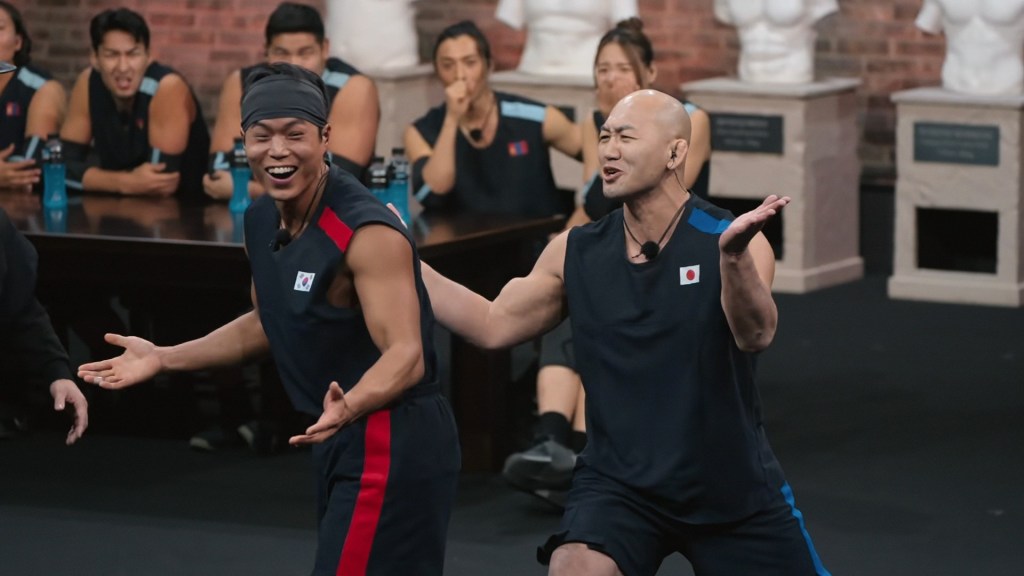
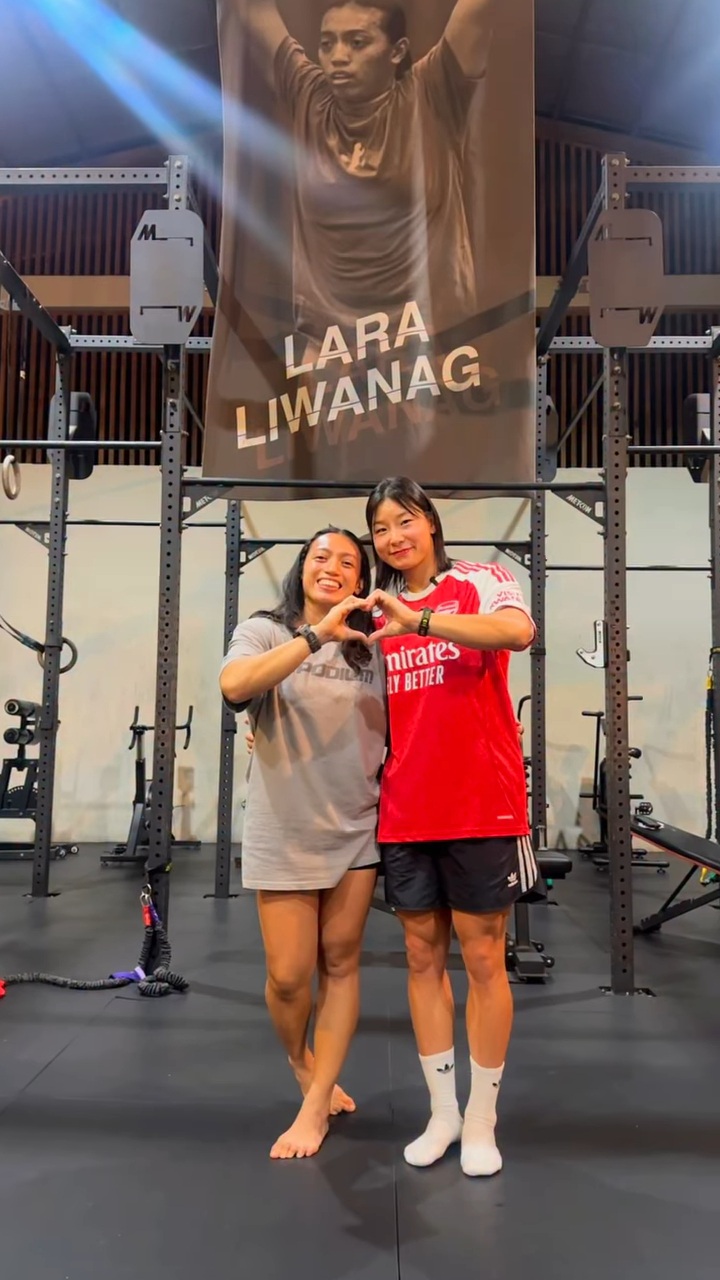
PS. Lots of great bromances on display in Physical: Asia, including Justin Coveney and Mark Mugen, Dom Tomato and Amotti, and Eddie and pretty much everyone. Instagram provides once again, as Eddie’s been hanging out with the Team Mongolia captain, Orkhonbayar Bayarsaikhan. And Eun-sil went to the Philippines. Looks like she’s gotten close to Lara Liwanag. From a post this morning:
Everything truly happens for a reason. I first knew @sillllling as the strong, fearless woman I watched on Physical: 100. A leader who uplifted women and carried so much power and grace. I admired her from a distance, never thinking our paths would ever cross. I never imagined that one day, I’d not only meet her on Physical: Asia, but actually become her friend. And not the “hi-hello” kind of friend, the real kind. The kind you share meals with, crush workouts with, do groceries together, drive around with, and have those long, unfiltered, comforting conversations that make everything feel lighter. Despite all her success, she is incredibly kind, thoughtful, humble, and genuine. She even visited me here in the Philippines, something I will forever carry with so much gratitude. It still amazes me… how someone I once admired on a screen is now someone I call a friend. Life really has a beautiful way of surprising us. Thank you, Eun Sil. You are a blessing.
Couldn’t have said it better myself. And believe me, I’ve tried.
 With Eyes East
Finally finished the series and am catching up with the posts. Nothing to add to this one: it’s extremely well put throughout.
LikeLike
Thank you so much! It was a lot of fun this season.
LikeLike