Episodes 1-6, the finale
Original Broadcast: 24 June – 8 July 2022
Written and Directed by Lee Zoo-young
Starring Bae Suzy, Jung Eun-chae, Kim Jun-han, Park Ye-young
Every now and then, I’m stricken with the pang of something – maybe dread, even embarrassment – over the readability of this blog, and especially its “K-drama reports,” for one simple reason: spoilers. As much as I might decry being spoiled on things myself, I’m never so considerate in turn. Maybe I provide a spoiler warning or suggest that the coverage will be comprehensive, so to speak, but at that point, it’s not a recommendation. It’s like a diary entry, and while I’ve always enjoyed the relaxed, indulgent nature of these posts, again, to whose use are they? Because the element of surprise is important to today’s subject, the 2022 Bae Suzy drama Anna, I will begin with a recommendation section before the report proper, if such a thing can be. And it’s important to the overall discussion because I’m not even sure I was supposed to be surprised by half the reveals, or if the reveals were merely “developments.” Part of my confusion may stem from this show having gone under the radar – translation: it wasn’t on Netflix or Viki – and so, what I knew going in was half-inferred. Amazon Prime’s summary is this: “The story of a woman who ends up living a completely different life due to a petty lie.” That life belongs to Jung Eun-chae’s character, and based on the trailer, I assumed that these two actresses were going to war. Come to think of it, perhaps it’s a spoiler to even raise these questions.
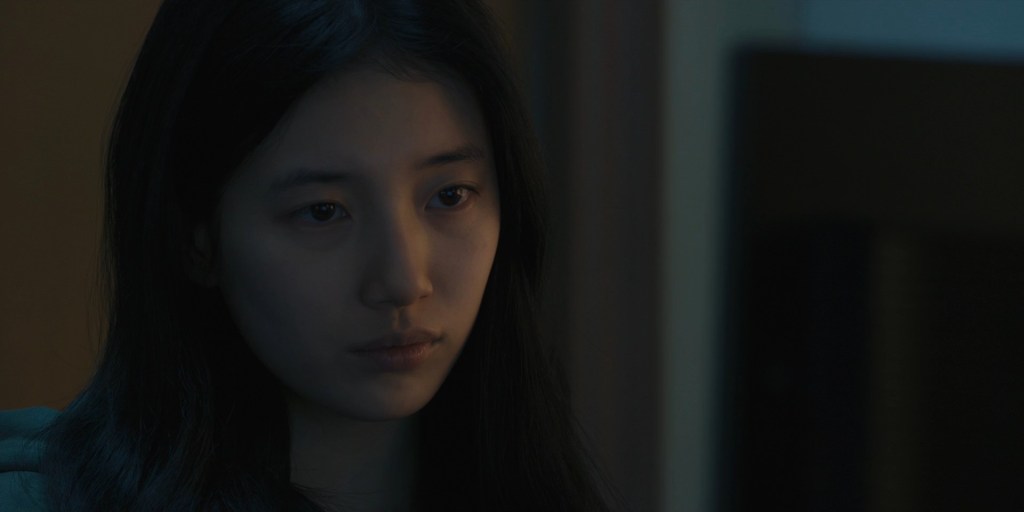
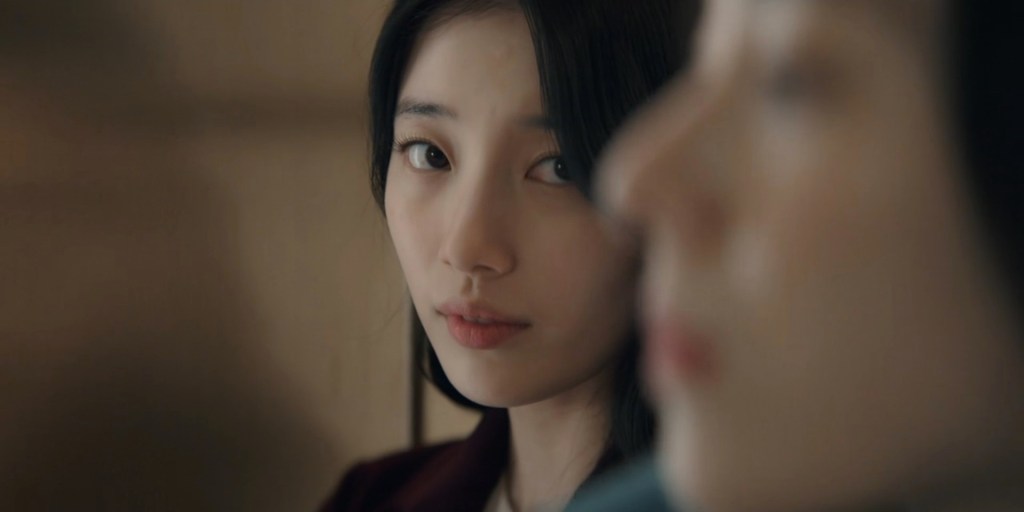
I’ll cut to the chase, then. Anna is a good show that feels, for most of its six-episode length, like a great one. It comes highly recommended if you’re in the mood for something depressed, and that’s not a joke. The show seems to emanate from Suzy’s eyes, which are usually staring or glaring or glossy, and truly, her performance is the other major draw. She’s incredible as Lee Yu-mi, who takes on the identity “Anna Lee” from her boss, Jung Eun-chae’s character Lee Hyun-ju, and proceeds to navigate increasingly decadent surroundings as an imposter where each decision, good or bad, is inherently wrong, and while she can’t afford to explode under pressure, she surely broods. It’s exactly the same tone as in Doona! from the very next year, although thematically, it’s more like a mix between Parasite and The Glory. And, frankly, a bunch of other things. Anna is like a greatest hits of Korean socioeconomic critique, but unlike those more famous titles, it’s reserved and soft-spoken, its thrills coming in subtly and bruising lightly. No rending of clothes or screaming faces against flames or rain or extreme, bloody violence. There’s a body count, but writer/director Lee Zoo-young is more interested in ideas than splashy imagery.
In fact, “subtle” is the operative word for the whole of the series, cleaving Anna from its K-drama contemporaries. The character Anna isn’t extraordinary in any way (aside from her beauty, which is sometimes commented upon), and while her actions are surprisingly consequential, she’s not turning the tables on rich people, or really, scoring victories of any kind. In other words, Anna trades the satisfying thrills of an empowerment fantasy for a lingering suspense. I’m torn, because while I admire Lee Zoo-young’s restraint, I’m more impressed by her fundamentals. The characters are convincing and full, but more importantly, their arrangement on the board makes for tantalizing possibilities. Yu-mi carries this great secret, of course, and various others learn of it and can blow up her world, but things never actually escalate like that. Specifically, it’s the issue of how much this show was not Bae Suzy vs. Jung Eun-chae, but we’ll pick up that thread in a moment. As a final note, I’m vaguely aware that the six-episode Anna does not represent Lee Zoo-young’s original vision, and there was an eight-episode director’s cut released sometime later. Still, her storytelling and directorial powers remain persuasive in the compromised version, leaving me with the belief that she could’ve pushed on this scintillating premise a little harder.
(It’s also a bummer that the studio took away final cut privileges because she’s not only the rare writer/director in Korean television, but female director period. And you can see how gorgeous this show looks).
Spoilers!
I like to record the reason I decided to watch whatever K-drama in question, even if it’s the same thing every time. I’d chosen Yoona’s Bon Appétit, Your Majesty over Suzy’s Genie, Make a Wish when I was in the market for a K-drama in Q4 of this year. Of course, I’ll always be loyal to Yoona (foreshadowing?), but Genie also looked like the odder, possibly culturally appropriative choice. I did not know until seeing the occasional Instagram reel that Suzy plays a psychopath who at one point beats the male lead with an iron pipe. Well, shucks! So, I was angling toward firing up Genie and would have if not for the interference run by interests from another realm; at the time, I was watching Gundam 083: Stardust Memory (plus, the Stranger Things premiere crashed Netflix). With that done, surely, Genie was next, but then a more different Instagram reel introduced me to Jung Eun-chae, who’s immediately captivating, and a browse of her filmography reveals Anna, whose trailer I remember watching around the time of its release. And again, that trailer really makes it seem like it’s a conflict between their respective characters, in the style of The Glory. As I’d discover, Jung Eun-chae’s performance was even pitched coincidentally similar to Lim Ji-yeon’s famous turn as Park Yeon-jin, with the evil half-grin and everything.
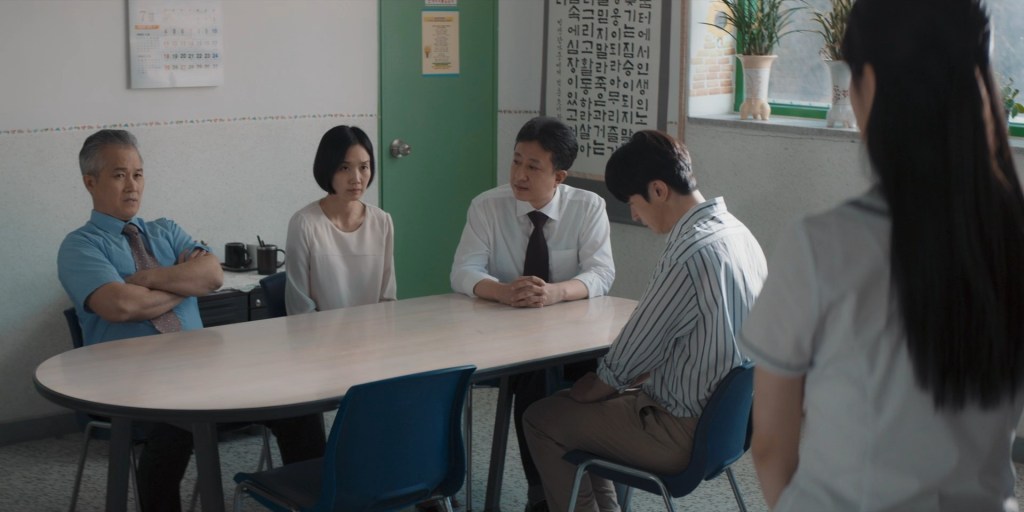
And so, the big spoiler I took great pains to obscure is that this is simply not the case, and maybe that should’ve been evident from the start. Anna begins with Yu-mi’s origins from childhood through the fateful “petty lie” told during high school, and it’s a marathon of misery that would’ve proven an insufficient build-up to an archnemesis battle. Yu-mi’s father is the owner of a tailor shop who barely makes enough money to provide for his wife, who’s deaf and mute, and his daughter, who learns of schoolyard rumors about her being from a poor family. She cries and pleads with her father to fund her ballet at least through the end of the season, and already Lee Zoo-young’s done the job of splitting my sympathy in this impossible situation. What’s especially impressive is how cold and clinical it all feels, especially as it goes on, because Anna’s original sin is wanting more than she has, and we’re not made to feel entirely like she deserves it. If anything, in the practical reality of this world, “Deserve’s got nothing to do with it.” In high school, Yu-mi is played by Bae Suzy, as she will be for the next, like, 30 years of the story, and she’s soon entangled in a relationship with a male teacher. After this is discovered, Yu-mi is forced to transfer, barely getting into a school that doesn’t usually accept forcibly transferred students, while we hear briefly that the teacher was only suspended. This is the start of another recurring theme on the show, the intersection of socioeconomic inequality and gender.
Another aspect of Anna which separates it from traditional K-drama storytelling is the lack of an internal voice. Yu-mi never speaks her thoughts out loud, and she rarely speaks at all. So much of the story is conveyed through, again, subtler film language, as well as constructed sequences and moody cinematography – one of Yu-mi’s dates with the teacher is only glimpsed from behind a door that opens and closes, speaking again to the clinical distance. And so, we understand Yu-mi’s decision to say “yes” to her dad over the phone when he asks if she was accepted to Ewha Womans University, when her application was rejected. It’s too much to bear; she’s asked too much of her parents and disappointed them too many times. She decides to attend school while studying for the CSAT exam, which is doable with off-campus housing, a little swag, and the poker face she learned at a young age from a British expat. Here, she meets Ji-won, her roommate who fails to recruit Yu-mi onto the school magazine, but succeeds in making friends. Yu-mi’s stoicism comes off as shyness, and all she has to do is not correct people when they make assumptions about her. To our split sympathies, though, Ji-won is a genuinely good soul who never lets that twinge of envy impact her friendliness with Yu-mi.
The plot summary will start skipping beats soon, but I promise these are critical details for later. Toward the end of her “college career,” her boyfriend is about to take her to the U.S. when he learns the truth about Yu-mi. In the end, she never makes it past Incheon International, but was away long enough to not be home when her father dies. From there, she works part-time jobs before landing a gopher gig for a rich family. While she technically reports to the patriarch, she spends most of her time running errands for the daughter Lee Hyun-ju, whose palpable menace comes from her position of power and utter indifference to the working class all around her. What surprised me during this arc in the story was how little Yu-mi and Hyun-ju develop a conflict, or a relationship at all. At some point in the future, these two will meet again, only Yu-mi will have stolen Hyun-ju’s identity to successful ends. That should mean that Hyun-ju has a score to settle, and that’s literally true, but it’s depicted so matter-of-factly, with only as much flamboyance as Jung Eun-chae’s fun, almost atonal performance can provide. I’m also vaguely aware that Anna is based on, or at least inspired by, a real Korean scandal having to do with falsified credentials, which might explain the lack of melodrama.
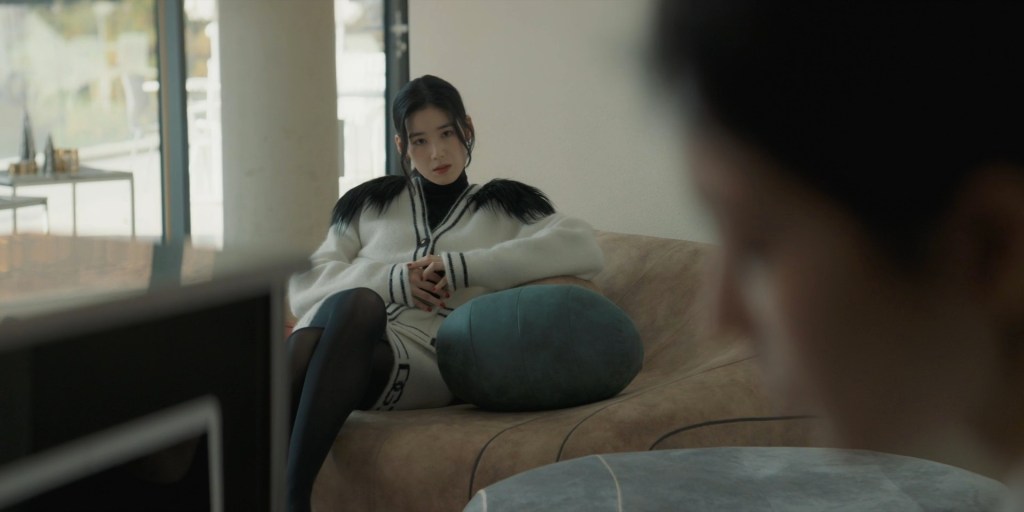
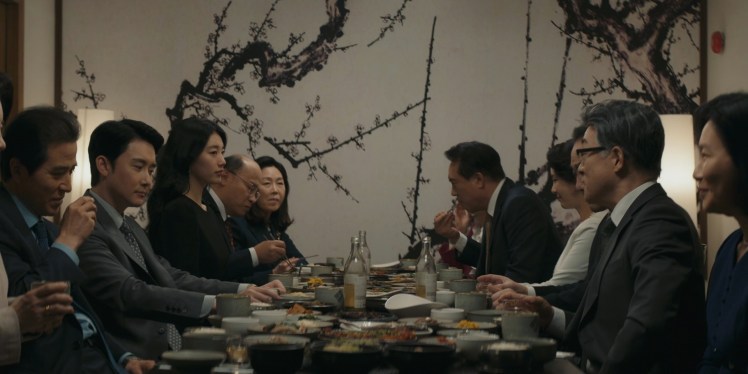
Indeed, Yu-mi uses Hyun-ju’s passport and other documents to cheat her way into an academic career, as a professor of students who applaud after her introduction. I mean, I had well-liked professors in college, but I don’t ever remember clapping for them. The occasional suspicion arises among her new colleagues, but there isn’t much of a focus on the question of “how could this have happened?” as the interest of the show remains psychological rather than sociological. The institutions and all their systemic wisdom are not under the microscope this time. If there is a “how,” it’s asked and answered in Yu-mi’s nearly episode-long origin story. Truthfully, she never had a chance in this world. Hyun-ju was born into wealth, and yet, she’s the first of several characters we’ll meet who detest poor people for being lazy. The next, though it’s not immediately evident, is Choi Ji-hoon, a tech CEO with political aspirations who quickly marries Professor Anna Lee. After their glitzy ceremony, they move into a high-rise together, and Ji-hoon begins his campaign for mayor of Seoul. That’s great. Historically, turning a government into a business has always made everyone’s lives better.
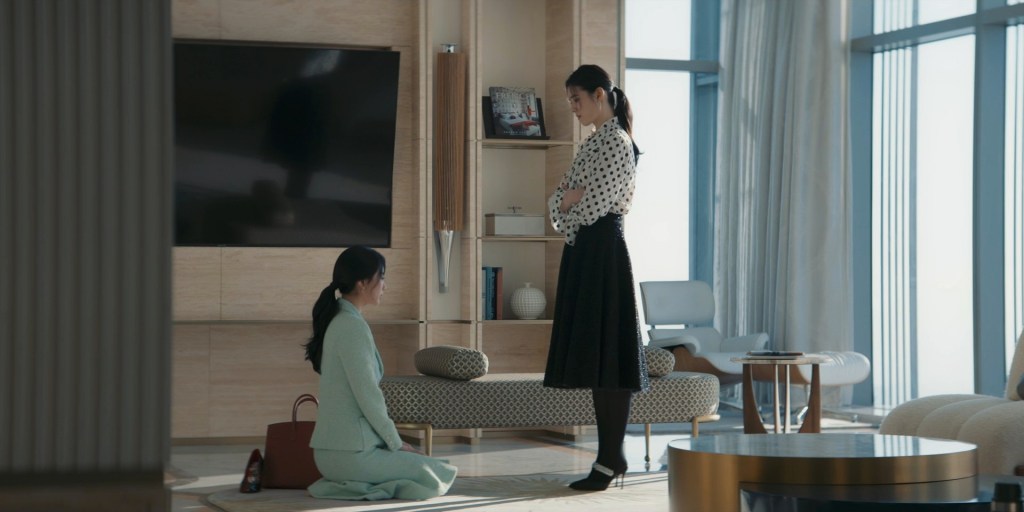
It’s in the high-rise that Anna encounters Hyun-ju for the first time in years, and Jung Eun-chae’s physical mannerisms of checking and re-checking this familiar face in the elevator were very funny. She recognizes her, but Anna says nothing. In fact, she tries to avoid Hyun-ju by taking the stairs, trudging up 23 floors. Damn that picturesque view! Only on that day does she discover Hyun-ju waiting for her at the top, and this will surely be the delicious midpoint collision. I still didn’t get it at this point, telling the screen, “I feel a slap coming on!” which probably would’ve sent Suzy tumbling end over end, looking about a head shorter than Jung Eun-chae. In this nevertheless tense, exciting moment, where Hyun-ju has Yu-mi exactly where she wants her – on her knees, even – she has to think about what to do. There had been no long-brewing revenge plot, and true to her character, Hyun-ju remains somewhat clueless. She eventually demands that Anna pay her three billion won by the end of the month, or she’ll expose her. That’s tricky, as none of what Anna appears to own is actually hers, but this is still not quite dramatic enough to sustain a series, right?
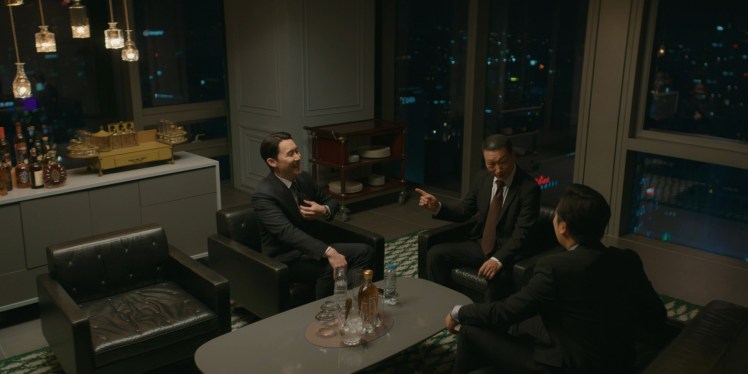
Anna takes meetings with lobbyists on behalf of Ji-hoon, collecting the bribes herself as Hyun-ju’s extortion fund. “Why is it so easy?” she muses at one point, an exception to the moratorium on out-loud thoughts for the irony that the easiest way to make money is by being rich. There’s a subtle refrain of this recursive cultural hollowness, where Hyun-ju is increasingly revealed to be a fraud herself. If you steal from a rich person who never earned anything, is it actually theft? And yet, there’s a more troubling inverse to this line of thought. Now under Hyun-ju’s thumb, Anna begins to compress. She watches in horror as Ji-hoon, who’s already been testing her boundaries, berates his driver for being seconds late before turning violent. What might disturb Anna the most, however, is how Ji-hoon uses the same abusive language as her old boss. After responsibilities pile up at work, Anna finally breaks when an employee requests time off with what appears to be less than 24 hours’ notice. First, she uses the abusive language herself: “Why are you making me the bad guy?” and then she explodes, and it’s scary and heartbreaking at the same time. It’s such a steep on-ramp after she’s spent so much time pent-up, just burning with rage.
It’s the approach to socioeconomic critique of reducing the abstract, the systemic, to a series of logical decisions. Anna occupies the same role that had once tormented her, sidestepping the too-philosophical question of innate evil by demonstrating how bad behavior is an organic, unavoidable outgrowth of this hierarchical social structure. Squid Game was a masterclass in delivering this moment, to far bloodier ends, of narrowing the individual’s agency toward a violent cog in a violent machine. It should scare you, and make you think, “That could be me.” We all like to envision ourselves as the one who makes the difference, who’d blow the whistle or speak up in the whisper network, but self-interest isn’t always as selfish as it sounds. It’s also around here that we might feel sympathy even for Hyun-ju, introduced maybe unsubtly (or with grim foreshadowing) by the arrival of her precocious daughter. But it’s not much of a leap to think that if Yu-mi could so completely transform into a monster – even for a moment – that Hyun-ju might have been something else, too. After all, it’s the luck of the draw; anyone could’ve been anything, and I can testify to that. I’m a highly successful American blogger, but in another life, I would’ve been a Korean born out of wedlock – no way I would’ve survived.
Anna begins to shift, decidedly moving past the Yu-mi vs. Hyun-ju show with the latter’s off-screen death, which hits with enough deferred dramatic consequence that you’d think Jung Eun-chae had been canceled by netizens during production (she’s doing just fine). Overall, this is an unpredictable story; Ji-hoon emerges as the chief antagonist, a real mean bastard who shows just enough flex to feel scarily realistic rather than a caricature. This is a guy who takes no joy in being evil, but he’s moving so fast that he never sits down to think about how it makes him feel when he, say, grabs his wife by the throat. It’s an uncanny portrayal of a political marriage, not in the sense of two kingdoms allying but that an unmarried man isn’t electable. The relationship is so cold and loveless. Early on, when he knocks on her door, she pauses before looking over at him (across the wide space of her home office) with such withering contempt. More misery, I suppose, though I found it compelling rather than deflating, even when her mom with dementia communicates how she was clearly traumatized by Yu-mi leaving for the U.S. when her father died. I might have just been too heartbroken by Jung Eun-chae’s premature exit. Bulletproof at that point!
There is, however, something deflating about the final arc, and especially the finale. I think it’s that Anna becomes so passive, after her illicit fundraising comes to nothing, though Suzy’s performance continues to shine. She barely even makes eye contact with people when she’s speaking, especially in the last two episodes. She almost takes on a mythic aspect, known and unknown by all, drifting through this cursed world she’s made. We’re buoyed, however, by the return of Ji-won, who’s kept in touch with Yu-mi and marveled at her ascent as “Anna.” She’s been working hard as a journalist, and we see how resilient and moral she is, and maybe most importantly, how unsuccessful. All that hard work – not to mention actual college experience – never amounted to more than a crappy apartment and more hard work. A perfectly constructed time bomb, as she’s positioned to expose Yu-mi and feel deep, profound betrayal. Again, it turns out to be nothing so dramatic, but I like the presented alternative. Their relationship may not be the usual roller-coaster female friendship of the typical K-drama, but it’s emotionally mature. Ji-won likely comes to understand Yu-mi’s choices, having pieced together the whole of the story, and so, their confrontation isn’t judgmental, only “awkward,” as Ji-won puts it. By this time, Anna’s ready to blow the whistle anyway, with the help of the curiously named assistant Cho Yu-mi.
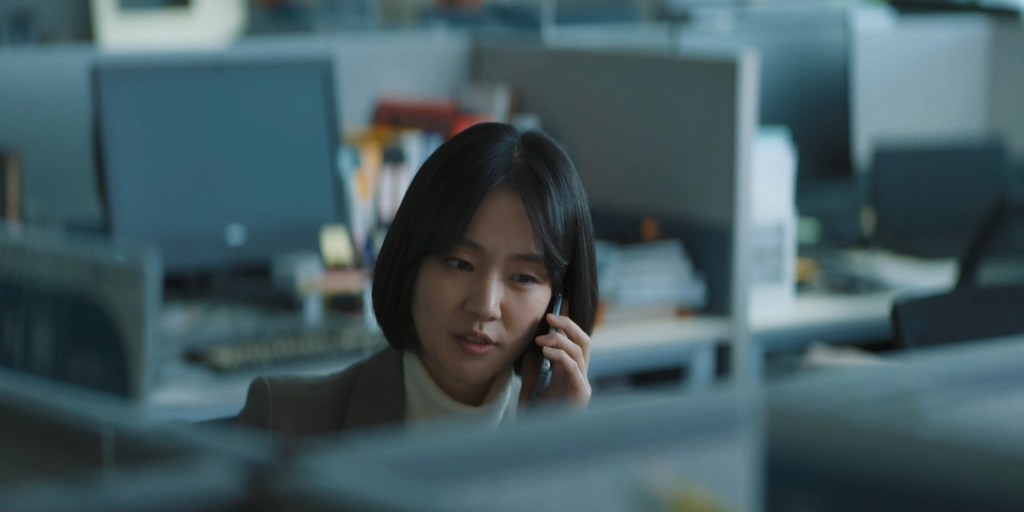
Ji-hoon is elected mayor, but he only got that far by killing his wife in a former life and, as we discover, killing Hyun-ju to protect Anna. Well, to protect himself from the scandal-in-waiting. As Anna had wanted to murder Hyun-ju herself, she feels complicit, and encourages Ji-hoon’s former, mistreated employees – including the driver – to break their NDAs on his abusive behavior. Meanwhile, Ji-hoon conspires to have Anna forcibly admitted to a psych ward in the U.S., but crashes the car on one of those endless desert highways we have in this impossibly large country. This summary, by the way, is a major compression of the final episode, in which we wait around for plots to unfold. It’s not the most compelling stuff, lacking the essential dread of Anna possibly being exposed at every step. By now, both Ji-won and Ji-hoon know the truth, and we’re more focused on Ji-hoon’s fate. I do really like Anna’s understated relationship with Cho Yu-mi, though, who’d witnessed Anna’s explosion earlier but remains loyal out of a vague recognition that all isn’t as it seems. Indeed, Anna tells her that she knows what it’s like to placate a boss, which is effectively being a mind reader. Like Ji-won, Cho Yu-mi experiences sexist discrimination on the job, and all three women work together in the end. And it’s an ending that feels appropriate, doesn’t stumble, and flows logically from what came before. It wasn’t a thematic course-correction like in The Glory, but I’m left with a similar feeling of punctured enthusiasm.
The problem might be simpler than I’m thinking, that the show evolves over time and becomes something less interesting. So much of what had been building is swerved, right down to the duffel bag of cash in Anna’s trunk. The consequences she eventually faces are not exposure and prosecution, leading to a knotty exploration of the societal hypocrisy of punishing a poor for cheating – the rich person’s game. Instead, it’s all minimized to that desert highway glimpsed in the opening, with the provocative imagery of Bae Suzy holding a flaming purse, eventually set to classical music and recalling the twisted elegance of Lady Vengeance. Unearned, in my opinion. Anna is no such dark comedy, no saga of brutal reversals and righteous carnage. It is, however, enough, to where I’d gladly watch the eight-episode director’s cut, taking this story over again from its unpleasant beginnings, and that much enthusiasm might be sustained by Suzy’s performance.
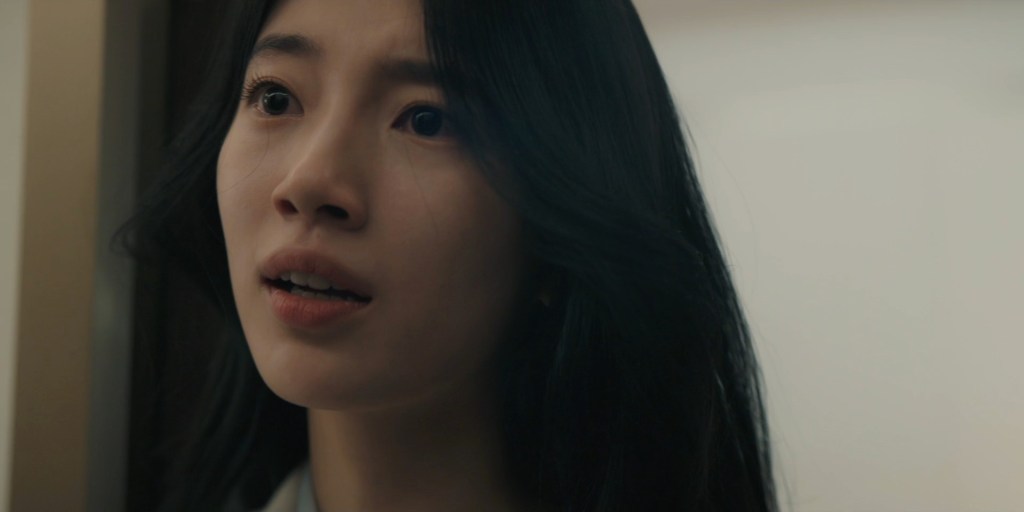
I’m hardly an expert in Bae Suzy’s acting, after only Doona! and now Anna, both of which were brooding, lonely characters, but I’m finding it difficult to imagine her as a bubbly K-drama lead who’d lose her composure at an inopportune moment or be delightfully klutzy. I mean, I’ve even seen and believed Lim Ji-yeon in roles like that, but so far, Suzy’s acting doesn’t diverge wildly from her off-screen persona. In real life – albeit, in front of the cameras – she’s also fairly quiet and somewhat intense, though not off-putting by any means. She has a disarming laugh, but overall, as far as idols go, she rates pretty low on the dork scale. She’s not out here flailing around like my beloved Yura, and yet, she still somehow feels less mysterious than Yoona. I don’t know, I think I might just be falling for her, so it was good timing that Yoona put out her “Wish to Wish” music video days ago. It’s funny, she’s always doing something for the holidays:
In case you’re wondering, and I would be, I watched the original over the director’s cut because I didn’t know there were such things. I just searched “anna kdrama” on Google, found it streaming on Amazon Prime, and went with whatever they served up (with ads, of course). If I’d known, I would’ve gone with the director’s cut in this case.
 With Eyes East