Episodes 9-14
Previously on “K-Drama Report: Undercover Miss Hong,” I noted that Lee Yong-gi’s actor Jang Do-ha previously starred with Park Shin-hye in The Judge from Hell, but didn’t know which character. To my surprise, he was Judge Bit-na’s first victim, whom she beat and tortured for twenty minutes straight. Going from that domestic abuser guy – recalcitrant, to the last – to happy-go-lucky Jang Do-ha, fawning over Hong Keum-bo… actually has a twisted sort of logic. It’s like, you know, she trained him. I’d also suggested that the show was twelve episodes long, so the revelation of its true form – sixteen episodes! – was jaw-dropping. After episode nine, it appeared the story was preparing for a climactic finish, when in reality, it was only pivoting – hard. We’ll have to do a little rewind back to that point, since it’s been a few weeks, but in the meantime, and on this eve of the weekend’s finale (for real this time), I just have to say that it’s been a pleasure. Undercover Miss Hong is extremely entertaining, and while it started out good, it’s only gotten better. The characters disarm with over-the-top comedy before revealing deeper, sympathetic layers; enough to bruise, not eviscerate, like my last experience with a K-drama. I’ve come to the edge of tears, which I didn’t expect. All the while, I’m desperate to see what Hong and the girls will do next, standing as they are against the skyscraping Hanmin monolith (monolithic Hanmin skyscraper?). Which reminds me: this is the rare K-drama where I do not “skip intro.” I love that main theme.
Episode nine is not only the transitional point between major arcs but where I see what kind of show this is: careful. The day Park Shin-hye is honored with a lifetime achievement award, I don’t know that Undercover Miss Hong will be remembered or edited into the montage, but I can say for certain it’s an upgrade from The Judge from Hell, her previous drama. The chief point of contrast is the characters. I’m made to wonder about each of them at Hanmin, from the glimpses of humanity in even the most vile to the shifting relationships between everyone else. Why is it that Cha Jung-il seems so reasonable at times, and even borderline personable? Why am I rooting for him to turn out to be a good guy? It might just be the actor, Lim Chul-soo, who does a remarkable job twisting his sympathetic face into a shit-eating grin, but he’s so unpredictable – in matters beside Hong Jang-mi. In comparison, most of the supporting players in The Judge from Hell, and certainly the antagonists, were bound by fate. I’m not making, pardon the pun, a moral judgment, even if by implication one screenwriter expresses a greater empathy for her fellow man than the other (I do remember being rocked by the earlier show’s violence). I’m more interested in the technical sophistication, how writer Moon Hyeon-kyeong balances a large cast, keeping them active in an unfolding plot. It’s such impressive work that I actually wondered for a moment if this was Kwon Do-eun’s proverbial third show. I was, then, reminded of the heights of the genre; Hong trades heartache for intrigue to satisfying ends, but I’ve yet to be, well, eviscerated. And so, the question guiding this post is: does storytelling perfection necessarily make for a perfect story? This is the complexity of storytelling, the infinite canvas that invites infinite error. Even before we say it’s a miracle that any film is ever produced, it’s a miracle they’re ever written!
The big trick revealed at the start of the second phase of Undercover Miss Hong is what I might term “activation.” Characters who appeared to serve a role in the story have effectively been recast. This can be an opportunity for the deconstruction of archetypes, but here I’m especially magnetized to the breakdown of hierarchy, centered around the table in Dorm #301. The clock runs out on Hong’s undercover operation at the same time the economic crisis hits Hanmin also, spared by a last-minute intervention by DK Ventures (and the DK crew: President Shin! Indeed, this hostile takeover was an inside job), that nevertheless demands blood sacrifice. Bang Jin-mok advises Albert to submit his name for termination instead of the two more obvious candidates, altogether dissolving the risk management division. When next we see “Yehppee,” he’s selling gimbap at a makeshift stall out in the cold. While Cha Jung-il, pride recently wounded by a long-overdue Hong beatdown (friends, it was a thing of beauty), takes particular glee in composing his layoff list (he literally can’t hunt-and-peck fast enough, a crucial period detail), the benevolent, bespectacled So Gyeong-dong falls on the sword instead of using it to slash employees, though the chairman can’t be bothered to hear his parting words. It’s a brutal dramatization of the maxim that the company is not your friend. Working harder curries no favor. They’ll cut you loose the moment you’re inconvenient.
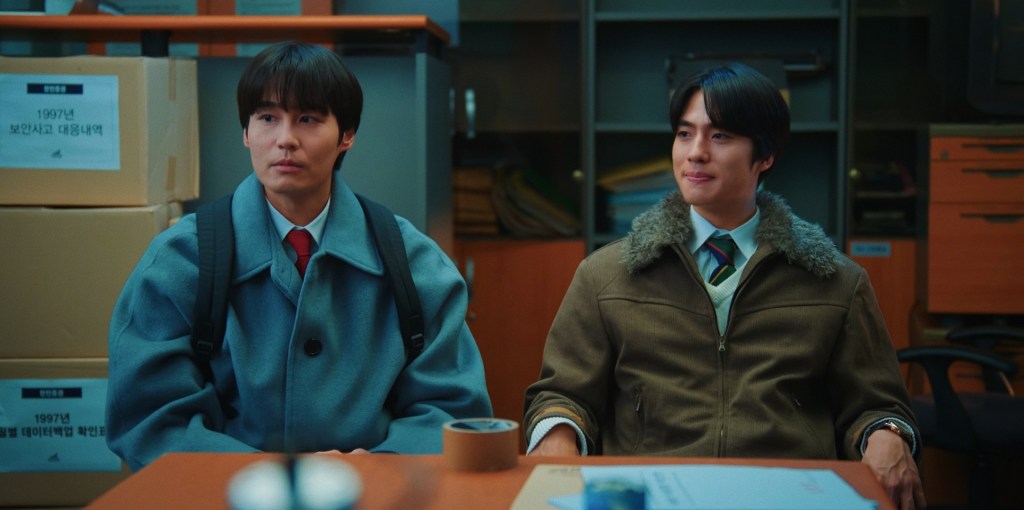
Dorm #301 has also fallen apart. The chairman decides it’s time for Nora to come home, as President Shin is shaping up to be son-in-law material, given his save with DK Ventures. Nora’s identity as a Kang is outed to Hong as Hong’s identity as an undercover agent/unnie is outed to Nora, both at once by an increasingly agitated Go Bok-hee. For a moment there, Bom was the sole resident of Dorm #301, like something out of Squid Game 3. Hong is recalled to her desk at the Financial Supervisory Service but hands in a letter of resignation. Instead of giving up, she teams up with Bok-hee for a daring caper: drain the slush funds out of the company’s hidden coffers to buy up stock and become majority shareholders, thereby saving the company – as in, the employees rocked by financial hardship – from either the corrupt Chairman Kang or the nefarious DK. As mentioned in the previous report, Hong has grown too close to the people around her, making her quest to defeat Hanmin no longer a savory prospect. First up, Hong and Bok-hee bring Albert and Yong-gi into the fold, forcibly in the former case (Yong-gi is spared the bondage, in this life). As it turns out, these two aren’t just work buddies but co-conspirators, as the creators and “Captain” of the Yeouido Pirates message board. With Yong-gi’s leet hacker skills and Albert’s direct line to the C-suite, they clearly make for valuable assets. This new dynamic is great and precious, with Bok-hee and Albert being playfully hostile. Yong-gi is still pretty happy-go-lucky.
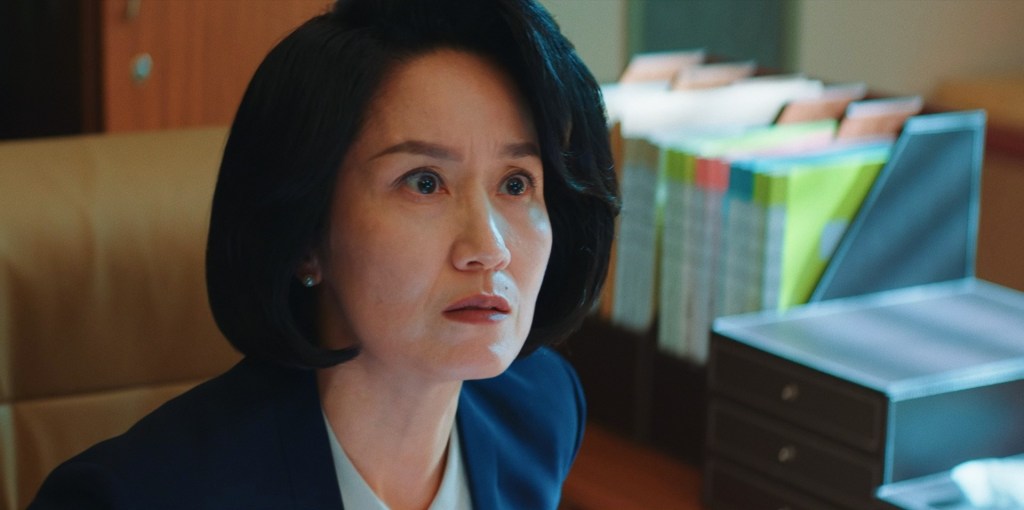
Of course, establishing characters early on, before they’re “activated,” leaves runway not so efficiently used. I hadn’t been frustrated so much as unimpressed by characters like Chairman Kang and Song Ju-ran, with fellow executive Oh Deok-gyu skating by on quirks, as well as actor Kim Hyung-mook’s committed performance. In meetings with important people, he’s sure to punctuate every sentence with a compliment, and he squirms when things aren’t going his way. Hong and Bok-hee’s scheme to buy up his shares is a particular spotlight: he believes he’s getting one over on everybody, and Kim Hyung-mook curls into the dramatic irony with hubristic mania. Chairman Kang’s primary function was to move the plot along, only uttering the protagonist’s name for the first time in the fourteenth episode – a shame, because it’s so fun to say – and Song is either wearing her plastic smile or talking with her gangster henchman over the phone. Not until the thirteenth episode did I see the shades of her character. As part of her plot to collapse Kang’s inner circle, Hong marches into Song’s office with a recording of President Shin plotting against the company with the handsome rep from DK Ventures, his old friend DK Lee. Song here is mostly listening to Hong’s deal-making, running through a gamut of emotions: shock, anger, and being genuinely impressed by the cunning of her nemesis. Already an electric scene for its alliance of enemies, it was a peek behind that plastic smile. So much of her character is left unstated, specifically that she’s a perpetual outsider, living in the royal estate but, as Albert notes, not being family. A live-in maid if anything, standing off to the side while the family’s seated for dinner. Her questionable means of grabbing at power come from a frustrated inertia. She’s waited her turn for years – decades, even.
Song’s other nemesis is Nora’s mom, Choi In-ja, who’s designed to be hateable, the species of rich person who’s more openly parasitic. She didn’t earn anything, doesn’t work, wears fancy clothes, lives vicariously through her daughter, and on and on like that. But I was struck by a small moment, after the disastrous engagement party, when she finds Nora yet again at Dorm #301. She starts freaking out, so Hong steps in, which I assumed would elicit a slap and, subsequently, a slap interception. I’d like to think that Park Shin-hye has graduated from slappee to full-time slapper (where it regards women – she kicks the crap out of dudes, as we’ve found). Nora’s like, “Oh, this is Hong Jang-mi, the one I told you about,” to which In-ja’s reaction isn’t to dig in, but to say, “I’ve been on edge lately.” It’s not a lot, but it’s something. By series’ end, this character might go down in flames with the other bad guys, but that would make a rare shimmer of humanity like this even more meaningful. Moments of goodness aren’t the sole provenance of good people, which is why evil can be so hard to spot.
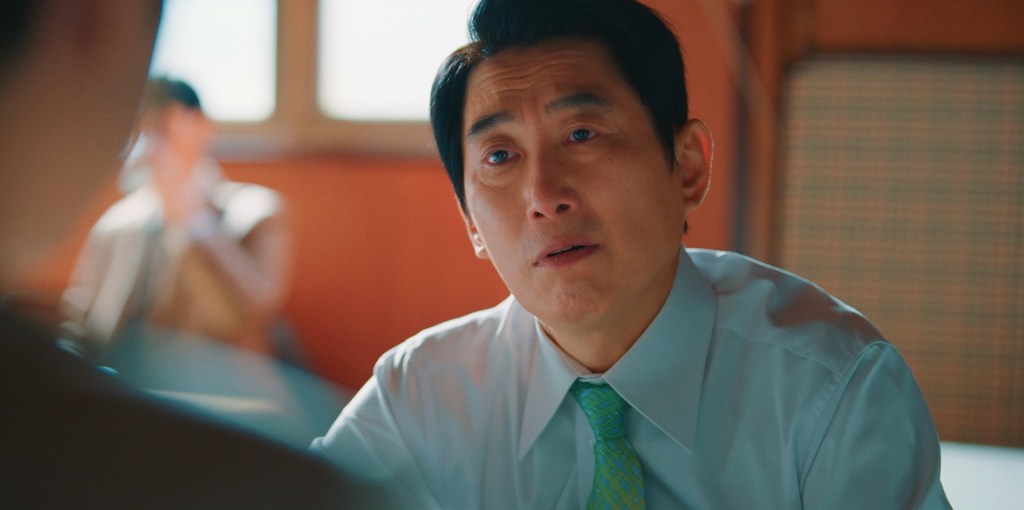
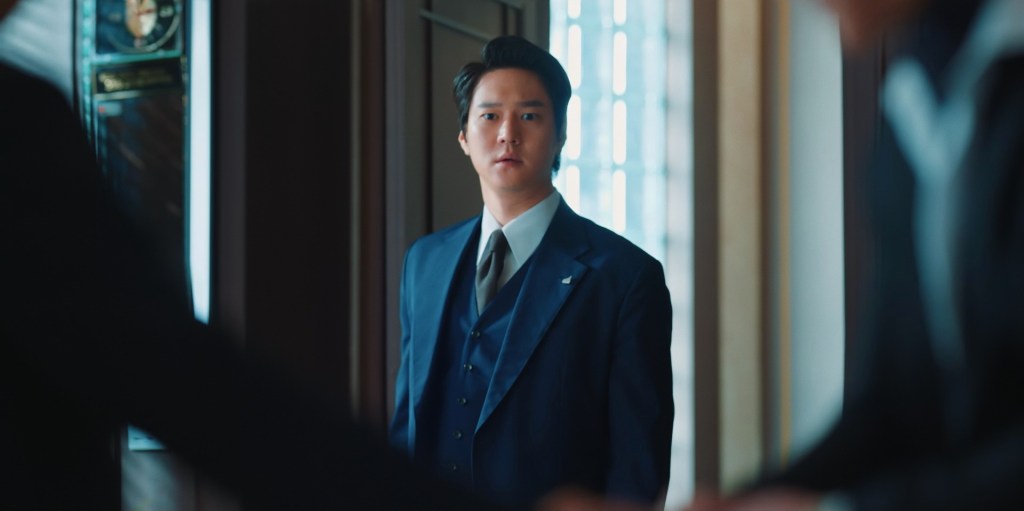
The most astonishing addition to Dorm #301, of course, is ex-president Shin Jung-woo. An exceptionally late activation, with the show’s male lead presenting as a mystery box for so long that Albert of all people is a more eligible candidate. Shin would appear to oppose Hong, inadvertently as president of Hanmin and then consciously once her identity is ascertained (which took a little too long, buddy), in a repeat of his apparent betrayal during her CPA days, which took the engagement rings out of him like Sonic the Hedgehog touching a spike. And yet, Hong’s boss Yun Jae-beom still carries the torch, treating Shin like a son-in-law at meals despite them not being a couple and him not being Hong’s dad. The actual dad is slightly less goofy. Granted, Jae-beom does divulge to Shin, over a lunch date, his own tragic backstory. His younger brother was an accountant at Hanmin under investigation for fraud (there are only two places you can work in Hong‘s South Korea). When he reached out for help, Jae-beom reacted with anger, out of self-preservation, and he’s lived with regret ever since the brother’s suicide. This personal tidbit was intended as a fable regarding Hong Keum-bo, and it does move the stoic giant. Time and again, he’s jumping in to protect her from harm or maintain her cover, but the complicating issue is that doing so has always doubled as self-interest. Is Shin a good guy? Is he a bad guy? It’s not like Hong’s feelings on the matter are clear, though it’s impressive how unreliable her judgment of character can be, as we’ll discuss soon (#Justice4Nora).
Song takes the incriminating recording of Shin to Chairman Kang, who fumes, ever channeling the tight apoplexy of Takeshi Kitano in such moments, then turns to DK Lee with a new offer and plenty of leverage: maintain the deal, but cut Shin loose from both companies. All according to Hong’s plan. And who does Shin encounter during his final descent in the company elevator but Hong, reveling in her revenge nine years in the making. Tactical revenge, too, putting Shin in her position with DK Lee’s heartless betrayal. Still, she acts quickly to recruit him onto the team, as if she’s lobbed a Pokéball at his bruised and broken form. Didn’t even give him enough time to change into sweats and mope around for a while. Unlike Hong, who was dramatically cast onto the street once upon a time, Shin maintains his dignity, even when made to take the blame for the dissolution of his relationship with Nora on the very night of their engagement party. As part of the Yeouido Pirates – the name of the “company” buying up Hanmin shares – he functions as a legal advisor. Things are about to get complicated, so Hong needs him to dot the I’s, though their eerie synchronicity irks Albert, to the point of cat-snarl sound effects, a nice gender subversion. Bok-hee isn’t shy about showing her true, mercenary personality to her former boss, either – Yong-gi is, once again, just happy to be here – making this new company the portrait of a flat structure and possible preview of a captured Hanmin. The old hierarchy has been broken, at least among this expanding group.
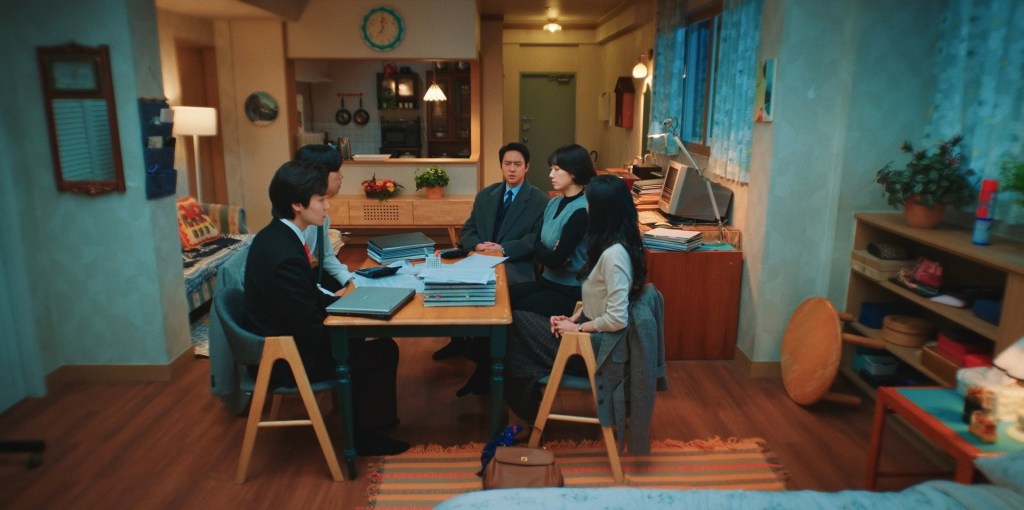
It’s a difficult feeling to describe, and unfortunately, I can only do so with a relatively obscure pop culture reference. When I was a kid, I generally shied away from JRPGs, with a rare exception being Custom Robo for the Nintendo GameCube. After finishing the campaign, a second campaign unlocked, with recycled assets and bizarre, fourth wall-breaking humor. I’d never experienced anything like that; it was like narrative afterlife. Seeing the relationships between characters like Shin, Bok-hee, Albert, and even Nora, so rigidly defined within the halls of Hanmin, now mixed and remixed in Dorm #301 – not sure how they’re slipping by the RA, but they must be, because they have that Walter White mountain of cash in the other room – it’s just so satisfying. It’s almost the stuff of fan-fiction, transposing and imagining what could be, and yet, this is the ultimate design of the show. Forgive me if I’m stuck on this point, but I’m awed by the storytelling mechanics. Despite being shocked that the show was longer than I thought, I now wish it was even longer so we could spend more time in this space.
It’s a different kind of pleasure than the catharsis of romance, and it’s rarer, but not necessarily more powerful. As you can see, I’m in a weird place with the show, and I think it comes down to a single moment. So, Nora, she’s the lovable dummy. Again, she didn’t have much of a driving purpose in the narrative, until In-ja manifested the idea that her daughter should marry then-president Shin, a guy twice Nora’s age– well, height, at least. Apparently, there’s only a seven-year age difference. Shockingly, Albert’s actor, Cho Han-gyeol, is even younger, giving that earlier prospective coupling a twelve-year age gap! Eh, I’ve seen wider. It’s different with a noona romance, you know? Anyway, I gradually came to fear this development between Shin and Nora as it was becoming less of a humorous non-sequitor. The chairman is playing a card he’d held back, and so Nora’s entire existence as a chess piece, to mix metaphors real quick, is realized. Whether she’s being shepherded through the upper levels of Hanmin, going from undercover coffee jockey to director overnight, or dining out with Shin whose heart is obviously elsewhere, Nora is being jammed into places where she does not fit. She’s out of her league in every situation, and painfully aware of it. Unlike climber Oh Deok-gyu, she harbors no illusions about her abilities, in part because she has limited ambitions anyway. That doesn’t mean she has no feelings about it. In glimpses, what we’re seeing is the melancholy of a child growing up.
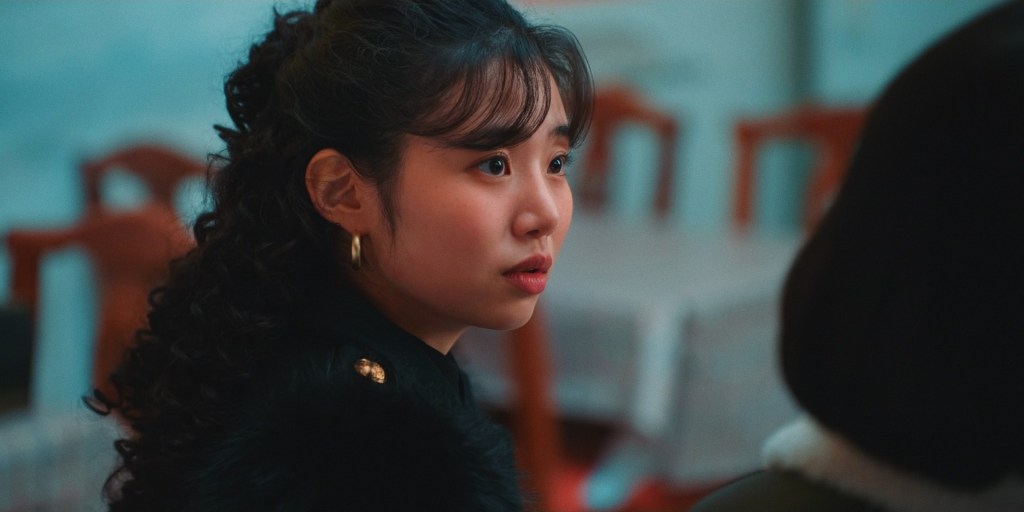
On a date with Shin, she asks him for advice. “Can I go to a birthday party I wasn’t invited to? What if I was invited by a friend who was invited?” Ever the outward gentleman, Shin politely inquires as to when the birthday is, which is Christmas Eve. This surely reminds him of his old flame, given that Hong’s birthday is also on Christmas Eve. He tells Nora that this anonymous ex of his would say that all the Christmas merriment on the streets was like a preview of her birthday. After a curious jump cut from Albert tangling with Bong Dal-su, Song’s henchman, we find Hong, Bok-hee, Nora, and Bom at the party in question. When Hong’s parents are also there, I’m terribly confused who knows what, but that’s okay. Bom suggests doing Christmas carols after Nora’s home videos of #301 include a little too much Mi-sook being conscious, bringing the mood down, so Hong tells Bom the anecdote about Christmas merriment. In one of the show’s simple but beautiful moments, Nora turns her head to Hong, realization dawning as she flashes back through all the clues we learned not five minutes ago. It would be funny if that were on purpose instead of the established grammar of the show, to reinforce how she’s a goldfish, but that’s exactly it. Nora’s obliviousness is a kind of innocence (itself a form of privilege, as Bok-hee the hustler points out). What sharpens the dagger is that Nora also looks up to Hong, and always had, long before she knew the truth. The hardest Nora ever worked in her life was to win the affections of Hong and Queen Bee, so it was already harming me that both were upset with my poor baby, and iced her out after she paid for Mi-sook’s hospital bill with Hanmin blood money.
It was, or so I thought at the time, the arrival of the Other Woman. As much as I love this trope, I especially love when she’s activated as such (Search: WWW) rather than introduced (Doona!). This would’ve been a unique take, given the nature of Hong and Nora’s relationship. The problem is that Undercover Miss Hong has not been about romance, and could finish without it to no ill effect. So while Nora’s journey from that point includes some of the show’s strongest drama, it’s nevertheless a missed opportunity, well-telegraphed. Shin is forced out of the company, and when he calls Nora with the bad news, she only asks that he tell everyone it was her choice before breaking down in tears. Hong and Bok-hee begin to feel like they were too hard on the girl (Bok-hee even having said that Bom never asked about her), and bring her into the conspiracy partway. They need her to fly to Switzerland (or “Swisse,” as it is) to drain her bank account of about $75 million USD. Again and again, her heart is broken and she’s made to face difficult choices which require, for the very first time, her agency. A coming-of-age is better late than never, but this one is viciously fast, no matter how many time-skips.
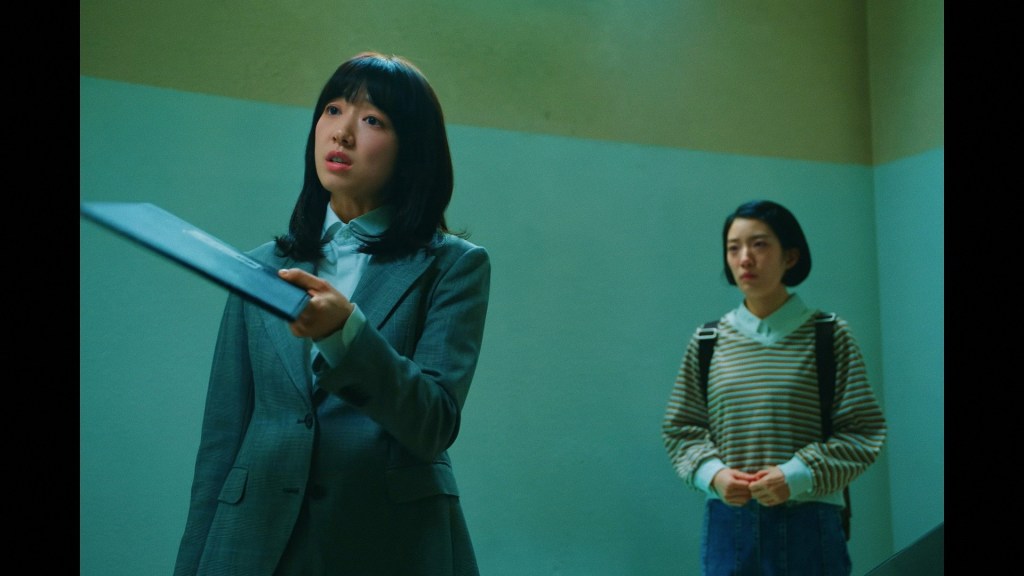
Hong Keum-bo is a properly dimensional character, with charms and flaws alike. As alluded to earlier, one of her curious habits is turning cold on friends, which she’s done twice, with Nora and earlier with Mi-sook. That was one of the big question marks I’d had, when they discovered Bom hiding out in Dorm #301 and Hong was adamant about kicking that child to the curb. Understandably, “Hong Jang-mi” couldn’t allow anything that might rouse suspicion, so I was instead left wondering about Mi-sook’s response to such coldheartedness. This is where we round off our look at the characters and their changing roles, with the one who kickstarted the show’s second arc. After Mi-sook is attacked at her desk by angry customers seeking recompense for the New Korea Fund that went bust – recall that Mi-sook was pressured from the top to upsell, and did so successfully – she hears about potential criminal liability, and knowing that her debts will be passed down to young Bom, gets that glint in her eye and attempts suicide. She leaves behind only two letters: one addressed to the chairman, explaining the extreme workplace pressure, and one for Hong.
In the hospital where Mi-sook lays comatose, Hong reads the letter which reveals that of everyone who’d come to learn her true identity, Mi-sook was the first, and she knew immediately. The diligent office worker’s first job was at Hong’s accounting firm, where the future Witch from Yeouido was indifferent to her, but protected her from a male superior’s advances by repeatedly smashing the guy over the head with a binder. All around, a great episode for Park Shin-hye issuing threats to people, as it’s also where Cha Jung-il cries, “You can’t talk to me that way!” because they’re not equals in the workplace or whatever, and Hong responds that if they were, he’d be crushed under her feet. Wow. I don’t remember if that was before or after she beat him up. Before, probably. Mi-sook had looked up to Hong ever since, and was even there the day of her unjust termination. Seeing her again outside of Dorm #301, with a different name and style, she decided to keep the secret – and her knowledge of it. Going back and reviewing that scene at the end of the first episode, it happened just as described so many episodes later. The actress Kang Chae-young reacts with shock, like she’s seeing Hong Keum-bo for the first time in nine years, and we might’ve chalked that up to the first-day nerves of a generally nervous character.
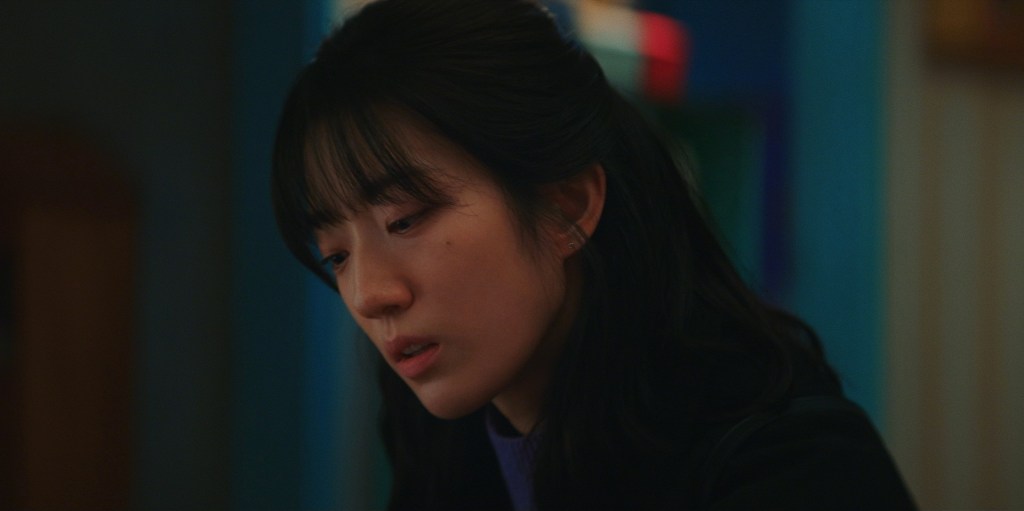
This is another plot development that landed with dramatic weight and is, in my experience, classical. From the very beginning, I marveled at how brazen these shows could be with coincidence. What are the odds that these two people would end up working at the same company again, at the same time, and be assigned to the same dorm? And in all that time, I never really found a way to rationalize it beyond a cheat that nevertheless succeeds. In this case, one character’s tragedy might simply be the main character’s new motivation, but we see how much Mi-sook’s fate ripples out to the village that’s formed around her and Bom. It’s more complicated than, say, a “fridging,” and certainly nothing is gained by the prospect of her death. I couldn’t wait for her to regain consciousness, because so much of the world had changed. And maybe anticlimactically, one of the first things she does upon waking is go back to work. Amidst the not-veiled gossip of her coworkers, who assume she won a big payout from the company, she sits at the very desk where she was assaulted by customers and begins to crumble under traumatic flashbacks until Hong shows up to make a massive cash deposit, saving the day once again. In this way, Mi-sook is a counterpoint to the central fantasy of the show. Not everyone can “win” in life like the protagonist of a K-drama. For most of us, no matter what happens, we have to go to work.
Where do we go from here? We leave episode fourteen with Chairman Kang aware of Hong’s scheme, vowing retribution with a telling line: “You were foolish enough to steal what belongs to me.” Something that maybe shouldn’t be shocking is the show’s amenable approach to socioeconomics. Maybe we’re not working in the gritty realities of Parasite or Squid Game, but proletariat anger is, like, coded into Korean DNA. How could Chairman Kang possibly believe that he earned his wealth when Hanmin is built on exploitative labor practices, which nearly took Mi-sook’s life, not to mention outright murder – earning this show Netflix’s “fear” content advisory. There are rich people hopelessly disconnected from the world and there are circling vultures like DK Lee, and then there are the communities which form to oppose them. In addition to, you know, Custom Robo, I’ve also been thinking about the American remake of The Office, which was forced to romanticize the workplace once it stretched into multiple seasons beyond its expiration. Is Undercover Miss Hong doing the same thing, with Hong working to save instead of destroy the company? Who cares about one’s fellow employees? We know that the people you work with are not your family, but like Mi-sook, you still have to work. Why not make the most of it?
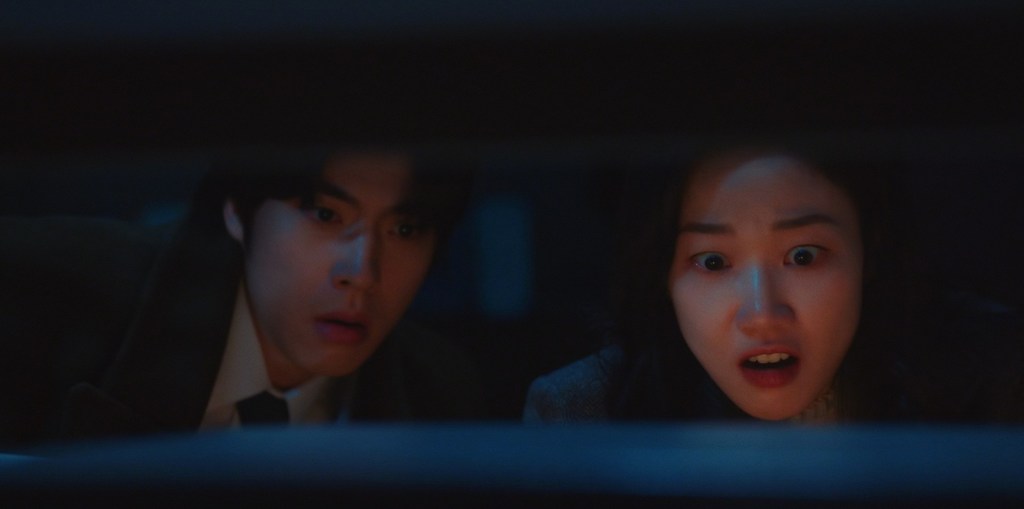
In terms of evaluating Undercover Miss Hong as one of the greats – as it has been, so far, great – another part of my [mild] reservation comes from its lack of iconography. This is the difference between something that’s perfect and something that’s special. We’ll remember Squid Game for a long time, but wow, was that show imperfect. I’m in love with Park Gyu-young’s Soldier 011, but her arc was so rudimentary? It’s the surreal, dollhouse sets and ultraviolence and Lee Jung-jae’s Emmy-winning performance: unique elements that sit on the part of the tongue that constitutes “word of mouth.” (I also think about how much I heard about Game of Thrones before ever watching it, like “crown for a king” and Ned’s death, where I couldn’t tell you anything about The Wheel of Time, despite having watched an entire episode). It’s an X factor, and unfortunately, nothing that’s happened so far in Undercover Miss Hong is new or different. I’ve seen period pieces set during the IMF Crisis before, as well as a group of young women living in a dorm and an undercover agent hiding her identity and ex-lovers crossing paths at a dramatic moment in their lives. I’ve seen Park Shin-hye lay the smackdown before – but more of that, please, always. It’s the scary thing about storytelling, that you can do everything right and still forget the salt. The pieces are in place – meticulously positioned – for a blowaway finale, so I’m hopeful.
Special thanks to Yuna for appearing in this blog post
For coverage of episodes #15-16, read on for the next K-Drama Report…
 With Eyes East