K-Drama Report: Bon Appétit, Your Majesty, Part III

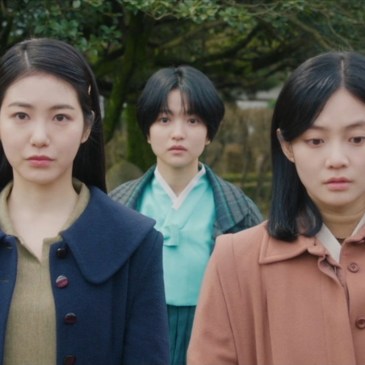
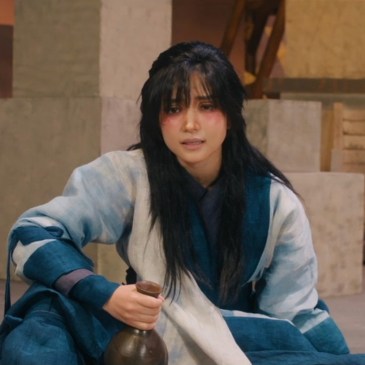
My girl almost got away with it, too. I know, you can’t have everything. Or can you? This is the funny thing about K-dramas, that the endings are so critical, it adds an extra layer of tension to the viewing. “Please don’t screw it all up!” It makes sense, though. Because K-dramas are, by default, limited to one season, there’s an actual expectation of a narrative conclusion, unlike in American television (where shows are either canceled prematurely or go on so long they drift off into incoherence). Thematically, there’s also an aspect of wish fulfillment. A show like Bon Appétit, Your Majesty is a romantic fantasy following the template of countless fantasies before it. We know all the beats – and we anticipate them – so laid down and preserved for their dramatic potential. Without a doubt, one of those beats is the officiation of the romance, however that takes shape (I don’t even have the term for it). The audience proxy, in this case Royal Chef Ji-yeong, lives this fantasy of winning over the palace one-by-one with her masterful cooking skills, including the scary-sexy King Yi Heon, with whom she eventually falls in love. Why shouldn’t she be able to hold onto that love, too? … More K-Drama Report: Bon Appétit, Your Majesty, Part III

K-Drama Report: Bon Appétit, Your Majesty, Part II

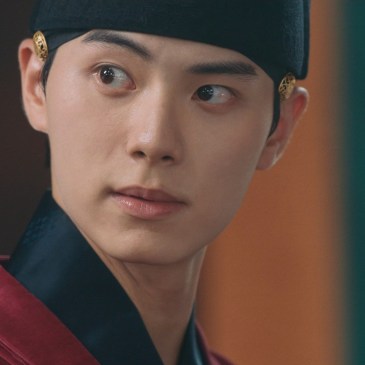
In its second act, Bon Appétit, Your Majesty levels up from good to great to excellent at blistering speed, centered around the latest challenge for royal chef Ji-yeong: a competition against legendary Chinese cooks to decide Joseon’s fate with the Ming dynasty. At the start, I worried the show would adopt a “dish of the week” structure, with Ji-yeong making food for King Yi Heon alone until they eventually fell in love. How would they make that interesting each time? Instead, we have this latest contest which animates the entire palace, setting conspiracies into motion and raising the stakes to the level of national consequence. The Ming envoy, Director Yu Kun, walks with the authority of his emperor, turning each exchange with the Joseon king into a careful game of feints and doublespeak. The contest itself occupies two episodes – contained almost entirely to one location – with two additional episodes of build-up. It’s remarkable, and I’ll just say now that I can’t remember the last time a K-drama made me cry like Bon Appétit’s ninth episode, with the contest’s surprising climax. … More K-Drama Report: Bon Appétit, Your Majesty, Part II

K-Drama Report: Bon Appétit, Your Majesty (2025)

Finally. You know, Yoona’s an interesting case. I’ve previously discussed how she’s this deific figure in hallyu but often plays the most mundane characters in K-dramas (faring a bit better in film, by all appearances). She takes us behind the scenes of these shows on her YouTube channel and she’s so enthusiastic, and I wish I could be, too. I really do. Unfortunately, it’s gotten to the point where Yoona’s not a selling point anymore. On one hand, she’s drawn to these safe, relatively unchallenging roles, but on the other, I don’t know if I’d be comfortable with her unsafe, thrown into the deep end of Korean movies and TV. Take Lim Ji-yeon, for example, who’s had a five-star career and now everyone knows she’s a brilliant actress, but Christ, does she get her ass kicked. She plays an abused wife in Lies Hidden in My Garden and a runaway slave in The Tale of Lady Ok. Award-nominated performances, but it’s too much for me to handle. The price of being a badass, really. A badass woman, mind you; no price for guys. Oh, I’m so nervous for my sweet baby Shasha in Project Y. I’d much rather watch Yoona in a reality show like Hyori’s Homestay or any old Girls’ Generation content, where we also see her actual, though still guarded, personality. … More K-Drama Report: Bon Appétit, Your Majesty (2025)

Palace-Minded Man | Uprising (2024) Review

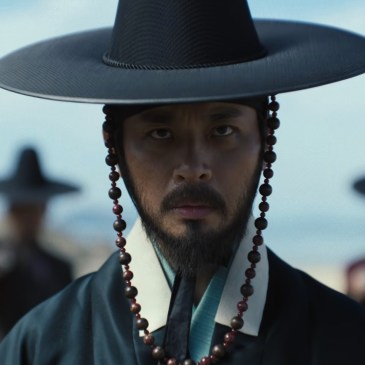
The 2024 historical epic Uprising is about two things: the Japanese killing Koreans, and Koreans killing Koreans. This is literally the experience in an early sequence of two cross-cut battles, when Toyotomi Hideyoshi’s samurai advance beyond the Han River in the first invasion of the Imjin War, and the hungry Joseon masses turn on the fleeing King Seonjo (who Wikipedia notes shouldn’t be confused with Sejong the Great). Fans of the recent Shogun will remember Hideyoshi as the taiko whose death incites the feudal struggle for power, briefly embodied as “Nakamura Hidetoshi” by my man Yukijirô Hotaru, of Zeiram (and not actually featured in Uprising). Apparently, this guy was trying to take Korea all the way till his consequential death in 1598. And fans of Netflix’s Kingdom will remember the Imjin War, the historical backdrop to that tragically short-lived zombie masterpiece. Well, rejoice for now, as Uprising shares the same brutal world of beheadings, cannibals, and funny hats – stopping short at zombies, of course, but not before outrageous political corruption. It’s a timely tale of ancient revolution against a cruel aristocracy. … More Palace-Minded Man | Uprising (2024) Review

Thespian Equestrian | Ran (1985) Review

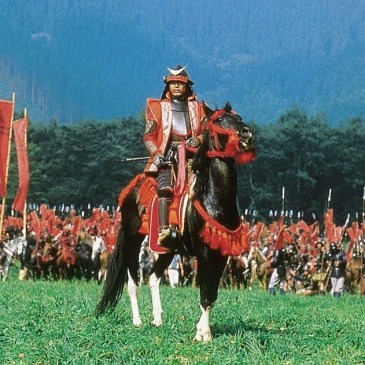
The horses and the horse riders are put through the wringer in Ran, the final epic of Akira Kurosawa and perhaps his greatest film. I saw horses struggling through water coming up to their necks, soldiers falling off horses, and horses just about to trample a soldier who fell off his horse. It’s a movie entitled “Chaos,” after all! And, well, that’s about as fresh an angle I can manage for this or any Kurosawa title, the director being so widely studied and appreciated. Of course, I’ve come into this one for the first time nearing the age of 30, long after film school let out. I have nothing to add to the conversation, so take this review on a humble blog as a missive – delivered by horseback – that I’d like the conversation to continue. … More Thespian Equestrian | Ran (1985) Review

Battle of the Warrior Queens Part II

Something that strikes me is the notion of international law as it pertains to imperial conquest, that you have to contrive a legal basis for something morally illegal. The British East India Company wouldn’t annex Jhansi unless Rani Lakshmibai’s heir was considered illegitimate. But why? Were they worried about a rebellion? Either way, I think that speaks to the time, the mid-19th century — that even empires were run by gentlemen, and that’s either inherently contradictory, or more true than they realized. But first, I think a recap is in order. … More Battle of the Warrior Queens Part II