Palace-Minded Man | Uprising (2024) Review

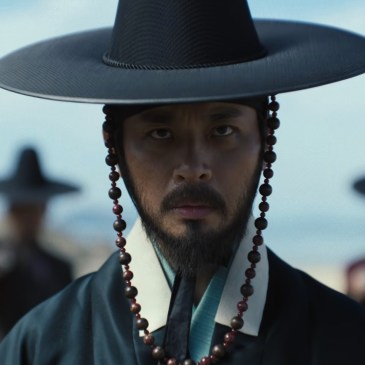
The 2024 historical epic Uprising is about two things: the Japanese killing Koreans, and Koreans killing Koreans. This is literally the experience in an early sequence of two cross-cut battles, when Toyotomi Hideyoshi’s samurai advance beyond the Han River in the first invasion of the Imjin War, and the hungry Joseon masses turn on the fleeing King Seonjo (who Wikipedia notes shouldn’t be confused with Sejong the Great). Fans of the recent Shogun will remember Hideyoshi as the taiko whose death incites the feudal struggle for power, briefly embodied as “Nakamura Hidetoshi” by my man Yukijirô Hotaru, of Zeiram (and not actually featured in Uprising). Apparently, this guy was trying to take Korea all the way till his consequential death in 1598. And fans of Netflix’s Kingdom will remember the Imjin War, the historical backdrop to that tragically short-lived zombie masterpiece. Well, rejoice for now, as Uprising shares the same brutal world of beheadings, cannibals, and funny hats – stopping short at zombies, of course, but not before outrageous political corruption. It’s a timely tale of ancient revolution against a cruel aristocracy. … More Palace-Minded Man | Uprising (2024) Review

‘Hallyu! The Korean Wave’ at the Boston Museum of Fine Arts

Today, my mom and I made the perilous trek into the city to visit the hallyu exhibit at the Boston Museum of Fine Arts. From the official website, “Today, South Korea is a cultural superpower—a global trendsetter producing award-winning films like Parasite, riveting dramas like Squid Game, and chart-topping music by K-pop groups such as BTS and BLACKPINK. But behind the country’s meteoric rise to the world stage—a phenomenon known as the Korean Wave, or hallyu—is the story of remarkable resilience and innovation.” … More ‘Hallyu! The Korean Wave’ at the Boston Museum of Fine Arts

Give Me My Turtle Back! | Decision to Leave (2022) Review

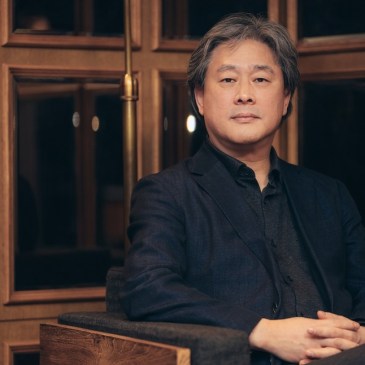
Decision to Leave is South Korea’s submission for the American Oscars, and it is, in no way, an Oscar contender. It is not an event film, it is not an issues movie, it’s not based on a book. And yet, Park won Best Director at Cannes, and I can see why. His actors, Tang Wei and Park Hae-il, are electric and lived-in, respectively. His touch with film language is delicate but precise. The way he plays with time and space can only be described as “masterful,” in the sense that he becomes like a god of time and space. We see the flash of an image, and moments later, that image is contextualized, shepherding us through the story with a proper disorientation. In fact, we’re being oriented toward puzzle-solving. You could put a crumpled paper bag in front of Park Chan-wook, and he’d shoot it the one way that would make you feel something. If one of his films happens to be emotionally bereft, more fascinated by than curious about human nature, it must have been a choice. … More Give Me My Turtle Back! | Decision to Leave (2022) Review

Genre Evolution [VLOG]

Trying something new — forgoing video essays for something far more specific: Kermode Uncut? Not a flattering comparison for me, but I just like the structure of those videos. I just have to work on cutting down on the chitchat and, you know, video quality.

Comeback Year

This year, long-gestating Tokyo Vice finally came out (though tainted by one very bad actor), we have a new Michelle Yeoh movie that people are flipping out about, Robert Eggers made the best genre flip — horror to action — and I’ve already spoken thousands of words to Kwon Do-eun’s return with Twenty-Five Twenty-One. But even without all these neat TV shows and movies already released, there’s a lot to come for cinema-goers (however you go — I’ve not been to the theater since Birds of Prey). … More Comeback Year

Three the Korean Way (Why Revenge?)

Gosh, I remember — and don’t you dare deny that this happened — I remember when Parasite was at the height of its celebration, and one of the ideas floating around online was that Korean cinema isn’t only defined by violence and revenge. And if you look, a lot of the blockbusters of the past few years were romantic-comedies or historical dramas. However, my experience with Korean film is absolutely defined by violence and revenge. That’s how it was marketed, that’s what got me interested. So consider this a disproportionate response to something I saw on Twitter a year ago. I think Korean revenge is important. And today, I want to explore three of its examples and ask the question that bubbles at the edges of your mind while in the throes of these films: why? That scurrilous online claim had to come from somewhere — why is there so much Korean revenge? And should revenge define the nation’s cinema? … More Three the Korean Way (Why Revenge?)