The year draws to a close, and everyone’s in the ranking mood. What an offense to art, but it is irresistible. My top ten this year is more like a top 23, only because I actually watched a ton of contemporary releases. At some point, the list goes from “bad” to “good,” so I’ll let you determine when, on this, a ranking of every new movie I saw this year.
Before we start, here are some titles I sorely missed: Maxxxine, Evil Does Not Exist, Anora, The Killer, The Substance (I’m gonna have to really psych myself up for that one). But boy, did I ever watch–
#23) Drive-Away Dolls

I was excited for Drive-Away Dolls when I first heard about it – due in no small part to a massive crush on Margaret Qualley – but just as quickly, I heard it was terrible! That boggled my mind. How could a movie like this be bad? Well, if Drive-Away Dolls has a leading, maybe “thesis” flaw, it’s that the script is too writerly. Characters talk about words, correcting each other on diction and grammar and it’s just like, man, people don’t do that. I could sit here and try to tell you that this is symptomatic of a self-conscious screenwriting process, but mostly, it’s just distracting. More to the point, this is a pretty uneventful, surprisingly low-stakes “caper” with two leads who share basically no chemistry.
#22) Under Paris

There’s something almost indescribable about the visual quality of a Netflix original – something I first noticed during the opening scene of the show Hellbound – where it’s very bright and colorful and therefore immediate and therefore uncinematic. Like, this is “movies in the digital age,” or something. I don’t know. Sharks?
#21) Godzilla X Kong: The New Empire

No country miles here, but this is the best American Godzilla movie, edging out the bloated 1998 disaster flick. In the sharpest move yet for the franchise, the marvelous Rebecca Hall takes center stage, and this time, the monster fights actually have sufficient narrative pretext. For example, there’s a new villain threatening the world, so King Kong goes to Godzilla for help. As we know, Godzilla is fiercely territorial, so the two classic monsters have a backyard wrestle. Sounds simple, but it took how many movies to get here?
I’d love to never talk about the Legendary MonsterVerse again, but with Amber Midthunder joining the cast of the TV show’s second season, well… go, go Godzilla.
#20) A Quiet Place: Day One

A surprising step down from the first two horror-thrillers – which are really good movies and I never remember that – this is an even smaller-scale story despite the enormity of the setting: apocalyptic New York City. No standout set piece or even the trademark nerve-racking suspense. Kind of a head-scratcher all around.
#19) I Saw the TV Glow

At times moving but mostly unengaging, this is a thunderbolt from another dimension, or more specifically, ambassador work from an urgently important perspective. It’s like a version of The Matrix at once more literal and obscure. There’s no metaphor couched in genre, or any traditional grappling with existing film language. Instead, I Saw the TV Glow disrupts that language to induce a dreadful feeling, one which perfectly aligns with stories I’ve read about and even heard from LGBTQ+ friends over the years, right down to the haunted childhood home.
#18) Late Night with the Devil
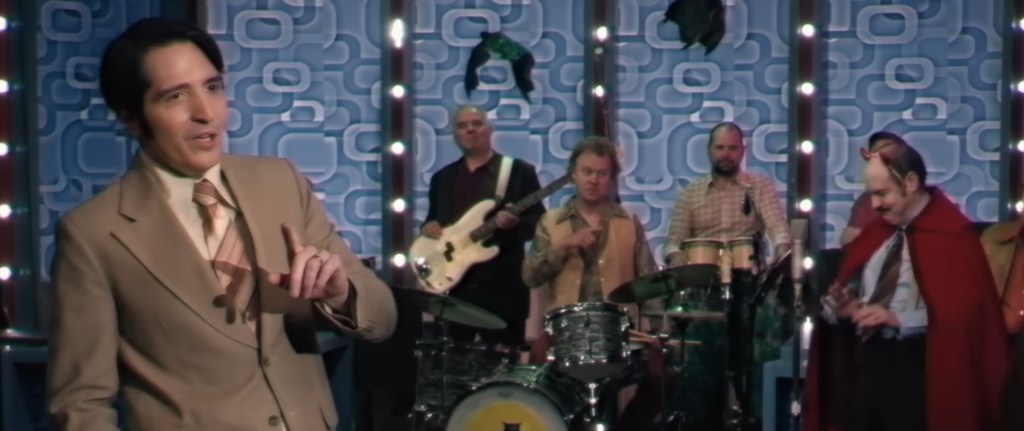
Like anyone who’s been watching Denis Villeneuve movies over the past few years (everybody), I’ve been waiting for David Dastmalchian in a lead role. This would seem to be the project of Late Night with the Devil, which offers him an irresistibly meaty character: the host of a ‘70s late-night talk show on a night when supernatural things happen. To no surprise at all, Dastmalchian is fantastic – funny, tragic, authentic – but beyond the eerie atmosphere, there isn’t much more going on. Still worth a look if you’re tickled by the premise.
#17) Woman of the Hour
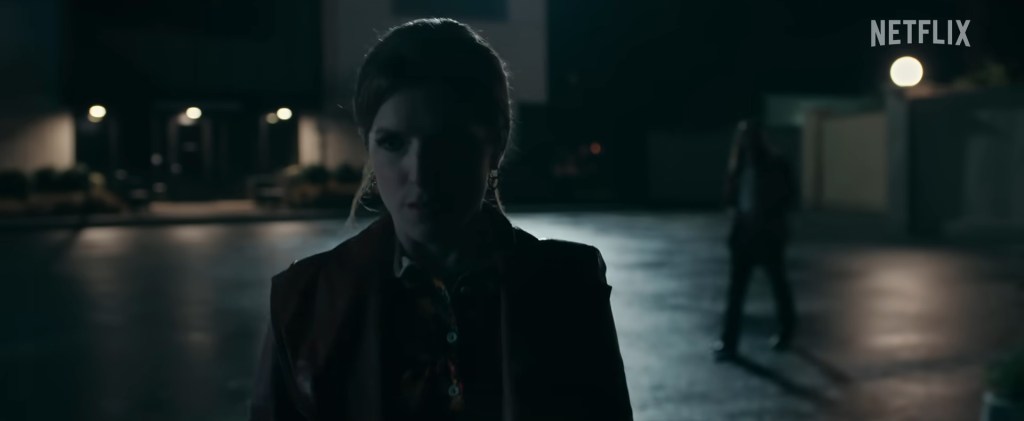
This is the first movie I watched after the election. It was brutal.
#16) Carry-On

A little bit of Die Hard, a little bit of Collateral, with enough Jason Bateman to offset a somewhat fussy script, Carry-On is the perfect “number-one Netflix movie.”
#15) Conclave

Like a later entry on this list, Conclave is a procedural with actual procedure, and that’s a breath of fresh air, like opening the doors to an ancient, marble Vatican room filled with crusty, scheming old men. This is actually the last chronological movie I saw this year, so I haven’t had much time to sit with it, but at this moment, I’m not sure it holds up to belabored scrutiny, whether its murky thematic statement on gender or its function as a detective story. Its clinical approach to the cardinals and their world also perforates any emotional affect, where scenes are sometimes bookended by compelling imagery – a parade of umbrellas shot from above – which nonetheless feels alien. But it’s Ralph Fiennes, who’s, if you’ll allow, a God-tier actor.
#14) In a Violent Nature

I need to see this one again, I think. I was pretty excited for “slasher from the slasher’s perspective,” but I was not picking up what it was putting down (severed heads, limbs). It wasn’t until listening to the Dead Meat podcast episode about it, where they argue that everything’s purposeful – even the stilted acting. This is an extremely violent horror movie, but it’s also kind of a parody. I didn’t find it comedic in the moment, but I can appreciate the intent. Like, if Jason is stalking the horny teens for an hour and a half, there’s gonna be a lot of downtime. And when he gets his undead hands on a victim, he’s gonna make it count, because he must be bored out of his mind. Still, a study of boredom skirts the edge of actual boredom, so your mileage may vary.
#13) Furiosa: A Mad Max Saga

Like this year’s Quiet Place entry, this “Mad Max Saga” is surprisingly low-key. In a runtime stretching toward two and a half hours, there are only two big set pieces on the scale of Fury Road, which was a long string of increasingly insane action scenes. But I have a complicated history with Fury Road, and found Furiosa to be much more palatable. In the final calculus, this makes for a solid outing in mainstream cinema’s strangest corner, putting it somewhere on the highway between Beyond Thunderdome and The Road Warrior.
Furiosa does feature my quote of the year, movie edition, which is “You make me the Dark Dementus.”
#12) Gladiator II

The original Gladiator – what a world where we utter such a phrase – is the ultimate man movie, as well as, for a movie about ancient Rome with British accents, the ultimate American movie. It’s about simplifying the complexities of imperial politics with a sword stroke, that all you need to determine the fate of a nation is to be the biggest possible badass. Unless, of course, forces far beyond your control decide to delay said fate for a beat-for-beat copy of the original story.
My attitude going into Gladiator II was “I can’t believe this movie even exists,” so how could I have expectations for it? This attitude carried me through the film, and it wasn’t until later that I’d felt had. It remains a qualified feeling; I may have just paid to watch Gladiator twice, but how many times have I seen it for free? The first time might have been in school! No, if I feel ripped off in any way, it is precisely for what I’m about to describe.
So, yes, Gladiator II is a carbon copy, with the only major wrinkle being the villain. We have the opening battle scene, then our hero is taken into slavery and made to fight, he excels in the arena, people start to take notice, there’s talk of retaking Rome (for the dream that is Rome), and we end on a final one-on-one. The night before I saw Gladiator II, I rewatched the original – with my dad, who was surprised by the limited bloodshed – and I had a thought that while I knew the coup attempt was going to fail, it would be cool to see. In fact, it’s something a sequel could do.
In between “talk of retaking Rome” and “final one-on-one” on our outline for both films is “coup plot thwarted.” Only, in Gladiator II, an actual army rides out and reaches the gates of the city. I’d say we’ve made incremental progress these past decades. Holding out hope for Gladiator III.
#11) Juror #2
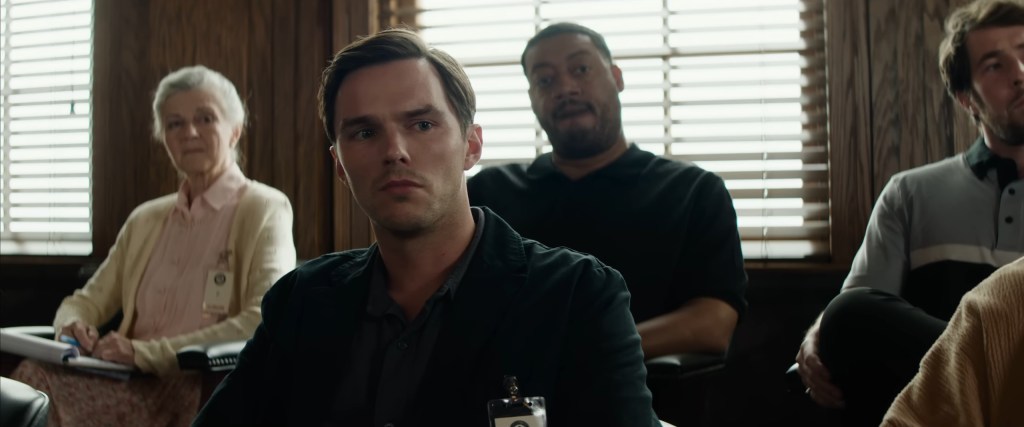
A guy finds himself sitting on the jury of a homicide case where, in fact, he might be responsible. This is a pretty rare high-concept thriller – “thriller” applied lightly – I mean, it’s got “remake of an award-winning French movie” written all over it. The guy in question is an expectant father, and that’s pretty much all we know about him. He doesn’t turn out to be a criminal mastermind or possess a set of skills, making this less of a “ha-ha” thriller than a morality play, or maybe a deconstruction of American justice? There’s an interesting scene in the jury room where a simple hypothetical is posed to a combative gentleman who effectively replies, “You’re right. I have changed my mind.”
Juror #2 was directed by a man in his mid-90s, so a lot of the critical appraisal is understandably colored by the possibility that it’s his last word. The man is Clint Eastwood, of course, one of the great directors who won’t be remembered as such only because he’s an overall cinema legend. I know, he did that thing with the chair at the RNC, and most of his movies are like an inverse of David Lynch’s thematic preoccupation – a white man in trouble – but if directors like Eastwood aren’t making movies for white people, they apparently flock to Taylor Sheridan.
So, if there’s anything being said with Juror #2, I think it’s something to do with how quickly that combative gentleman came around. This is a fantasy where considered dialogue can rewire minds toward collective good. The system is fully exposed, via the magic of screenwriting contrivance, but justice ultimately prevails. In retrospect, I’m not sure why it did, because if the movie had ended five minutes earlier, it would’ve been truer to the nonexistent French original.
#10) Trap

In modern Internet parlance, Trap being in the actual top ten is a wild choice. But I’m a sucker for the high concept, the movie sold on an intriguing premise rather than being part of a franchise or having star power – though certainly, Trap is part of the “Josh Hartnett renaissance.” It’s also M. Night Shyamalan in his meme era, after the persuasive drama of his early films and the high-profile downturn in the late 2000s. Now it’s all dumb fun, I guess, and at least for Trap, that’s fine. I thought this movie was a lot of fun, and it’s one of the easier recommendations in what’s turned out to be an artier, more eclectic movie year than I realized. It’s all the “how is he gonna get away with this one?” thrills of Dexter, with the same violation of one’s suspension of disbelief. That’s an obvious bugaboo for some movie-goers, but I only balked at the very, very end. And I was actually quite charmed by Saleka Night Shyamalan’s performance(s).
#9) Monkey Man

Apparently, 2024 is also the year of actors making unexpected directorial debuts. Granted, someone like Clint Eastwood waited a while before directing a western, but it looks like Anna Kendrick only starred in one psychological thriller before directing Woman of the Hour, and as far as Dev Patel goes – action movie? That’s pretty cool, man! Monkey Man is a real bruiser, with influences beyond John Wick and its imitators. It’s also surprisingly heartfelt, when hearts aren’t being stabbed repeatedly or what have you.
#8) Rebel Ridge

This was not what I expected, based on the trailer which I watched a day before the film’s release on Netflix. Immediately hooked by the “one man comes to town” First Blood setup and the piercing gaze of leading man Aaron Pierre, I also knew of the director’s reputation (despite not having seen any of his movies). Jeremy Saulnier’s previous, Green Room, is renowned for its violence, so I figured Rebel Ridge would be a bloodbath. Instead, it’s an exercise in “competence porn,” a kind of procedural for people who actually like procedure, and aren’t zonked out on the couch watching CBS primetime.
#7) Love Lies Bleeding

I don’t know if I Saw the TV Glow will prove to be Justice Smith’s long-awaited breakout role, and I’m terrified that not enough people saw Katy M. O’Brien’s massive delts in Love Lies Bleeding. Like one of those ‘90s thrillers – Thelma & Louise, Bound, The Last Seduction – but absolutely unencumbered by the milquetoast sensibilities of the era, I suppose this is the best possible expression of the phrase “girls gone wild.” At the same time, there is something held back, whether a reluctance to go too deep on the body horror or even a full commitment to the central romance. I’d say it compares to a thriller like 2018’s Widows? It’s good, and I can’t wait to see what O’Brien does next.
#6) Nosferatu
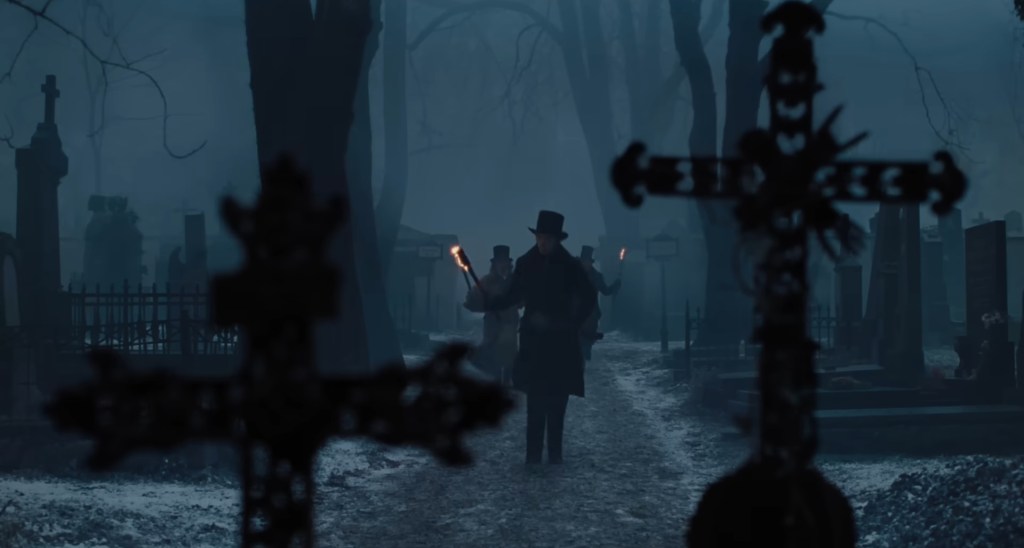
A passion project by one of today’s most exciting filmmakers, Nosferatu was a mustache-see. Despite a negative theatre experience with an audibly impatient (and remarkably clumsy?) audience, I was nonetheless able to sink into the Gothic atmosphere with its gorgeous period detail and Shakespearean dialogue: “What, no mug of ale for a weary traveler from distant Coorhagen? I can reward you well, for I am of noble blood.” “I stay open for no man in these dark times. Things come with the night that no sane man would welcome.” Anyway, the actors are all game, like Eggers favorites Willem Dafoe and Ralph Ineson, and I was especially impressed by Aaron Taylor-Johnson, who I only remember as “the exceptionally boring guy from the 2014 Godzilla.” Then of course there’s Bill Skarsgard as Count Orlok, with a performance far from redundant with Pennywise, and a deeply committed – physical, spastic, rabid – Lily-Rose Depp.
A scary vampire movie is hard even theoretically, because we’ve known about these guys for hundreds of years and have dealt with them accordingly. What makes Orlok scary is certainly his physical presence, but also his unknowable supernatural powers – which are not to, like, zoom around real fast like in The Vampire Diaries. This is more about reducing people to jibbering madness and entering dreams. There’s plague imagery and village rituals and allusions to ancient nobility. It’s great stuff – and also, slow as a carriage ride up a Transylvanian mountain. A little drawn out, which is just another way of saying “artistically self-indulgent.” Like, I wouldn’t want this movie to be faster or more comfortable for me if it means Eggers wasn’t having the time of his life making it. That’s what I came to see: his dream movie. Other considerations are kind of secondary.
So, in the theatre, I was sitting next to a guy who was breathing loudly and even snoring, and he was sitting next to his wife who dropped a bag of popcorn (“[Inaudible name] knocked it over,” she says) and a cell phone, and spent much of the movie bent over groping for items on the floor. I have a feeling I’ll like this movie better when I can watch it alone.
#5) Alien: Romulus

Alien: Romulus was my most anticipated movie of the year, and it didn’t disappoint. For whatever reason, though, I find I have nothing to say about it. I liked it a lot, and it was a great, intense experience in the theatre, as this Alien movie pulls the biggest surprise of all: it’s genuinely scary. Like, pee-your-pants scary, and if you haven’t seen it, you’ll be watching it for two hours being like, “What was he talking about?” and then it appears.
#4) The Shadow Strays
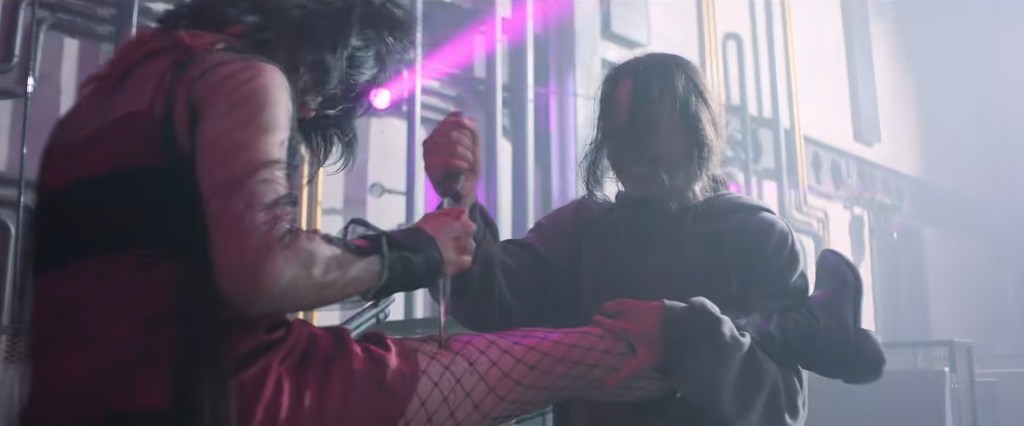
One of the titles I keep coming back to on With Eyes East and just in general is The Night Comes for Us, which was revelatory. That movie was not only the premier showcase for Joe Taslim, but it properly introduced me to Julie Estelle, who I immediately heralded as the “future of action cinema,” only for her to do one more action movie and then basically retire. It’s been heartbreaking these past few years, watching her get married, have a child, enjoy her life – I mean, she was so cool in The Night Comes for Us. That’s my dream woman right there.
I made a whole video about it, and actually, she ended up seeing that video, because the director of The Night Comes for Us sent it to her, Timo Tjahjanto, and I felt terrible because not once did I even mention his name. So he’s back this year with a movie like The Night Comes for Us, another big, bloody martial arts epic. In the leadup, what was especially exciting was that this was gonna be a female-led action movie. And usually, those words fill me with enough trepidation that I never end up seeing a lot of the American action movies that have come out recently, with whichever actress, but I knew this would be different. This guy gets it. He gets it more than I get it, and this is literally my whole personality. It’s the only thing about me.
Like with The Night Comes for Us, this movie builds a world with lore and factions and bizarre characters, like a gangster who wears a gimp mask, and all sorts of ninja samurai guys. I know we’ve probably soured a little bit on action world-building post-John Wick, because it’s so trendy, but when done right, it just means there’s attention paid to visual iconography, that the costumes and production design will have gone through rounds of concepting. Unfortunately, and when compared to The Night Comes for Us and especially The Raid 2, The Shadow Strays doesn’t look great. It’s got kind of a flat, muddy affect, and I was severely disappointed that the heroine, for most of the runtime, wears a grey hoodie sweatshirt. Often impractical, we love movie armor because it looks cool.
But that’s literally the only thing she’s missing, because she is crazzzy (love her!). Aurora Ribero is the actress’s name, she was 19 when she shot this. Super fast, super brutal, and angry – a very important ingredient often missing. And the whole movie is like that. Very aggressive, nonstop action, moving from set piece to set piece with invention. Tjahjanto has thought through every inch of every location, every movement of the choreography, and every household item that could double as a piercing weapon in some new, terrible part of the body.
So, it’s pretty much what you’d expect. If you’re an action fan looking for something harder-hitting than the average American fare – John Wick included – Tjahjanto is pretty much the ceiling, I’ve found. Still mourning the Julie Estelle sequel to The Night Comes for Us, but this has certainly made that loss a little easier to bear.
#3) The Promised Land
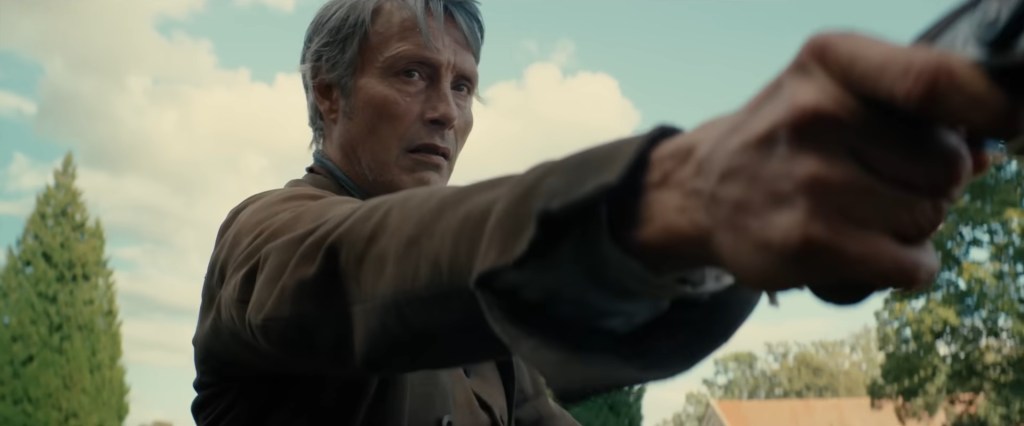
I don’t think anyone’s ever uttered “For fans of 2018’s The Nightingale…” but there you have it. This is a violent, dour historical drama led by an indomitable Mads Mikkelsen, who’s ventured into a Danish wasteland to cultivate the soil. It sounds like a man vs. nature situation, but I like to think of it as a revenge movie where 90% is setup to the inciting incident. Our silent, badass hero spends the movie gradually building up a plot of land, and soon a community, and finally a family, and so when those are taken away from him, there’s gonna be hell to pay. If it’s an action movie, it’s the rarest kind; of every new movie this year, The Promised Land tugged hardest at my heart strings.
#2) Dune: Part Two
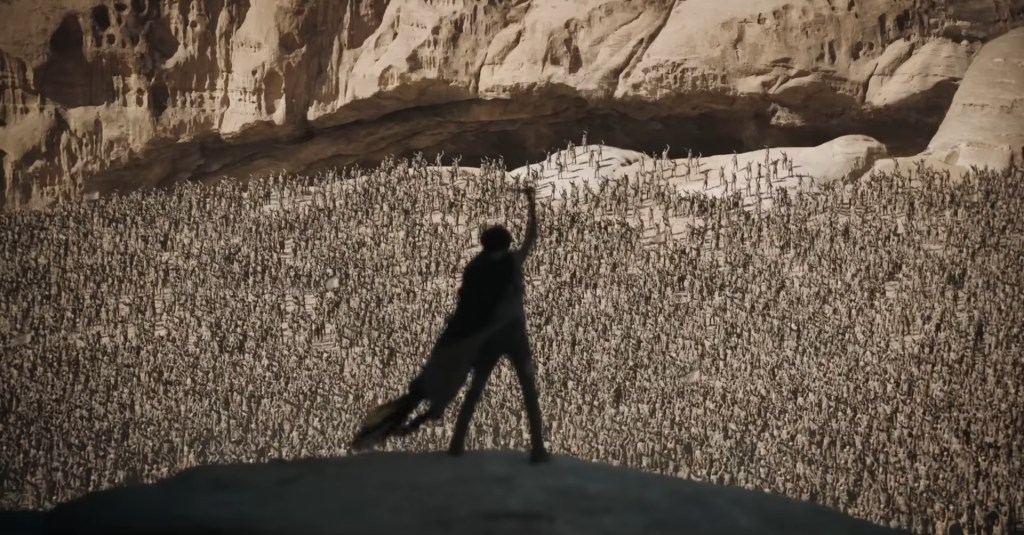
I don’t know why this isn’t a bigger deal for me. It’s probably something to do with the Dune brand, to which I’ve never been a particular zealot, but Dune: Part Two is the realization of what I always dreamed of making as an aspiring filmmaker: the proverbial science fiction epic – but which is also, like, a real movie. On one hand, you have the epics like Star Wars and Avatar, and then you have the “real movies” like Ex Machina and Villeneuve’s own Arrival, and never the twain shall meet until the advent of our smiling Frenchman. That being said, this very sentiment constituted a lot of the discourse I saw, that Dune was “Star Wars for grown-ups,” and The Empire Strikes Back has been dethroned. Come on, guys. You love Star Wars. It’s going through a rough patch, but it endures because of its welcoming world and charming characters, where Dune is far more cerebral. Yes, its set pieces are incredible, but you’ll notice they’re more difficult to describe than, say, the Battle of Hoth.
I saw Dune: Part Two in IMAX pretty late in its run, and there wasn’t an empty seat in the house. There I was, in a sea of humanity, realizing I’d made the mistake of not getting a drink beforehand, so I remember being really thirsty while watching the long desert movie.
#1) Civil War
There’s two things here. One is the experience of the movie itself, which was extremely loud – just like, a super memorable theatre experience – and two is the movie as a work of science fiction, whose importance is hard for me to overstate. For the first part, I managed to go into this movie knowing nothing, other than it was Alex Garland, and I’d seen a couple of still images. I had the trailer in front of Love Lies Bleeding and Dune: Part Two, but I closed my eyes, so I didn’t even know that they end up at the White House in the end. Based on the first half, I was not expecting a massive set piece at the climax.
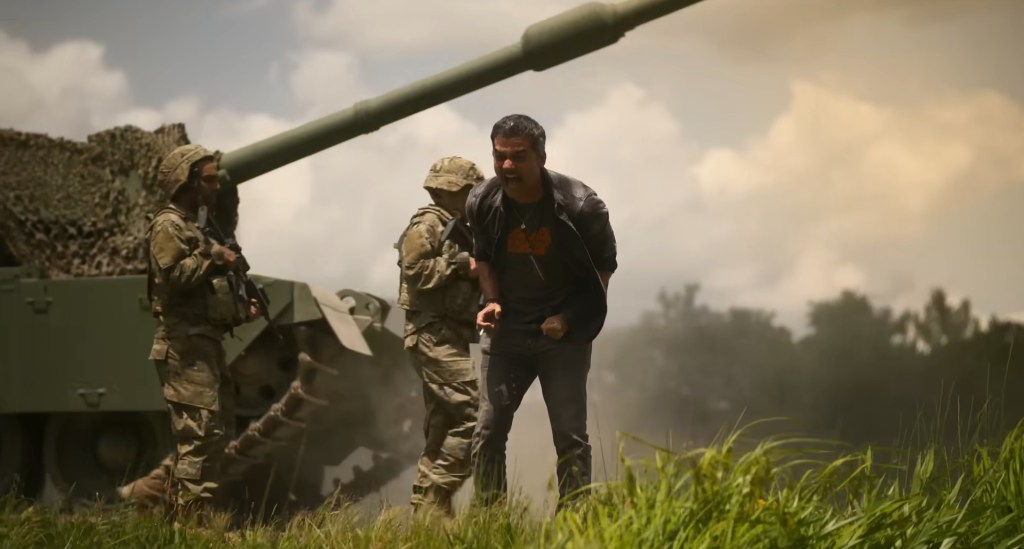
Civil War also features my favorite montage in a movie since Ghost in the Shell 2, which is “Breakers Roar” by Sturgill Simpson playing over the forest fire and then the military’s arrival in Charlottesville. That shot of Wagner Moura screaming as tanks roll in behind him – and that was just something they found on the day, that wasn’t even scripted.
I watched an interview with Alex Garland at the BFI where he talks about his process, and specifically why he doesn’t use a shot list (the diametric opposite of Eggers’s approach). He does a lot of rehearsals with the actors and figures out the blocking and the camera movements, but if he’s crafted a shot with a specific lens and lighting configuration around a window, that means the actor will have to go over to the window in order to deliver the line. But what if the actor doesn’t feel like going over the window? What if that’s just not the vibe? A very actor-friendly process, which is so crucial in science fiction like this. We need that grounding in emotions and character so we can reconcile with the what-if aspect.
And the what-if here is pretty basic: “What if the political fractures in modern America escalated to actual warfare?” There’s nothing original about that; it’s entirely execution. And Civil War is played so straight, with such craft, that speculative ideas we would’ve otherwise been desensitized to suddenly hit really hard. That scene where the woman, maybe a press secretary – we don’t even know – comes out of the car with her hands up and the army guys just shoot her down! It’s the juxtaposition of everyday America with the rules and process of a foreign war.
That’s really, to me, what the movie is about – and “about” with Civil War has been contentious. I don’t think the movie is interested in making a moral statement, and I don’t know that I even agree with the minutiae of Garland’s politics. This movie is valuable to me because, like Starship Troopers, it’s using the cinematic form to do something. In this case, to render the question, “What if it happened here?” in horrifying verisimilitude. We recently saw this play out in Syria, all that imagery of urban chaos.
So it’s a wake-up call, but more importantly, if it is making a statement, it’s very indirect: if you want to do this, this is what it’s gonna look like. Even if one side has a righteous cause, you can’t account for all the violence. There’s gonna be opportunists and psychopaths and accidents. And we know this. We know that when war comes to a place, rape and crimes against humanity inevitably follow. But the purpose of science fiction, or rather, the potential of science fiction, is to present that in a persuasive way. We can call back to it, because storytelling digs into our brains differently than news media or even education – which we should also be participating in, but movies, obviously, are more fun.
To that, I love, after all the brutality, that this movie ends on a punchline. It doesn’t make it any less disturbing, but it’s just perfect somehow.
 With Eyes East
” In retrospect, I’m not sure why it did, because if the movie had ended five minutes earlier, it would’ve been truer to the nonexistent French original.”
😆😆😆
LikeLiked by 1 person