What Can I Do?

When I used to ask “What can I do?” in response to the world’s terrible events, I’d imagine marching in the streets and all the dramatic scenarios which spin out from there. At that point, it’s a troubling question of constitution, and integrity. “Am I willing to risk my life – or more realistically, my job – for what I claim to believe in?” During the first Trump administration, though, I saw how much the real fight happens in courtrooms, by organizations like the ACLU and the SPLC. The best I can do there is donate money. For the more dramatic end, I’m not a frontline guy. At least, so far, I haven’t been called upon. ICE invaded my hometown (and in doing so, made national headlines) but hasn’t occupied where I currently live. I assume that if I were to join one of those protests against a horde of ICE agents and be detained, it would be for so long that I’d lose my job and, judging by how things are going, my citizenship. Whether or not I’m willing to give up my livelihood and back up my convictions with courage – as so many have elsewhere in the country – is something I have to decide, especially as the situation tilts ever toward state violence. … More What Can I Do?

Lessons from Television

My memory of the movie Ghost in the Shell: Solid State Society is that my memory of it is fuzzy. Even for Ghost in the Shell, it’s a little too murky, with less promise of a reward than the similarly complicated Ghost in the Shell 2. Still, it’s an appropriate sendoff for Stand Alone Complex, refocusing the story to the “what” of the Major from the “why.” After having fun playing hacker pirate, she returns to Section 9, though her continued employment is nevertheless a question. It actually frustrated me how indecisive the show was, as if afraid to muss the continuity. One of the things I do remember is mention of Dejima, the island of migrants whose manipulation into declaring itself a nuclear state by a rogue intelligence agency bent on returning Japan to prewar imperialism was the subject of the show’s second season. By the finale, Dejima’s hero Kuze has been executed, with the criminal mastermind behind the manipulation, Gouda, assassinated by the Major – his head a-splode. Where does that leave Dejima? According to Solid State Society: nowhere. The immediate threat is over, but the broader problem remains unresolved. In this case, the indecision is useful. … More Lessons from Television

Will They Know There Were Good Americans?

I’ve never liked the phrase “Don’t feed the trolls,” because it comes from a place of apathy. Functionally so, as advice from someone on the outside of whichever outrage to the person within it. We’re ankle-deep in 2025 (and drowning), and have likely been thinking about how to navigate the crush of abstract politics with our personal lives, of social media and real relationships, and startling new developments which are also exhaustingly familiar. Will we make the same mistakes as last time? Maybe those “mistakes” were actually stemming the tide of the “worst,” giving us merely “terrible” instead. Here’s why you don’t feed the trolls: if they’re making an argument so infuriatingly stupid, it’s probably because they haven’t thought about it too hard, and that’s probably because they don’t really care. You can’t educate someone like that, because in order to learn something, you first have to care about the subject in question. … More Will They Know There Were Good Americans?

The Day It’s “About” the Empire and Not “By” the Empire

Anyway, something I love about Asian movies is when they manage to find white actors to play less than flattering roles, often in recreations of historical events. The question is sometimes, “Where’d they find this guy?” because the acting is so bad, but then it’s “Where’d they find this guy?” because he’s making the British look real fucking stupid. In Ray Stevenson’s case, I’m genuinely curious if his Irish heritage meant no lost love, either, or if it was just a paycheck and an awesome vacation. … More The Day It’s “About” the Empire and Not “By” the Empire

Is It Disrespect?

I admit I felt a pang of embarrassment after having singled out Rekha Sharma when discussing Yellowjackets on the QNA Year End Review. After being the first actress you see on the show, she’s soon sidelined for a majority of the season and killed off in the finale. So, actually, it was a series of pangs. The funny thing is, in a post-show interview with the creators [which, naturally, I can’t find again], these two emphasized the ambiguity of plot events, that what you saw is not necessarily what it seemed, and the only thing they did confirm is that Sharma’s character is dead. What the hell? … More Is It Disrespect?

The 20-Year Marketing Legacy of “Training Day”

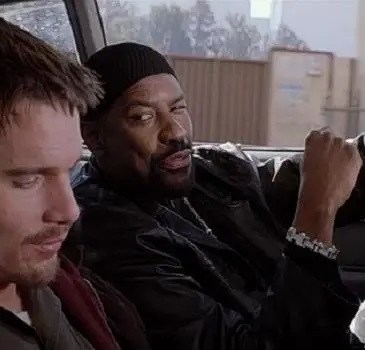
Filmmakers can be sensitive sometimes. David Fincher still won’t talk about Alien 3, a 25-year-old wound by the time he produced Mindhunter, co-starring Holt McCallany (from Alien 3). Maybe on the promotional circuit, McCallany mentions that he first worked with David on Alien 3, and the director has to sit by silently — we apply the Eisenstein montage to his blank face and imagine the inner turmoil. Once a film has been made, it’s printed onto public record, and may follow its filmmaker through their career. I understand via pop culture osmosis that Stephen King wants to be known for The Dark Tower, but everybody talks about The Stand instead. You may not get to choose, as budgets inflate and stakes raise and the realities of showbiz bear down on creative passersby. … More The 20-Year Marketing Legacy of “Training Day”

“Warrior” Couldn’t Be More Relevant in 2021

Just as some believe anti-violence in film can be achieved by sickening the audience with ultraviolence, any cinematic depiction of racism necessarily traffics in the imagery and narratives of racism. And necessary they may be in turn, all the brutal historical dramas which bring atrocities to vivid life beg the question: isn’t there another way? Perhaps there have been or could be movies about racism that forgo such descriptions as “confrontational.” Instead, we could have two strangers from opposite sides of the track building a new and honest relationship with nary a slur slipping out. Sometimes you want that, and that’d be nice. But sometimes, you want to see a racist guy kicked through a wall. … More “Warrior” Couldn’t Be More Relevant in 2021

Masokaiju Tendencies: Those American Godzilla Movies

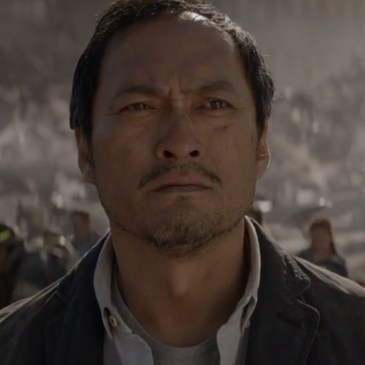
Godzilla is a metaphor for the atomic bomb in a film from Japan, a country struck with the atomic bomb by America, so when Godzilla shows up in America, how do you want me to take that? Hollywood has a concise answer: “I don’t give a shit.” A seemingly inevitable statement made as consequence of international intertextuality is forfeited upon the altar of I don’t know what. Three American Godzilla movies have been released so far, and I understand this to be a controversial statement, so I apologize in advance, but none of them have been good. Granted, Godzilla movies are usually not good, but this is different. At least, I think it is. … More Masokaiju Tendencies: Those American Godzilla Movies