Patriots stand with patriots
I’ve never liked the phrase “Don’t feed the trolls,” because it comes from a place of apathy. Functionally so, as advice from someone on the outside of whichever outrage to the person within it. We’re ankle-deep in 2025 (and drowning), and have likely been thinking about how to navigate the crush of abstract politics with our personal lives, of social media and real relationships, and startling new developments which are also exhaustingly familiar. Will we make the same mistakes as last time? Maybe those “mistakes” were actually stemming the tide of the “worst,” giving us merely “terrible” instead. Here’s why you don’t feed the trolls: if they’re making an argument so infuriatingly stupid, it’s probably because they haven’t thought about it too hard, and that’s probably because they don’t really care. You can’t educate someone like that, because in order to learn something, you first have to care about the subject in question.
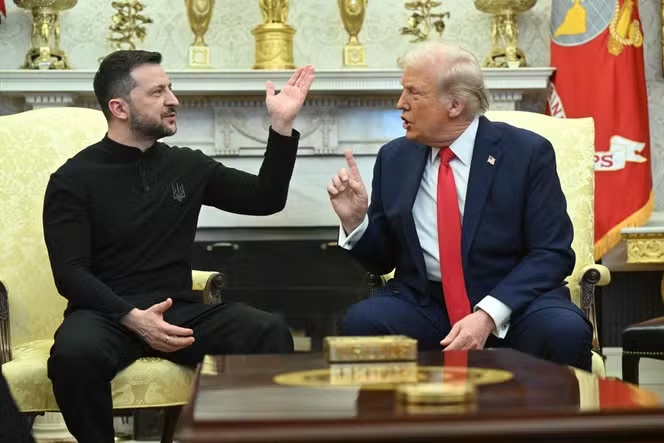
One of the “old mistakes” I actually gave up even before the first Trump administration ended is protest. COVID was a big part of it, but honestly, looking back at that time, it was cowardice. Unwilling to admit that, I’d come to the conclusion that protest was more about the individual’s feelings, of doing something to “show up” because that’s what you have to do in precarious times. Call your representatives, knock on doors, vote – at the very, very least. I’ve been seeing a lot of protests lately, though, especially in the wake of Zelensky’s meeting in the Oval Office last week. The most persuasive theory behind the spectacle – for you future archaeologists – is that the Trump administration is looking for a pretext to stop funding the war effort, and assumed Zelensky would blow up on live TV. The only wrinkle in that theory is that the administration doesn’t need a pretext; it was practically a campaign promise.
Anyway, most of the reactions I saw to that Oval Office meeting were united in feeling shame, embarrassment, and anger toward the Trump administration and the country as a whole. By “reactions,” I mean comments under the Facebook posts from various news outlets. And then there was the post by Fox News, which somehow popped up in my feed. Now, those reactions were united by the idea that Zelensky is stealing our money and now we have a good, tough president who won’t let him get away with it. First of all, if he’s stealing our money because the war seems to be going on longer than we thought, we were in Afghanistan for 20 years. Not that that cost too much money, of course. Second, you want to be the world’s policeman and also take no responsibility? That’s just being a dick.
Obviously, not everyone is the kind of person who comments on Facebook posts by the Fox News social media team. Some, more reasonable people might be wondering why we’re supporting a foreign war when there are pressing domestic issues. I hate to break it to you, but we happened to have elected an administration incapable or unwilling to address either. It’s a full-time job, turning a plutocracy into a kleptocracy! But let’s get into it: why doesn’t Ukraine just surrender? Aren’t they the ones prolonging the war? This is the basis of a conversation I had in the wake of the weekend’s protests. Setting aside that Ukraine didn’t start this war – as causation is a surprisingly weak avenue in these sorts of discussions – they have every reason to fight it. And this is how I end up arguing with a younger version of myself.
Yes, I’m not here to win an argument I felt I lost earlier. As far as that goes, we were both able to guide the conversation back to status quo, neither minds changed. You can’t educate me about the moral good of letting Russia take Ukraine (or moral not-as-badness-as-you-think) because I don’t care about the scenarios in which Putin’s government benefits. In fact, I do care about the opposite – it’s an emotional issue. For his part, he was exercising a sentiment which I once held dear: “War is bad.” We should pull support from Ukraine, thereby ending the war, because wars are too costly in terms of human lives and money and everything else.
When I was younger, studying film and storytelling, I realized (or fabricated) that all the filmmakers I liked had something to say. As I wanted to be a filmmaker or storyteller myself one day, I thought about what I’d, too, be saying. What was it that mattered to me, as a sheltered middle-class American with no worldly experience? I decided that it would be “war.” During the Vietnam War units in middle and high school, what struck me was the concept of PTSD. You’re telling me you go and fight a war, and even if you survive, when you come back you’re just fucked forever? This, oddly enough, is what made war real to me. Subsequently, the literature I pursued independently had to do with ending war itself, grappling with the opposing school of thought which presupposed that war is natural. Animals fight all the time, they say, and we are animals.
I was thrilled by the discovery that nobody knows better that war is unnatural than the military – pretty much every military going back to, like, the ancient Greeks, who had to call their enemies “barbarians” to make them easier to murder. I don’t regret collecting some of that historical trivia, but what I needed to understand was that war could be bad while also being justly fought. The American Civil War, for example, was “bad” in the sense that hundreds of thousands of people died, but it was necessary. Actually, it was this current phase of the War in Ukraine which finally turned me around here, only as far back as 2022. The Ukrainians were plunged into a war for survival, of self-defense, and that’s not something I’d ever encountered in all the years being horrified by American foreign policy. No, in this country, we “don’t know” why we fight wars (see: Iraq).
So, what about America’s role in Ukraine? Yeah, this is admittedly more difficult. To say it’s in the broader strategic interests of the Western world is too abstract (and a bit sociopathic), that a general stance against Russia keeps them out of our cyber stuff too conspiratorial, and arguing it’s for justice or what’s right is debatable. Why not, as those Fox News Facebook people might say, don’t we apportion those funds elsewhere? Back into our own pockets (yeah, right) or to other global conflicts? What makes Ukraine so important? Well, I think this is just one of those arguments that can’t be won. It was never meant to be an argument. We don’t want to condemn Ukrainians to rule by a power willing to murder them, or whatever else it is they don’t want so badly they’re willing to sacrifice their lives to fight it. Why? Because Ukrainians are people, and they count just the same. And for some of us, the fact that Trump likes Russia and not Ukraine is enough. No skin off my back, I’m glad you’re here.
This takes us to the title of this post, which was originally just “Party Like It’s 2022,” because I can’t believe we’re re-litigating Ukraine. There’s a subplot in the movie Judgment at Nuremberg where Spencer Tracy’s judge character wonders about the culpability of two non-Nazi German citizens for the Holocaust, a dramatization of the term “Good German.” When Russia invaded Ukraine, we kept hearing stories about how the Russian people were blissfully unaware of the fighting. I can believe that (knowing the bliss of my own countrypeople about, just, so many things), but it’s impressive that we sometimes find ourselves asking about the line between a government and its citizenry. From what I can tell, the rest of the world does not condemn the whole of America for having elected Trump. I mean, why not? We collectively failed. Why don’t you look at us the way we look at you? Well, they’ve had years of thinking not only about themselves but of other countries – especially the main character. They think about the world in a broader way than we’ve ever had to. They think about the world, period, because the world includes America.
I think this is why protest is important, especially in a case like this. Partly self-serving, it’s a message: “We’re still with you.” And the message to those in power is: “Not without a fight.” Or, at least, due complaint. “Your policy is unpopular!” is always worth shouting. In its absence, who knows what they’d try? Speaking for myself here, Ukraine is important because of Ukrainians, who are important the way that the people of any country are important. In defining “importance,” I specifically mean that they don’t deserve to suffer the atrocities of military conquest. It doesn’t matter who they are, what they’ve done, what they believe. If Russia invaded the U.S., would I not care if a thousand people were killed in Arizona because it’s a red state? Nobody deserves to be killed in a war (they absolutely deserve to be fucked over by policies they voted for, but that’s the worst of it. Or you know, prosecuted by the law if their MAGA mania turns criminal). Sometimes, to make sure nobody’s killed in a war, you have to kill in a war. Paradoxical? Yes. Difficult to understand? No.
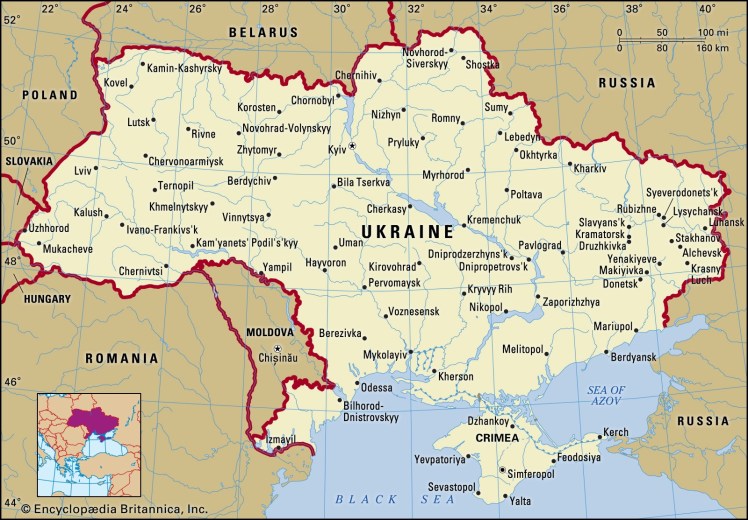
That’s where this post was supposed to end, but I have to reiterate how crazy it is we’re still arguing about this (if we are indeed, you know, dead Internet theory and all). We’re not just talking about “since 2022,” but like, forever, because we’re always trying to hoard our wealth like Smaug and come up with any reason not to help Jewish refugees during World War II or Tutsis during the Rwandan genocide. Surely, there were more pressing issues (not that U.S. intervention is necessarily a cure-all). Now, wait a minute, says @NuancedNate, you can’t compare Tragedy X to Tragedy Y. Then let’s take the value scales out of it. In choosing whether or not to support a cause or a people (however usefully), let’s refer to an unwritten code rather than attempting to measure the severity of the situation. Sure, only thousands of lives were lost here and not millions, but it’s the same principle: the violation of a sovereign territory, policies which presage genocide, whatever. Turn your worldview into pattern recognition. Or “care about people,” but come on. Do we actually care about people we don’t know? And that’s fine, they only need us to care enough to be the difference in policy between life and death.
 With Eyes East