The Ghost in the Shell | Episode 4

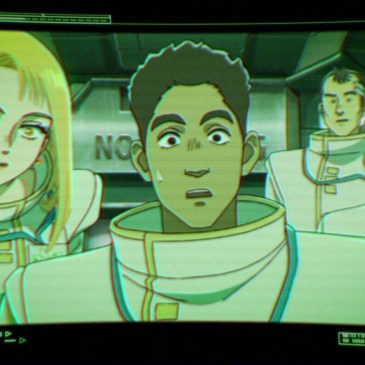
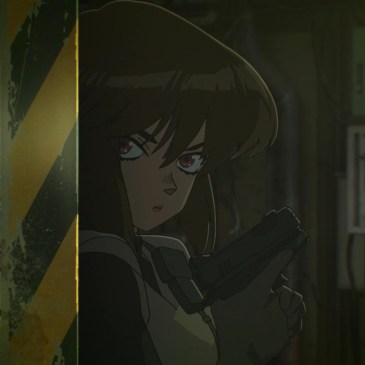
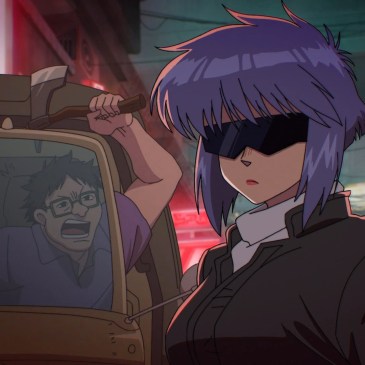
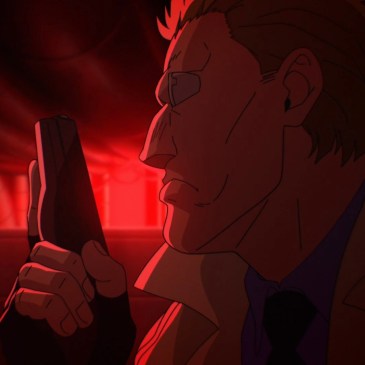
Ghost in the Shell 2! It’s Ghost in the Shell 2! Now, dear readers, how long will I make it into this post without mentioning Ghost in the Shell 2? Oh, I see. Let’s call this the elephant in the forest, because Mamoru Oshii’s 2004 sequel undoubtedly colored my experience with the fourth episode. Both pull from the “Robot Rondo” chapter in the manga, all three dealing with a potential robot uprising, like something out of a pulp sci-fi novel, as Batou notes here. It seems that even in 1989, this was well-trodden territory. And while Ghost in the Shell 2: Innocence retains several key elements, like an attack in an alley (and Batou’s Power Glove), a yakuza connection, and even the doomed shipping inspector, it adds a layer of techno-philosophy derived from the writing of Donna Haraway atop the basic science fiction setup. In the end, we’ll learn that child trafficking victims being “ghost dubbed” into sex robots were sabotaging the machines to lash out and attract police attention, a morally grey solution to yet another instance of systemic child abuse that Masamune Shirow views with distance. Innocence Batou’s chief objection, however, is that the sex robots had ghosts, too, a conclusion which helps him accept the Major’s mysterious, transformative fate. … More The Ghost in the Shell | Episode 4

The Ghost in the Shell | Episode 3

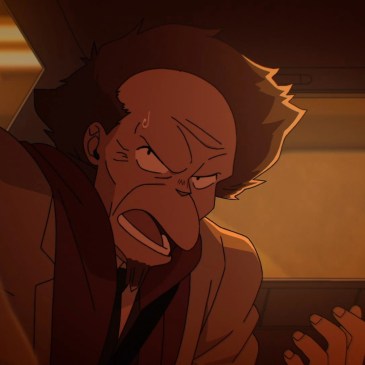
With the promise of next week’s episode being “Robot Rondo” and only that, I’m wondering if episodes two and three are a kind of toll, accidents of format and adaptation that anticipate better later material. The fireball premiere aside, I’m enjoying The Ghost in the Shell about as much as I enjoy the manga, whose darker, serialized final arc appealed more than its, let’s say, standalone episodes. This leaves “Junk Jungle ii + Megatech Machine i + ii” a curious piece of television. Not entirely satisfying on its own, but certainly interesting. As with its predecessor, it features elements which were adapted previously, into Mamoru Oshii’s 1995 film, that gorgeous, thought-provoking classic of science fiction cinema. By contrast, this latest rendition feels like scattered, disorganized notes scrawled by a mad genius concerned with technical detail and the implications of future technology, in need of fastidious cleanup by a different mad genius more concerned with spirituality and the human soul. … More The Ghost in the Shell | Episode 3

The Ghost in the Shell | Episode 2

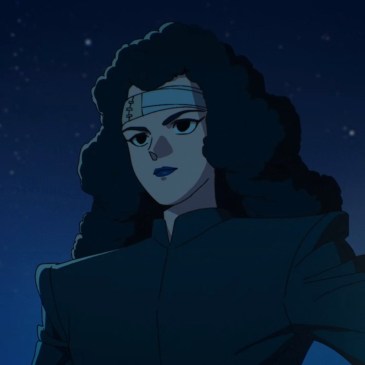
The first weeklong wait between episodes was brutal. I watched the first episode about three times, as well as the first two episodes of Stand Alone Complex, and if it wasn’t for Human Vapor (another Japanese procedural with a twist), I’d be in nonstop Ghost mode. So, was the second episode, “Super Spartan ii + Junk Jungle i,” worth all the teeth-gnashing? This one’s tricky, and surely trickier than the satisfying premiere, laying bare the broader shortcomings with this particular adaptation project. One couldn’t be blamed for assuming that each chapter of the manga might translate to an episode of the anime, but possibly because of the “Prologue” being a short but crucial chapter, everything is bumped forward a bit. For example, episode two opens with the final pages of the “Super Spartan” chapter, meaning it properly concludes the first episode before beginning the “Junk Jungle” chapter after the opening credits, itself left unfinished pending episode three. Perhaps a future short chapter evens things out, but in the meantime, this awkward timing ensures that “Super Spartan ii + Junk Jungle i” doesn’t feel like an episode of television, just “the next part of the story,” and it isn’t even clear what the story is yet. … More The Ghost in the Shell | Episode 2

The Ghost in the Shell | Episode 1

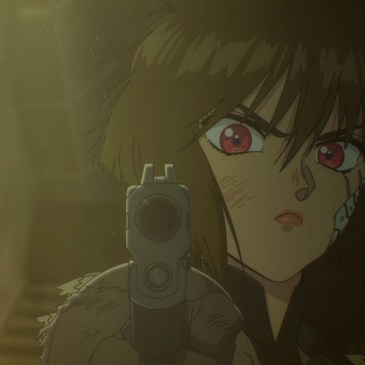
The Ghost in the Shell is so much. For reasons within and without, it feels precious and rare like a gemstone in every second, every frame. It is true there hasn’t been a recent installment, the latest now six years old, but it’s also an example of anime, a craft initially defined by limited movement in comparison to Western animation, and yet Science Saru adapts Masamune Shirow’s kinetic manga with buttery-smooth animation, an active camera, and generous colors. The only visual element withheld is the gore, the opening body explosion covered in a digital mosaic – which somehow makes it more obscene – leading to the splat of a bloody stick-figure against the wall. Where traditional adaptations pare back the farcical, even manic quality of the source material, opting instead for deadly serious meditations which, honestly, better fit the subject matter, The Ghost in the Shell is paced with a punchline rhythm, and is altogether a carousel of great faces. One of the small joys of the manga is the candid glimpses of characters in repose, where Batou might be wearing an enormous grin or otherwise be looking silly (or pervy). This is practically the animating philosophy at the heart of 2026’s Ghost in the Shell, if the first episode is any indication. … More The Ghost in the Shell | Episode 1

I Will Be So Sad if This is Bad

Mark your calendars, folks, for a new Ghost in the Shell on July 7th! “Ghost in the Shell?!” I hear you erupt, indignant, “You mean the Japanese cyberpunk media franchise which hasn’t been good in over ten years, being generous?” “Ah,” I say, with scholarly poise, “Japanese postcyberpunk media franchise.” How clever indeed. The plan was to totally play it cool and wait to write about Science Saru’s The Ghost in the Shell only upon its release, theoretically doable as I haven’t been trapped in a hype cycle (hype psyop) in what feels like ages. And frankly, the first two teaser trailers weren’t doing much for me, beyond providing excellent music samples – the second like something out of Metroid Prime – and selling the concept of animating the artwork of Masamune Shirow with a budget larger than, say, the Appleseed OVA. So, what happened to turn things around? The third trailer. And so, I want to tell you a story in three trailers, and it’s my favorite one: the story of the Major. … More I Will Be So Sad if This is Bad

Kitana Wins

I’ve just gotten back from Mortal Kombat II, with a couple of hours to post this and prove that I saw it extra nerd early on Thursday rather than on Friday. I suppose I could show you the ticket, which I’d wanted to anyway because it was for 6:30, but then on the door, it said 6:45. And when I looked at Fandango today to see if anybody was gonna be sitting next to me, it also said 6:45, but there’s no way to prove that now. So, take my word that I thought to myself, “How can it be a 6:30 showing and a 6:45 showing at the same time?” Like a practiced modern moviegoer, I arrived at the theater at 6:30 sharp, budgeting enough time for all the pre-movie rituals, including waiting at the concession stand wherein the group in front of me appeared to be buying tickets? Growing surprisingly anxious, I finally made it to the premium-format theater and my seat and proceeded to sit there like a dope through, like, ten minutes of ads for insurance and cars. … More Kitana Wins

Feels Great! | Second Life (2024) Review

This is the rare case where my memory of a film, “edited” into snatches of images by whatever neurological sorcery, just about matches the film itself. When you hit play on Second Life, also known as Son of a Punch, you’d better not take a second to close an app on your phone or fiddle with a bag of – what do the kids like these days? – Fritos. It doesn’t even clear one minute, including studio logos, before something insane happens. A gang boss busts in on a police funeral and starts talking when all of a sudden he’s silenced forever by the flying kick of the widow, Lao Liang. Pregnant and now imprisoned, Liang establishes herself as top dog by defeating the treacherous Sister Hong in a fast, prop-heavy battle scored with music out of an old King Hu epic. The lighthearted tone and broad comedy are established here, as well as a relentless pace. The moment Hong is put down, she becomes a lifelong ally and friend, jumping to Liang’s aid when her water breaks only moments later. And in the next few moments, we jump ahead thirty years and meet Gui, an enforcer for gang boss Chang Meng who shoots up the ranks after protecting him from a dozen guys in a shirtless blaze. … More Feels Great! | Second Life (2024) Review

Rip and Tear | The Forbidden City (2025) Review

Whoa! You know, it wouldn’t take much for an Italian kung fu movie to be the best Italian kung fu movie, so why set the bar so high? I don’t think anybody else is coming. First of all, I’d be happy to address any reservations one might have, as I did, based on the title. Despite its somewhat foggy thematic resonance, The Forbidden City is “Chinese restaurant name” generic and may resurface unpleasant memories of The Forbidden Kingdom, the Jet Li versus Jackie Chan anticlimax which happened to be the Hollywood debut of Liu Yifei, who’d go on to play Disney’s Mulan in 2020, doubled by stuntwoman Yaxi Liu, the star of The Forbidden City. Capisce? As we find, “Forbidden City” is the name of a Chinese restaurant in the movie, but it could also refer to its primary setting of Rome, upon which Liu’s wayward character Xiao Mei eats, prays, and lays a heavy beating, and that’s only barely a joke. Fair warning (or invitation): the spice level here is “Korean.” We’re not talking CG blood and the weightlessness of mild American fare nor the horror-hewn sadism of Indonesia. It’s roughly comparable, I’d say, to The Man from Nowhere. Guys, do not fight in a Chinese kitchen, where there’s grills and frying oil and – oh, God – cheese graters. There’s a bone break so severe I yowled. Mei is hardcore, animated by rage and, to borrow a useful term, too angry to die. … More Rip and Tear | The Forbidden City (2025) Review

Envision Turbulence | The Fate of Lee Khan (1973) Review

A King Hu wuxia film is a precious thing, there being so few. I’d taken a circular route from the canonical works at the start of his career – Come Drink with Me, Dragon Inn, A Touch of Zen – straight to the Mountain duology of 1979, skipping over The Fate of Lee Khan and The Valiant Ones. Either way, I’m running out, though I was mightily defeated by Legend of the Mountain and left it unfinished. And so, there was something bittersweet about finally sitting down and watching The Fate of Lee Khan, or “The Turbulence at Yingchun Pavilion,” here at the beginning of the year, when the kung fu mood usually strikes. And ironically or not, the film is a pastiche, taking little bits from across the catalogue. It’s the tavern setting of Dragon Inn, the caper premise of Raining in the Mountain, and the cast of A Touch of Zen. Here, Hsu Feng plays a villainous Mongolian princess, sister to the titular antagonist, while the villain of A Touch of Zen, Han Ying-chieh, is a resistance member disguised as a drunk, and Roy Chiao, the Buddhist monk, is undercover as the henchman at Lee Khan’s right hand. By the way, is it technically yellowface for these Chinese actors to play Mongolians? You’re not fooling me, man, no matter how much additional facial hair. … More Envision Turbulence | The Fate of Lee Khan (1973) Review

IT’S HERE (again)

Donovan, my Baby Assassins partner-in-crime (the Miyauchi to my Tasaka, if you will, though maybe there’s a better duo to be), informed me a few days ago that the TV show, Baby Assassins: Everyday!, was eminently streamable on Hulu and HBO Max, and has been since October 16th. I was late. How could I not have known sooner? Where was the YouTube trailer? Where are the outlets meant to warn me? So, I’m here now to pass it along, realizing that perhaps I am one of those outlets. Not really, but seriously, what the hell happened? … More IT’S HERE (again)