Spoilers
I’ve just gotten back from Mortal Kombat II, with a couple of hours to post this and prove that I saw it extra nerd early on Thursday rather than on Friday. I suppose I could show you the ticket, which I’d wanted to anyway because it was for 6:30, but then on the door, it said 6:45. And when I looked at Fandango today to see if anybody was gonna be sitting next to me, it also said 6:45, but there’s no way to prove that now. So, take my word that I thought to myself, “How can it be a 6:30 showing and a 6:45 showing at the same time?“
Like a practiced modern moviegoer, I arrived at the theater at 6:30 sharp, budgeting enough time for all the pre-movie rituals, including waiting at the concession stand wherein the group in front of me appeared to be buying tickets? Growing surprisingly anxious, I finally made it to the premium-format theater and my seat and proceeded to sit there like a dope through, like, ten minutes of ads for insurance and cars. Only then did it strike me – why are car commercials so ubiquitous? How many cars do you actually buy in your lifetime? And who’d base such a significant purchase on a television commercial? I’m not saying car commercials in themselves are ridiculous, but they are the essential commercial, practically designed to be ignored. Well, I’m not gonna make my deadline like this (thank you, I’m well aware I can cheat by publishing the post today and then make revisions past midnight at my leisure, and it’ll still display as published on the 7th, but I have “commentary on shitty comedians” clogging my YouTube algorithm and just watched a video on the principled missionaries who did stand-up for those Saudis who apparently love observational humor/grievance politics as well as plane crashes, so I’m gonna henceforth set a policy of honesty on this site).
Coincidentally, I also watched a bit of The Super Mario Galaxy Movie, by way of the Nintendo Direct revealing – much to the Internet’s delight – another remake of Star Fox 64. Ahead of the gameplay footage, we were treated to Fox McCloud’s introductory scene from the movie. If you missed it, critics panned Galaxy, with extreme prejudice, to the point where I genuinely wondered how it could be so bad. Now I know. That teeny-tiny clip downloaded one of those J-horror movie viruses into my brain. If I had to diagnose it, the problem might be “insincerity.” Yes, it’s a comedy and a kids’ movie, but wow, was it smug and cynical, too. In, like, a minute!
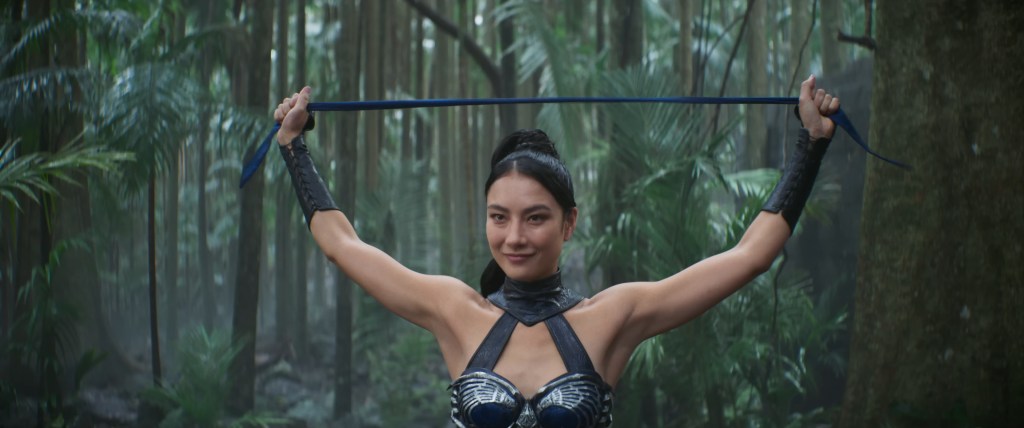
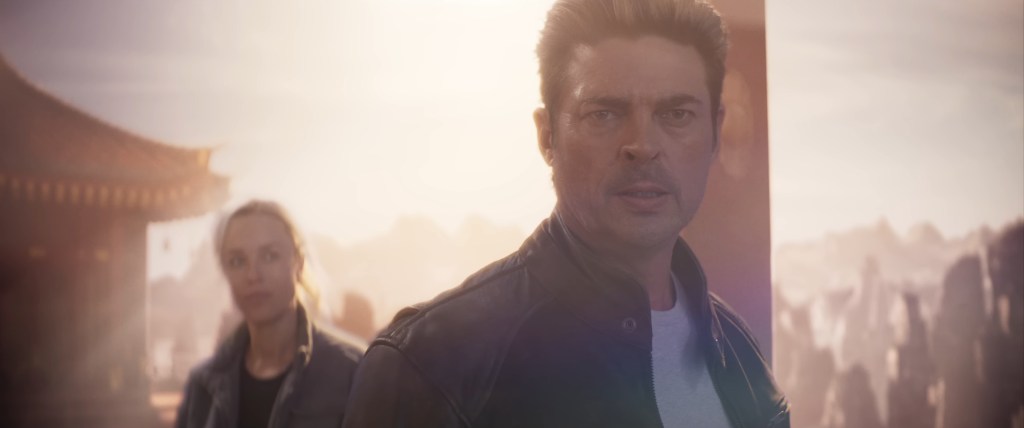
This is a problem I’ve been seeing with American action movies lately, and the actual subject matter for today is an American action movie. It’s also a movie based on a video game which took inspiration from a tradition of movies – the co-creator Ed Boon, who makes an on-screen cameo appearance, would be quicker to cite something like Zu Warriors from Magic Mountain than Big Trouble in Little China, though the latter gets a nod by Karl Urban’s Johnny Cage. So much to say, the character arcs and story beats feel so familiar that they’re almost instinctual. Kitana is the princess who watched her father slain by an interdimensional emperor and seeks revenge, Johnny Cage is the washed-up action star who learns to be a real hero, Scorpion and Sub-Zero continue their eternal battle even in hell. I mean, these actually sound pretty outlandish, but there’s nothing unpredictable. Did we ever doubt that Jade would make her good turn by the end, despite having little motivation to do so? We like her, so she will. The only true wild card is Kano, who manages to be a comic relief without constantly pointing out how wacky everything is. My question is this: if we know the plot by heart even before the title card – which is just “Mortal Kombat,” if I remember correctly – do we need to bother with its development? My note about Jade might indicate my feelings on the matter.
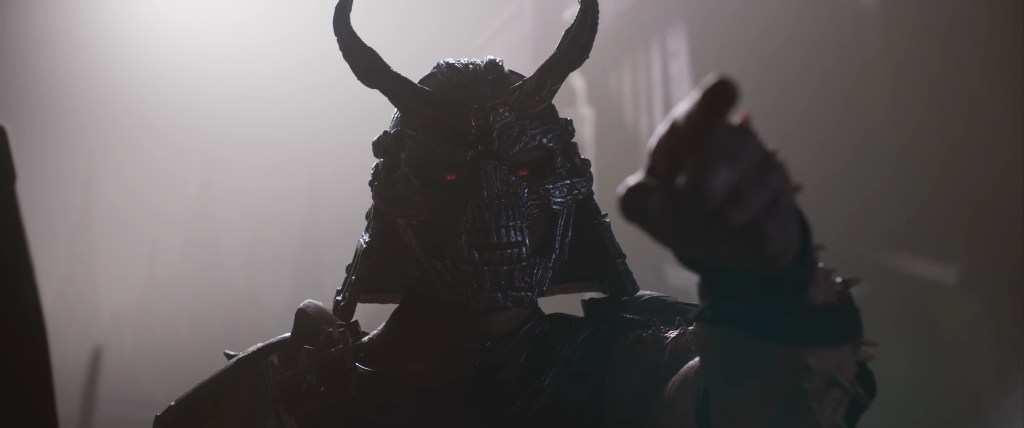
I liked Mortal Kombat II. Although the marketing emphasized Johnny Cage, it’s much more Kitana’s movie, and if you know anything about me, you know that’s not a problem. The actress, Adeline Rudolph, acquits herself with appreciable gravitas, burdened with the more self-serious side of this kung fu movie pastiche, and with especially appreciable ferocity in the fight scenes. In other words, she’s dealing with real emotions, as is Johnny Cage and the doomed Cole Young and Liu Kang, forced to fight a reanimated version of his friend. Despite a two-hour runtime suggesting the space for us to access these emotions, I only glanced the surface of Kitana’s revenge quest. It’s too much in outline. As a child, she watches Shao Kahn murder her father, King Jerrod, and then we fast-forward to adult Kitana and she’s basically the same person. There’s no exposition she’ll learn that’ll alter her path, no additional decision she has to make. It’s strange, because Shao Kahn assumes her kingdom, Edenia, as well as her parentage, but the two have basically no relationship. Shao Kahn wants to keep on conquering realms and Kitana wants to kill him. Why not make him a good father? Introduce a complication, an inner conflict for both. I mean, he doesn’t even seem like that bad of a guy. He’s playing by the rules after all!
Watching video game movies trundle by through the ‘90s and 2000s, there’s this sense of an existential terror on the part of the producers, that to put the gameplay on the silver screen would, paraphrasing the words of probably countless film critics, be like taking the controller away. God, Roger Ebert would’ve hated this movie. And so, the gamers could go on complaining about fidelity to the source material – or scratch their heads in the case of big swings like the original Super Mario movie – free of the truth that they don’t know what’s best for them. Aside from HBO’s The Last of Us restaging cutscenes, invariably making for the worst parts of the show, Mortal Kombat II is the most faithful recreation yet (barring maybe the Uncharted fan film with Nathan Fillion, or better yet, the 2016 Ratchet & Clank movie), with the games living in the cinematic language and iconography. The fight scenes include a 2D establishing shot, with combatants on either side of the screen; after Kitana KO’s Johnny Cage, he stands there swaying, as if waiting for player one to input the commands for a Fatality; and of course, there are the Fatalities, though nothing as spectacular as Kung Lao bisecting Nitara with his bladed hat. The last one, I gladly admit, is pretty damn good.
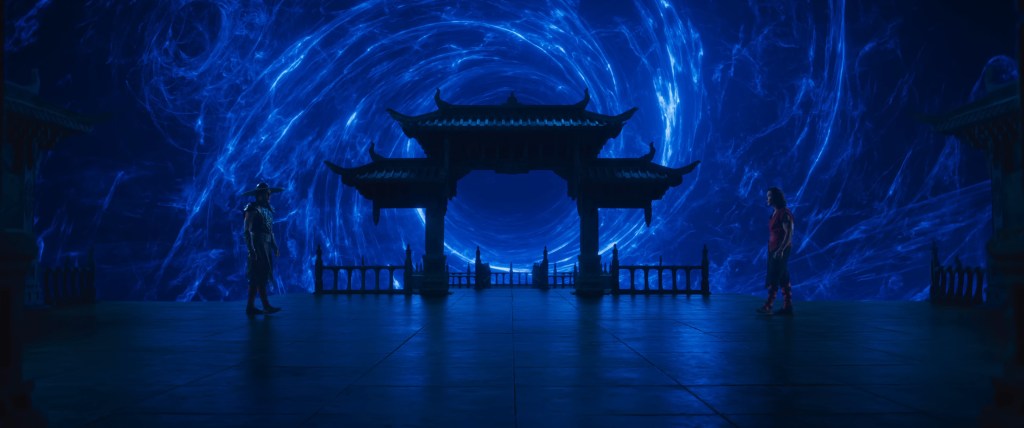
As I’ve whined about previously, Mortal Kombat II was bumped from its initial 2025 release to 2026, where it’s offset by The Furious later this month and a Street Fighter in October, its very archnemesis. The Furious promises lightning-speed fight choreography by luminaries in action filmmaking, as well as the brutality to elicit trailer-friendly comparisons to The Raid. Street Fighter is freer to mash up its iconic characters in fight scenes because it’s not supposed to be to the death. These movies, though I have yet to see them, feel self-assured. What’s the specific appeal of Mortal Kombat? The fights appear slow after so much exposure to Kensuke Sonomura, though the character conceits make for gimmicks – or themes – best exemplified by Kung Lao’s hat being a constant, shifting threat. So, it should be the gore, but that’s counter-balanced by giving every character – who’s somebody’s favorite – enough focus. You can’t just kill a Baraka like he’s a goon, especially when his dynamic with Johnny Cage is practically the film’s highlight (and it’s simple, too, but satisfying). The American tolerance for movie violence has increased lately, and now it appears that ‘90s bad boy Mortal Kombat is struggling to keep up. The red-band trailer for Evil Dead Burn was more white-knuckling than anything going on in the feature that followed.
If not the gore, then surely the cosmic palace drama. A simple YouTube search for “mortal kombat lore” yields videos of 30 minutes in length, an hour an a half, and a top result clocking in at three hours. Here, again, Mortal Kombat II is straightforward. Shao Kahn’s only feint outside the rules laid down by the Elder Gods is the film’s MacGuffin, a shiny green amulet that promises unlimited power (some might call it “cheating”). Surprisingly, the undead sorcerer and villain of the first movie, Shang Tsung, obeys his lord who nonetheless suspects him of coveting power. There’s even a scene where Shang Tsung sits upon the Iron Throne, only to then hatch a cockamamie scheme to aid Shao Kahn rather than undermine him. I like that our Earthrealm heroes have to recruit Baraka in order to access the villain’s lair – the procedure of which is murky in practice – but that was pretty much the one wrinkle in the straight line to the climax.
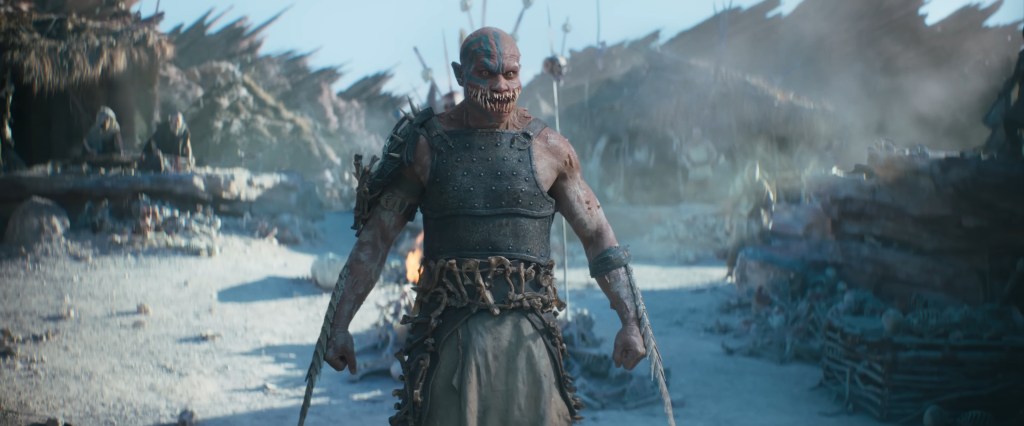
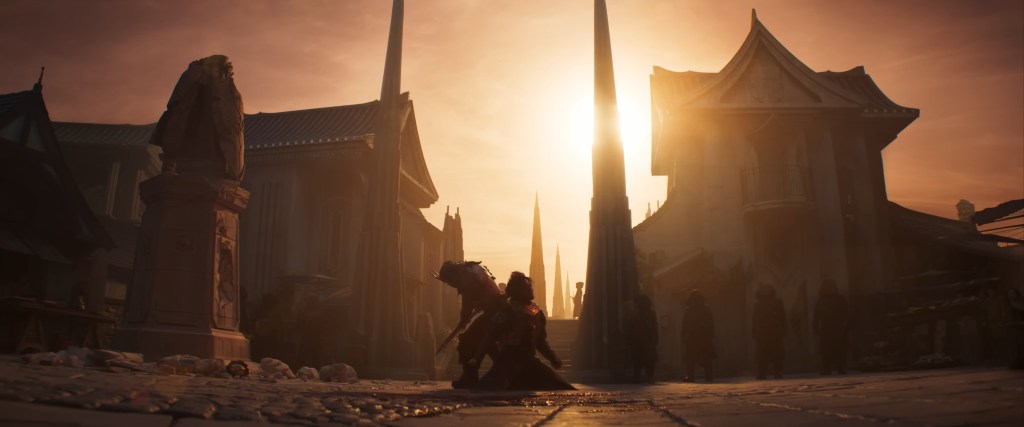
This arcade plot structure is most – exclusively? – problematic in establishing a sense of place. Edenia is two locations populated by a hundred faceless extras, and I think I felt more settled into Helion Prime in the opening act of The Chronicles of Riddick. Remember that dichotomy between Mortal Kombat 1995 and Mortal Kombat 2021, that the earlier film had awesome sets and the latter had epic locations? It’s almost like this new one chose option C: lots of green screen. Of course, the 1995 film also had Enter the Dragon in its veins, where the tournament was set on an island and there was, like, a schedule, and we saw characters moving from place to place and interacting. Similarly, the Dead or Alive movie, and probably the original Street Fighter, which I’ve still never seen. In Mortal Kombat II, characters will literally teleport into the fight scenes. They barely have enough time to talk beforehand, so there are no scores being settled or action as true consequence of story threads. Jax tells Jade that she’s fighting on the wrong side and it’s like, why? Would she give a single shit about Earthrealm?
And so, the somewhat queasy feeling I had throughout the movie was claustrophobia. Despite being a cosmic battle for the fate of the universe, it felt so damn small. And there goes Sonya No-Last-Name, shrugging her way through this life-or-death struggle. The crazy thing is that, even after saying all this, I do like the movie. We didn’t see nearly enough of Joe Taslim’s beautiful face, and not all the witty one-liners land, but the real concern is that dangerous, bladed edge of insincerity. Like, that’s just the default for movies of this vintage. The most recent MonsterVerse Godzilla movie was the most complete, the most feature-rich, but it still walks and talks like the Star Wars sequels. Mortal Kombat II isn’t so crass, though it also isn’t crass, like all those fun movies that cropped up in the wake of 2008’s Grindhouse – ignoring that a truer neo-grindhouse movie was something like Drive (a real lightbulb moment for me recently). We’re not talking about Hobo with a Shotgun or Black Dynamite here; Johnny Cage learns a valuable lesson, the princess retakes her kingdom, characters refer to each other as “friends” despite little shared screentime. So, I enjoyed the movie, but I could not tell you what, specifically, I enjoyed.
Aside from, well, you know.