

Directed by Corey Yuen
Starring Devon Aoki, Jamie Pressly, Holly Valance
DOA: Dead or Alive gets off to a rough start. We find Princess Kasumi awkwardly sitting on a throne and a dork named Hayabusa awkwardly standing nearby and expositing. Then Kasumi gets up and leaves, trading awkward dialogue with Hayabusa as he follows. She wants to leave the palace to find her dear brother Hayate, but “Princess Kasumi,” he warns, “the guards will kill you!” So she goes outside and it’s a veritable Curse of the Golden Flower army. And yet, nothing happens. A pink-haired Ayane shows up to further exposit awkwardly, and then Kasumi turns off the gravity and leaps over the gate, over the Great Wall of China, and over a cliff. No fight scene, but a lot of terrible acting, terrible special effects, and terrible everything. As far as video game adaptations go, it’s pretty faithful.
I’m fully aware that Dead or Alive had a tumultuous production, leaving a compromised final product poorly received by fans and critics. It was released during a particular dark age of video game movies, alongside the legendary Street Fighter: The Legend of Chun-li, as well as live-action movies based on Tekken and King of Fighters. This opening sequence would only confirm that the rest of the movie is gonna be, like Chun-li’s solo outing, a spinning bird kick to the face, but then Kasumi hits a button and her outfit – moments ago a kimono – sprouts glider wings. The electric guitar starts in. She’s just received an invitation to DOA, this franchise’s take on the island tournament endemic to the genre, and joins several other goofy-looking fighters on a private jet. Before I know it, the movie’s sailing along as a bargain bin martial arts flick.

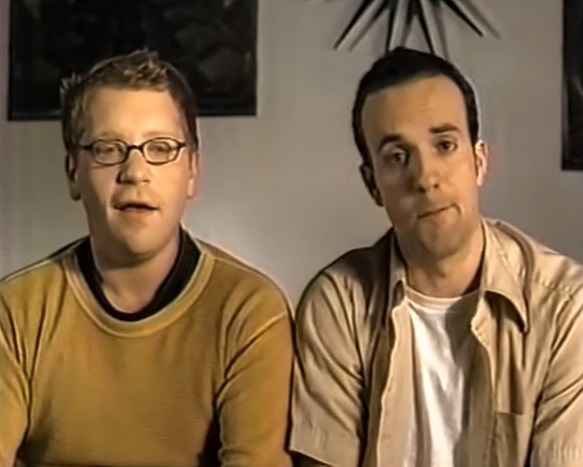
As far as “sexy kung fu” by way of Corey Yuen, it’s not So Close. It’s not gross, though, either, which is what I was expecting. The Dead or Alive franchise is best summed up by a TV commercial where two gamer losers talk about the features of the third installment juxtaposed with sexual game footage – heads between legs – culminating in the line, “She kicks high.” I think there’s a difference once the winning concept of “hot girls fighting” is alchemized from polygonal models to live-action. I imagine everyone in the cast went into this project with both eyes open, and what results is an appreciably playful tone. Tina whines, “Dad!” when her dad keeps assuming she’s in lesbian relationships with other fighters. There’s a volleyball scene as tribute to the Dead or Alive beach volleyball subseries. Those gamer losers are even represented in the movie with a character named Weatherby, whose first lines to his fighter crush Helena are, “I’m Weatherby. I work in the lab, I’m Weatherby.”
This is the only tone that would sustain the film, because just look at it. And listen. The CGI and the acting are the same kind of artificial, lending DOA: Dead or Alive an accidentally coherent aesthetic. On the other hand, the bedrock is surprisingly solid. When Kasumi has her first fight scene, it’s been properly contextualized – her opponent Leon possibly killed her brother – and it moves to an actual narrative. We see the problem right away, that Leon’s enormous and physically powerful. Kasumi’s standard punches and kicks clearly don’t work, so she has to adapt. Similarly, Tina ends up fighting her dad, and since her motivation to fight in DOA is to be taken seriously, she has to actually hurt him. After he takes a tumble into the water, he gives her a proud thumbs-up. It’s all low-stakes, well-choreographed, and decently performed. I mean, there’s a lot of wirework, but that adds to the unreality.

Not to mention there’s a lot of prop work, too, where fighters are kicking vases at each other or tearing tables in twain. Just like in the games, the environments are a hazard, or an opportunity, so it never feels like two people and a green screen. Or at least, not always. Which is helpful, because the tournament events can break out anytime, anywhere. Fighters are alerted to their next opponent, and they can throw down immediately or choose a time to meet later. Where are the refs? What are the rules? As we discover, the tournament has actually been about the main bad guy collecting data to make himself the ultimate fighter. For most of the runtime, however, the bad guy doesn’t really seem like a bad guy. He’s just being a host.
Ultimately, I don’t know if this was a case of low expectations. I was genuinely torn between two and a half stars and three, which makes me think I rated the Zeiram movies too low. Where I love those movies but can’t recommend them, I’d easily recommend this one. It’s lightweight, and feels like a gem from one of those 50-movie kung fu collections. Fans of the franchise might bristle at the characterization of Ryu Hayabusa as a hapless dork, and while I’d never count myself as a “fan” – having never actually played the games – I’ll admit to a soft spot for Dead or Alive. It’s the most woman-centric of all the fighting games, even if that’s because, you know, “she kicks high.” The live-action adaptation follows the franchise protagonist Kasumi and flanks her with two women. Their dynamic ends up being fun, and feels earned. It isn’t weird and catty. And it isn’t super sexualized, either – at least, not to the point of error. But take that assessment with a grain of salt, as well as this entire review. I am, after all, this movie’s exact target demographic.
I just have to note that, in the end, we find out that the castle from the opening scene is called “Kasumi’s Palace.” That’s the level of context and world-building you can expect from this movie.
 With Eyes East