
Directed by Si Shu-bu
Starring Rong Shang, Zhang Pei-yue, Qi Jing-bin
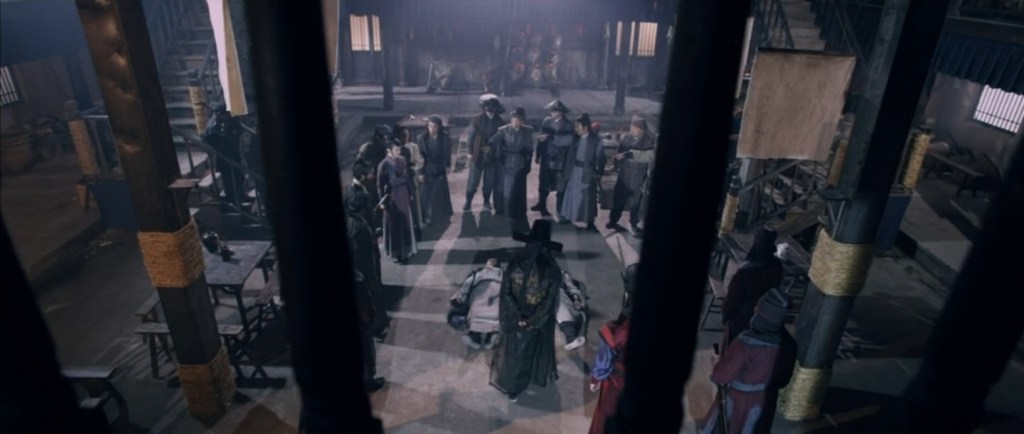
I’ll be honest, I watched this movie in three installments, against the ticking clock of a 48-hour rental on Amazon Prime Video. For the first few minutes of the second session, I was convinced the playback hadn’t remembered where I left off. “Didn’t I already see this part where they force their way into the inn, witness a fight, then talk with the police?” I sure had, but it happens again, with variations enough for a kind of “can you spot the difference?” puzzle. To be honest once more, I had no earthly idea what was going on in this movie, and I doubt an undisrupted viewing experience would’ve done the trick. I may be among that special few who find kung fu movie plots confusing, but I have a feeling, in this case, I can share the blame: myself, the movie, and fate (as authored by the logistics of international film distribution).
The moment I learned about Lady Detective Shadow, it was the most excited I’d been to watch a movie since last year’s Prey. You know, I’ve been focusing for so long on violence – best exemplified by Julie Estelle’s bloodsoaked turn in The Night Comes for Us – that I’d forgotten the appeal of black-and-white heroes. Martial heroes! The IMDb page teases such a character: “A kung fu fighting lady detective travels the bad lands of ancient China bringing criminals to justice.” This, to me, is rare. She isn’t seeking revenge, she isn’t on the run – she’s doing a job. The action is her job. It’s what she’s supposed to be doing within the status quo, which imbues her violence – at whatever content-rating level – a moral finality. She beats up the bad guy, and that’s it. No reset to normal. No smoke-bomb getaway. She is correct.
So, how does a movie fall short of this irresistible but admittedly basic logline? Well, it’s very simple; it’s not a “movie” in the strictest sense. This feature which has the visual texture of a daytime soap opera is actually part of a series entitled – to the best of my knowledge – A Magic Female Police Officer. I didn’t know that until halfway through this very review’s first draft, when I was asking questions I assumed had no answer. Certainly, the critical element missing from Lady Detective Shadow, so presented by Prime Video (but is actually maybe the sixth sequel?), is context. Yes, we have the opening exposition delivered over previz animatics, but more than any question about who or what is why?
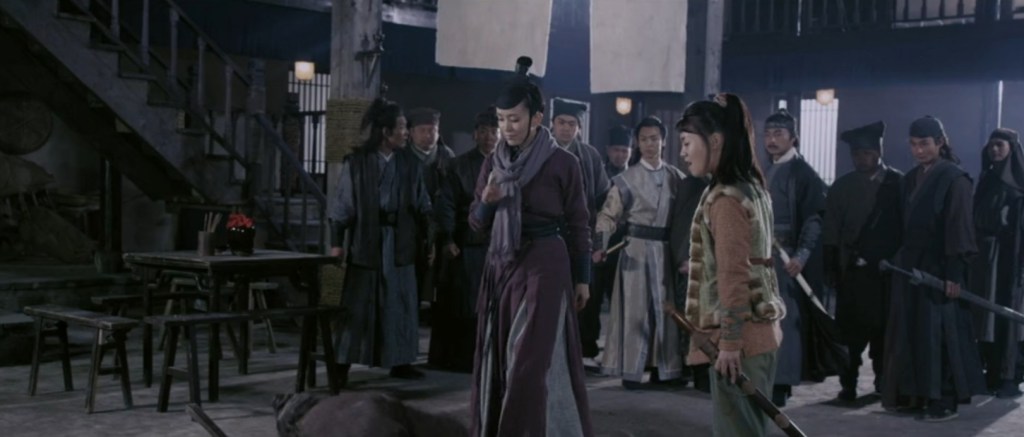
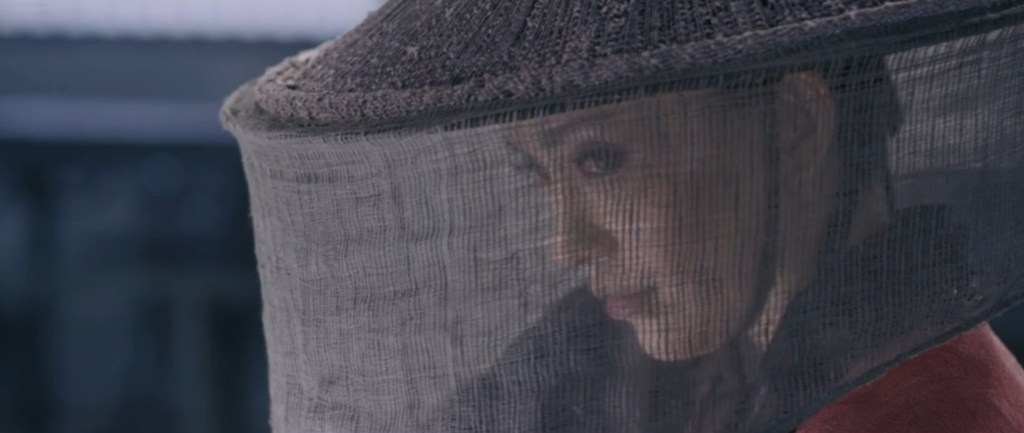
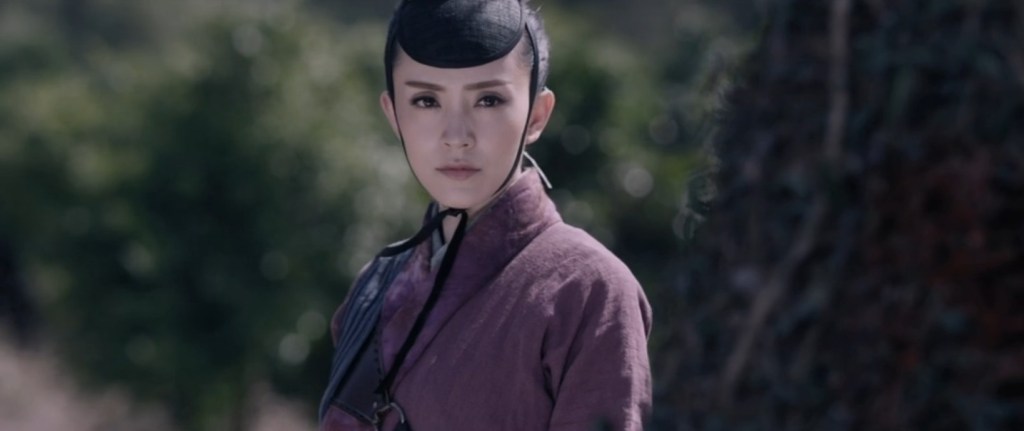
And this could be where starting a series in the middle benefits me, because I’ve never needed that why. I don’t need to see our heroine, Sima Feiyan, become the action star. And whether by accident or not, her depiction in this movie is deeply satisfying – refreshing. It isn’t played for laughs how a woman knows martial arts, and nobody ever questions her skill (I mean, maybe they would if there were, like, “scenes” in the traditional sense. More on that in a bit). And important to me, but never a condition because it’s asking too much: she doesn’t lose a fight. She isn’t reduced in any way – even in her clothing, which is great, because Feiyan is super stylish. She just looks so damn cool on screen.
Alas, the movie around her – only one of many – doesn’t do her justice. We employ a number of low-budget hallmarks: fade-to-black scene transitions (like, from medium shot to medium shot), student-film color grading (few sliders slid, if any), and loud clanging parts of the soundtrack to signify an event. This score is so overactive it puts network American TV to shame. Not a scene of clue-gathering passes without the full, booming symphony. I suppose it’s an additional problem that not much happens to warrant such dramatic music.
The climactic scene, where a cave-in threatens a treasure-seeking father and son, has effects so ropey I found myself actually gritting my teeth. We’re clued into off-screen rocks falling because the foley guy is bouncing basketballs or maybe shaking a Jenga box. They use a falling-dust overlay that magically tracks with the camera movement – when the camera isn’t digitally shaking. And then there’s the green screen toward the end, and the less said about their Lunar Kingdom quality – with the addition of CGI horses – the better.

Now, this may be an exceptional case, but I never used to let technical aspects of a movie distract from the experience. Or say things like “the less said the better!” It was probably growing up and hearing kids sarcastically remark, “Nice graphics” at a middle school screening of Fantastic Voyage, and desiring to do better but not really knowing how. If these technical details are the most obvious to criticize, I’d prefer to focus on storytelling and theme. But, you know, I could use a little help, Lady Detective.
It’s just that the scenes don’t really feel like scenes. They never seem to exist in the spaces provided by their locations, an unfortunate marriage of overwritten dialogue and arbitrary camera angles. Or maybe the unfortunate result of annual productions, where recycling sets becomes part of the culture, narrowing the significance of in-universe locations. So there’s the inn, some woods, the inn again, a CGI desert, and an underground cave. That’s four locations in a 90-minute movie, which would have about 40 to 45 scenes. That’s some ugly math, and it computes as a visually static movie.
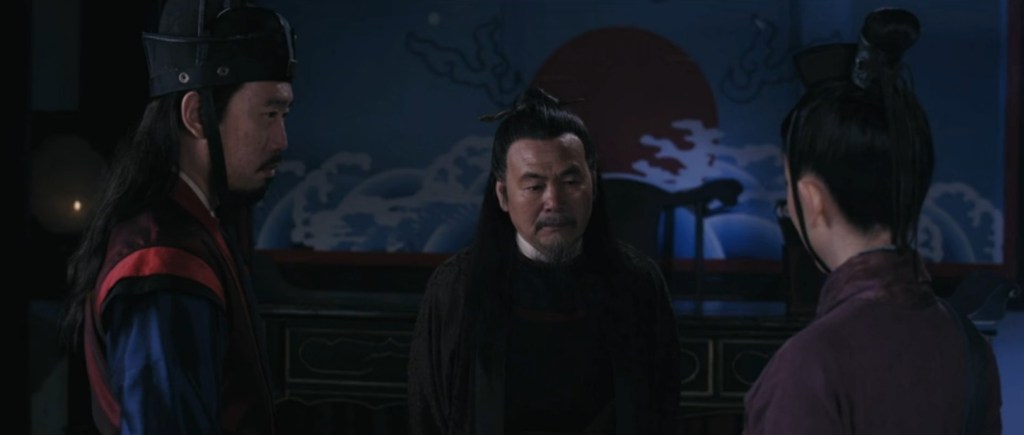
From what I could piece together of the story, there are rumors of a great treasure sealed away underground, but when the father/son duo stumble upon it, they’re lost to their desires and see what isn’t truly there. Feiyan notes that their reason has been defeated by fantasy, and if this movie was even two ticks better, I might have also suffered such a deadly, Jenga block fate. Mercifully, I emerge clear-eyed – and broken-hearted.
Yeah, right. If I can get my hands on the other movies, I’d watch them in a heartbeat – no matter how many sittings. I watch mukbangs, for God’s sake.
 With Eyes East