We Need to Talk About Episode 10
Love Next Door kicks off its second half by hitting the Big Red Button. In my experience, a good K-drama will take its time to develop the characters and their conflicts, nurturing these story fundamentals like a gentle gardener, while other K-dramas will decide at some point to lob a grenade in there and blow up all the flowers. Someone will die, or end up in the hospital, or get hit by a fucking car, or a bus. Love is for Suckers kept introducing extreme situations for the characters to suddenly deal with as the climax to existing, unrelated issues. In retrospect, was this a commentary on the sensationalism of reality TV? In Love Next Door, we know that something happened in Seok-ryu’s past; she took a year off from work and broke things off with her fiancé, and perhaps these two things are related. During a taste test of her cooking attended by both Seung-hyo and ex-fiancé Song Hyeon-jun, she collapses, clutching her stomach, and elects for Hyeon-jun to take her to the hospital.
Feeling solidly second-place, Seung-hyo doesn’t simply go to the hospital also, only showing up after Seok-ryu is discharged. Later, he discovers what happened: Seok-ryu’s been eating too much spicy tteokbokki, and she has stomach cancer. Okay, no car accident this time, they went the illness route. Actually, it was Seung-hyo who was hit by a car, which is what put an end to his athletic career. So, I’ll be honest, I’ve been iffy on Seung-hyo. Initially, I suspected he may have been miscast, that the role needed a 10% dork injection to be consistent with the dongsaeng aspect, or a 10% hunk injection to widen the contrast. Jung Hae-in is a good actor, but he almost plays him too weary, almost haunted? He’s moody, despite his comfort with the world. I don’t know. Regardless, what bothers me most is how Seung-hyo, like all K-drama male leads, expresses concern for the girl by yelling at her. “How could you not be more careful?! You almost got hurt!”
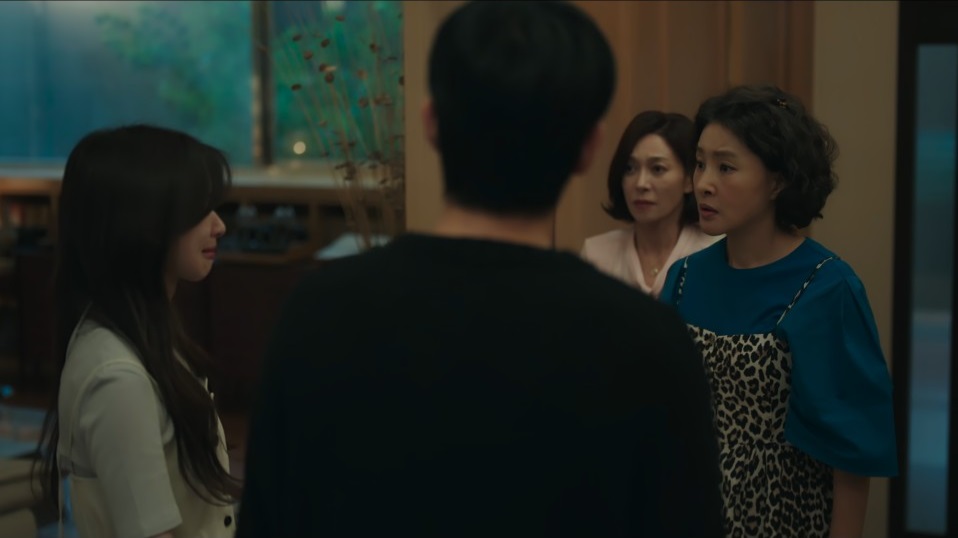
In episode ten, this reflex is shared among the entire household. We open with a rewind, as Mi-sook meets Hye-sook just outside because she heard Seung-hyo was sick, which she knows happens during the summer rather than the winter, to the surprise of his own mother. They reach the Choi/Seo household in the midst of episode nine’s closer, when an emotional Seung-hyo mentions cancer. “Who has cancer?” Mi-sook says repeatedly, prodding with her eyes at both of, in effect, her kids. Having just discovered a pharmacy of pill bottles in Seok-ryu’s desk drawer, she may have an idea, but is nonetheless overwhelmed by her daughter’s slight nod and falls into her arms sobbing. As news spreads around the community, the family reacts with apologetic sorrow, for not having been there and for all the pain dear Seok-ryu endured in the dark. Wait, I’m sorry, that’s incorrect – this eventually happens, but only after their first reaction, which is anger.
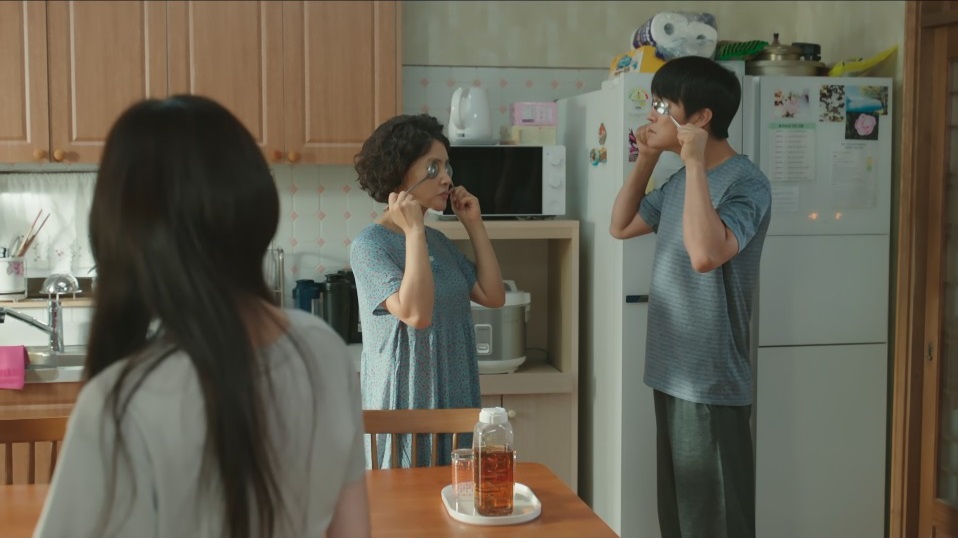
I can understand shock edged with anger during a confused time, but what Mi-sook and Seung-hyo are feeling is denied, of their support roles in Seok-ryu’s life, and are subsequently regretful and reflective, looking inward at the most inappropriate, selfish moment. Only dad Geun-shik has the reasonable response, asking if she’s truly okay now. Otherwise, Seok-ryu has to listen to Mi-sook’s drums through the floorboards, so impressively played as a pressure-release valve. In actuality, Mi-sook breaks down on the drum stool, wailing in sadness to the point of requiring the “frozen spoon for puffy eyes” treatment the next morning. “They looked like Ultraman,” Seok-ryu notes to Mo-eum, whose own reaction to the news is relatively subdued. The most interesting part of this plot thread is how each character thinks back on the clues they should’ve been uniquely attuned to but missed, like with Mo-eum having seen countless people in medical distress as a paramedic.
An extended flashback sequence in episode nine tells the tale of how Seok-ryu came to break things off with Hyeon-jun, confirming our suspicion that he wasn’t 100% to blame. After the surgery and chemotherapy, Seok-ryu fell into a deep depression, and Hyeon-jun stayed by her side as a supportive husband-to-be. He eventually reached his limit, however, and snuck off to a party to finally cut loose. In the ensuing argument back home, he reveals how resentful he’s become by accusing her of dragging him down to a dark place. In the present day, she notes that she’ll be living with her imminent death for the rest of her life, and that’ll occasionally make her sad and anxious. Of course, Hyeon-jun probably believes he can handle that now, which is why he’s in Korea trying to win her back.
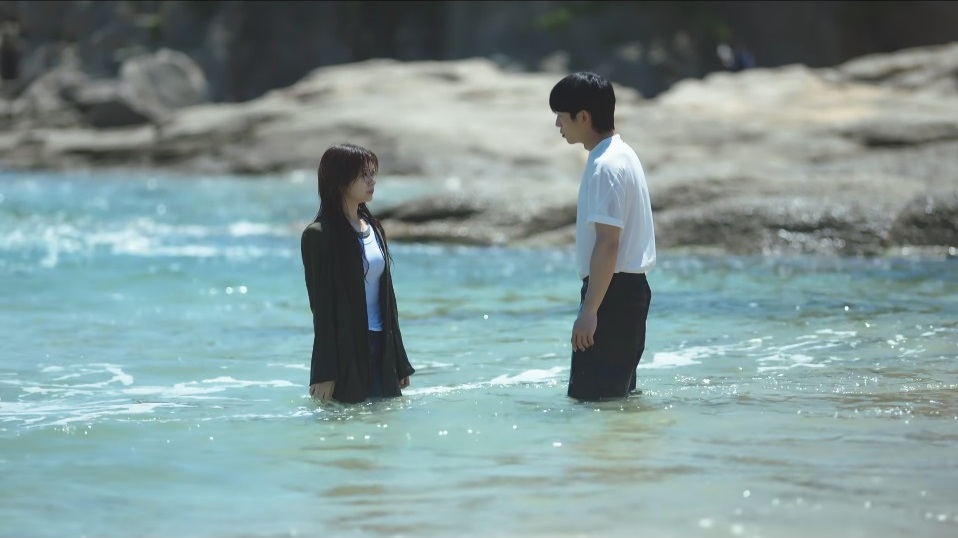
After all the weird behavior from her family and friends, Seok-ryu escapes to the beach where she once ran away from home in high school. It’s a place only Seung-hyo knows about, so he finds her there after searching the usual haunts. This leads us to a confrontation first by the water, then in the water, when Seung-hyo lifts Seok-ryu off her feet and marches into the ocean. He’s still angry, though this time because of the depression part. In the shouting match against the wind and waves, Seung-hyo deliberately provokes her anger so she can let it all out. Now, let’s pause there, because this reads as such a false note. Not only was she dealing with this years ago, not at this very moment, Seung-hyo, it’s also like, that’s not how depression works? For the record, this is a wholly separate scene from the other one where he’s berating her until she’s forced to literally run away.
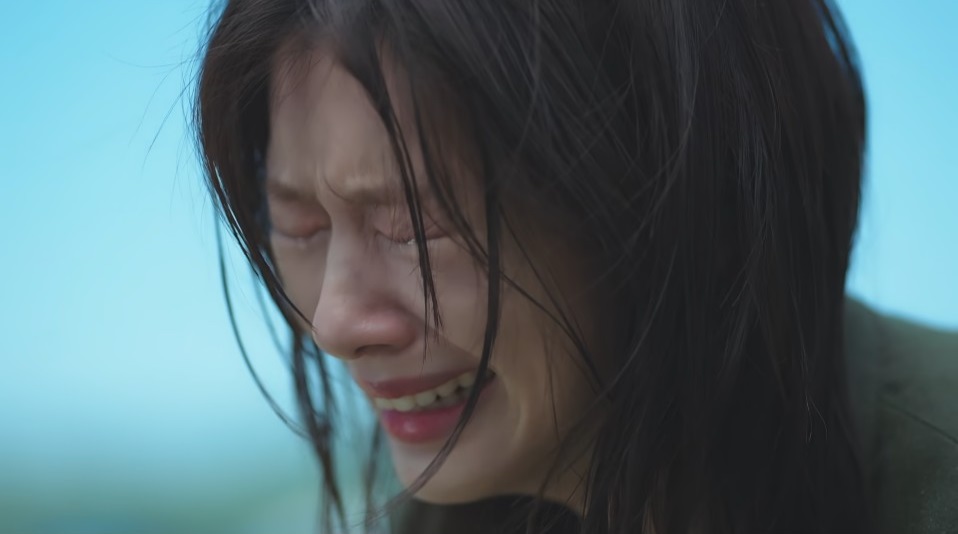
If this plot thread represents the rare failure of a writer to see things from the protagonist’s perspective, it’s a failure Shin Ha-eun set herself up for. In an earlier episode, we saw the other side of Seok-ryu’s decision, when she’s on the phone with Mi-sook and can’t bring herself to say that she has cancer, though we didn’t know it was cancer at the time. I was still going with “car accident.” In that moment, she’s the locus of the viewer’s sympathy. I was sympathetic with her. I, like most people, understand what it is to keep things inside so as not to burden others. She didn’t want to worry anyone, and what could they do, half a world away? Part of the problem with this instance of the Big Red Button is that, like in Love is for Suckers, it’s the mechanic by which we resolve an existing conflict – the mother/daughter drama – instead of seeing the conflict resolved on its own terms. When the dust settles, finally Mi-sook understands the weight of Seok-ryu’s life, and regrets being so hard on her before. Great.
The immediate frustration, however, comes from the timing of this plot thread, following the cliffhanger of Seung-hyo confessing his feelings for Seok-ryu in episode eight. This was me at my most excited, wondering how they’d deal with this new complication – a natural outgrowth, by the way, of what the show had been building. And I should be clear: medical issues like cancer and depression are fair game for dramatic storytelling, but in their deployment here, they’re more like hard left turns (which a cancer diagnosis certainly would be). In cynical terms, they’re shortcuts to pathos. Wouldn’t you be sad to learn about a fatal car accident? This, as we discover, is why Kang Dan-ho has a young daughter and no wife. Man, my K-drama bingo card, look at it.
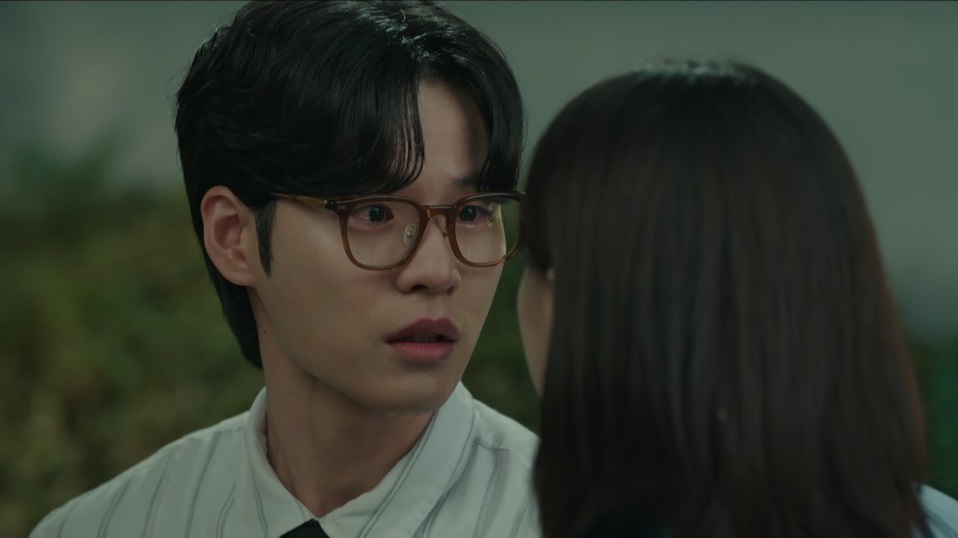
While Seung-hyo’s part in this cancer subplot disrupted the existing story and ultimately made for an overall bewildering hour of television – or, since this episode is an hour and a half long, a bewildering movie of television – his reaction did prove compelling to Hyeon-jun, who sees in the angry outbursts a healthier form of stress management than he’d practiced once upon a time. Later that night, he texts Seok-ryu goodbye, but Seung-hyo of all people delivers her to the airport for an in-person, and supervised, sendoff. It’s only at this point that I realize Hyeon-jun has been The Other Man all along. In the last post, I extolled the virtues of The Other Woman, as I’m always compelled by each of her teary-eyed incarnations throughout the genre. But for whatever reason, I was completely unexcited by Hyeon-jun’s arrival in the very same role.
Character-wise, he’s a bit more bland than the Other Women I’ve seen, with almost no discernible edges. He’s a nice guy? Kind of persistent, but you don’t really buy a one-way ticket out of the country, so I suppose he has a set window. In past examples, there’s an effort made to invest the viewer in the potential relationship ahead of the love triangle. In Love is for Suckers, male lead Park Jae-hoon and Other Woman Han Ji-yeon actually go on a couple of dates. In Doona!, it’s the high school love interest now back in the guy’s life. Search: WWW gets extra points for making us care about the relationship between the Other Woman and the female lead before everything comes to a head. Hyeon-jun should fit this bill. He was engaged to Seok-ryu, and he was the only one there during her darkest hour. He did the emotional labor, if you will, that Seung-hyo didn’t, which makes me think of those people in the folds of the Internet who helped deliver exes to their better selves and other relationships.
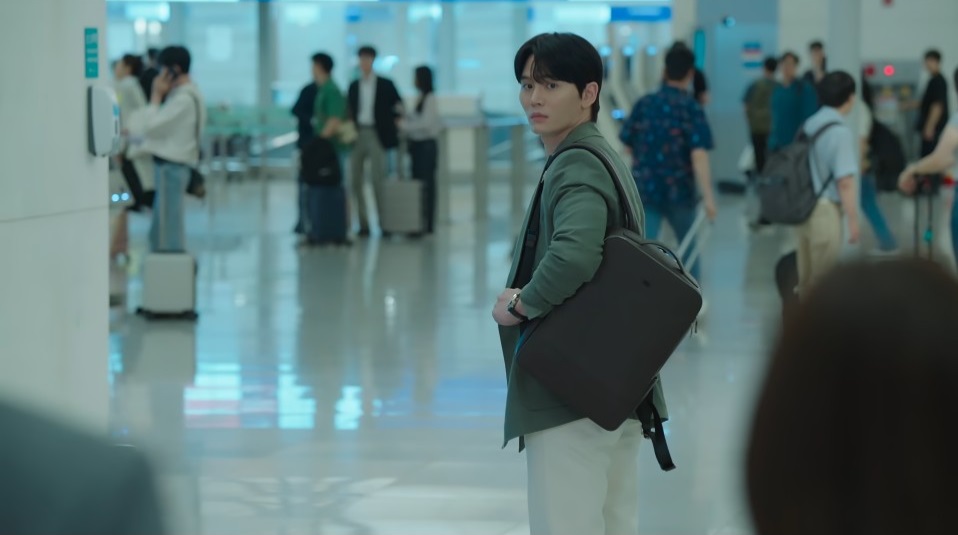
That isn’t exactly what happened, and while I don’t think Hyeon-jun made a fatal error in the relationship, I also don’t blame Seok-ryu for leaving him. In the final calculus, he’s the victim of something like perspective bias. If this story were presented chronologically, we might have rooted for him over the guy who calls her dad “Uncle.” But of course I want it to be Seung-hyo, because I actually know anything about him. It was disappointing to see Seok-ryu pull away from him after the big confession, and I’m still unsure why that happened. She talks about her elevated sense of mortality turning love into a distant prospect, but I wonder if she doesn’t want her relationship with Seung-hyo to suffer the same fate as her and Hyeon-jun’s. For a show so willing to have its characters speak, even cry their feelings into the air in private moments, this ambiguity is more confusing than purposeful-seeming.
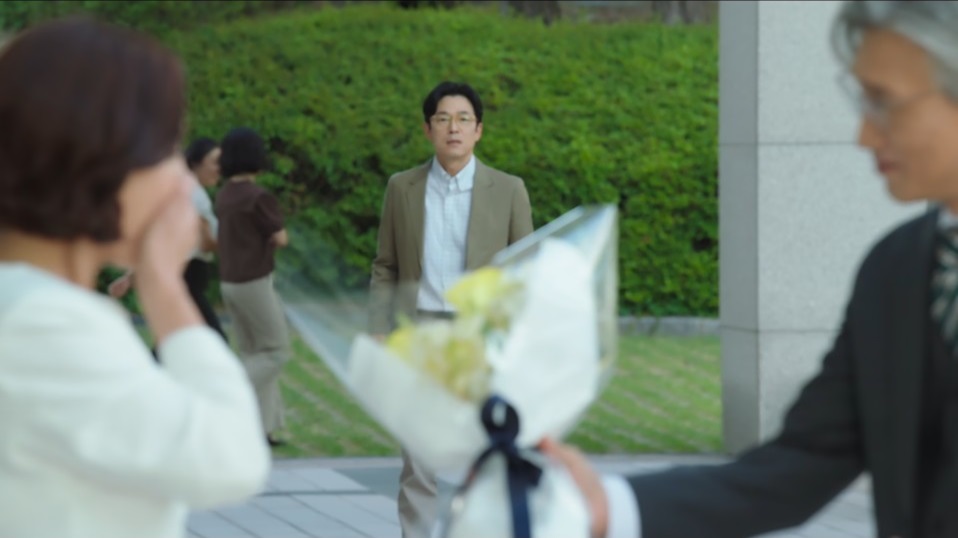
And that’s a wrap on episode ten – nearly! This is, after all, a mega episode, and quite possibly the longest of any K-drama I’ve ever seen. For our last thread, it finally dawns on Seung-hyo’s father Dr. Choi Kyung-jung that he has a super-hot wife, so he decides it’s time to stop moping around and rekindle the old fire. He texts Hye-sook about getting lunch and then literally skips his way out of the hospital. No cafeteria food today! He rounds a corner, and I swear to Kali, he sees her with the g– you know, the guy. Vice minister something. I’m usually rolling my eyes so hard whenever this character’s on-screen I never learn his actual title. I mean, this is stunning. The absolute brass balls on Shin Ha-eun. When first she did this exact same scene, Kyung-jung also rounds a corner so we can reveal Hye-sook with Mr. Minister in a scenario that could possibly, maybe be extrapolated as romantic. When it happens the second time, I shouted at the screen. “Do not walk away!” And he does. Next time we see him, he’s putting the papers on the table. Talk about the Big Red Button.
Well, we made it through. This is around the time I get more critical of a K-drama, after a rosy first Report, if only because there’s more available to potentially criticize. But we’ve had the big reveals – always risky plays – and the early pleasures are giving way to heavier melodrama. It’s the funny paradox of K-dramas, which especially excel at building alluring, comforting worlds and battering viewers with sometimes obscene levels of tragedy. In the end, the formula is solid enough to sustain its global cult following, hopefully captured in micro by these frantic K-Drama Reports on thine humble blog, though the strange thing about Love Next Door is that Shin Ha-eun is clearly part of that following. She’s already broken the fourth wall by referencing Something in the Rain in a scene with one of its stars. We’ll see how studied Love Next Door ultimately feels, if its “second act pains” are only temporary and writer-sunbaenim can successfully navigate these irresistible tropes which still lay like mines in the sea.

