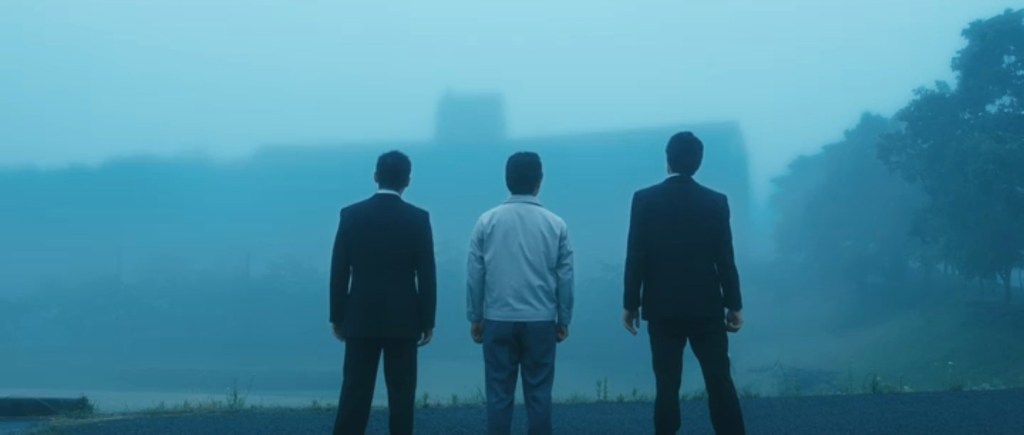

Directed by Yugo Sakamoto
Starring Seiji Fukushi, Haruka Imô, Tomoya Maeno
The onset of Ben Affleck sequel The Accountant 2 is occasion to reflect: what is this thing we do? Whether it’s Jason Statham is The Beekeeper or Tom Hiddleston is The Night Manager or Charles Bronson (and Jason Statham) is The Mechanic, these titles are, like, almost a metaphor? It’s more like an unspoken understanding, between the dads who make these movies and the dads who watch them, that this is gonna be about a reserved, quiet guy who’s secretly a badass. Sheds the accountant facade (glasses?) and springs into action, possibly to give a couple of taunting bad guys what-for. “Hey, old man!” they taunt. We can probably add A Janitor to this pantheon, but with asterisks. At one point, the girl character says to/of our titular janitor, “You’re not an ordinary man,” which is true to the form, but then it’s like, I don’t know why he’s a janitor?
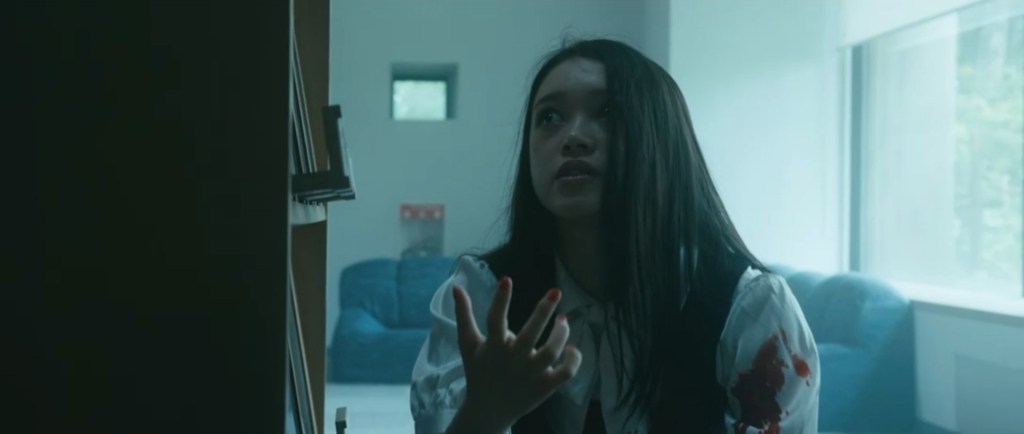
Our resident badass is Akira Fukami, and long ago, he lived an innocent life as a little boy on a tricycle when his yakuza father was shot to death in front of him. He’s taken in and raised by his dad’s friend, fellow yakuza guy Yoshiki Majima, and we flash-forward to when Fukami’s a brooding adult mopping the floors at a high school in order to keep an eye on Majima’s daughter Yui. We have to trust that, at some point, Yui will be targeted for termination and Fukami will indeed spring into action, which happens, but what does the whole janitor thing add to that equation? He mops some floors, says nothing, and has a couple of encounters with student bullies, who are introduced bullying a teacher. The lead bully punches Fukami in the face, and he doesn’t fight back, presumably to not blow his cover. And then the plot shifts into the springing!
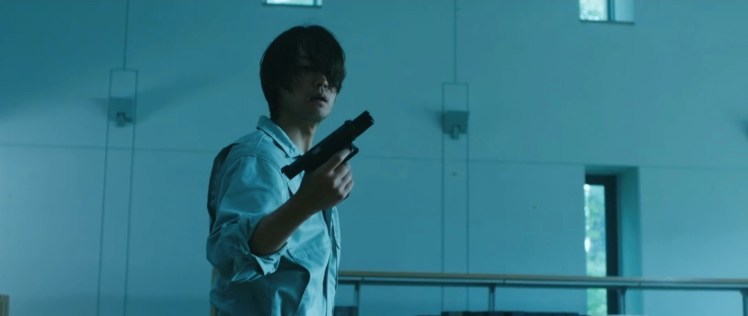
What’s missing here in the “janitor” component is a lot of setup. Not only character but that specific dad fiction joy of the undercover badass. It’s strange to me, because director Yugo Sakamoto would go on to work with Japanese action legend Kensuke Sonomura multiple times, so I assume (maybe unfairly) he’s in that clique with Tak Sakaguchi and whoever else remains on the forefront of Japanese action cinema. Theoretically, he knows his stuff. He’s almost got it, but not quite, which is insane given how basic our story is. Fukami and Yui never develop a relationship, making the dovetail of their dramatic arcs visibly apparent but emotionally nonexistent. They share sort of a thematic relationship, but that still doesn’t help, only exemplifying what could have been – and we know exactly what that is. This was sorted more than 30 years ago with Terminator 2. Maybe this action movie director never saw Terminator 2?
The film opens with the scene of the elder Fukami being shot – and this movie has some terrible death acting – which proceeds without dialogue and cuts in and out of black. It’s working with a shorthand and prioritizing film language, which hearkens to a much different ‘90s American film tradition: the deconstruction inherent to the rise of indie cinema. Strangely, again, style is kind of the missing ingredient here. We’ve got quirky killers, yakuza politics, and martial arts, each of which usually come packaged with an overarching theme or aesthetic. A Janitor is so matter-of-fact, which takes the air out of a lot of the big performances and attempts at humor. It’s nearly the same complaint I had with Bad City, which was so stock-standard as to be entirely bereft of character, but A Janitor does have sparkles of personality here and there.

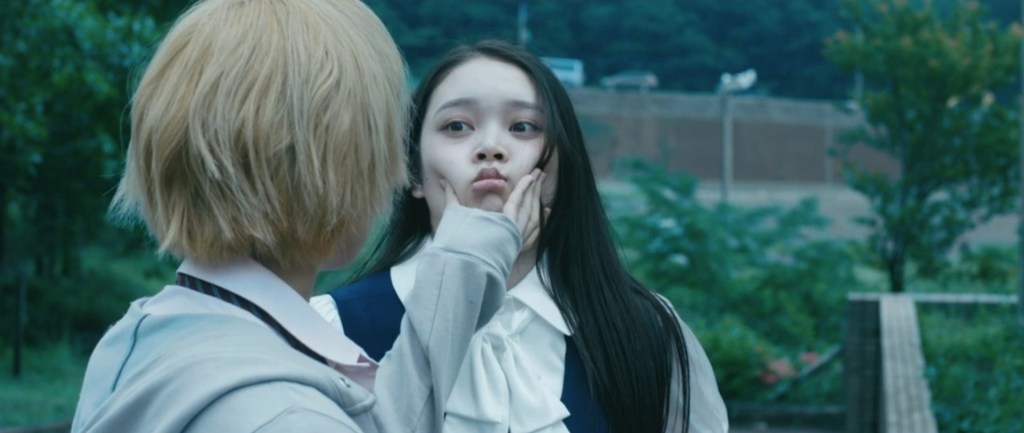
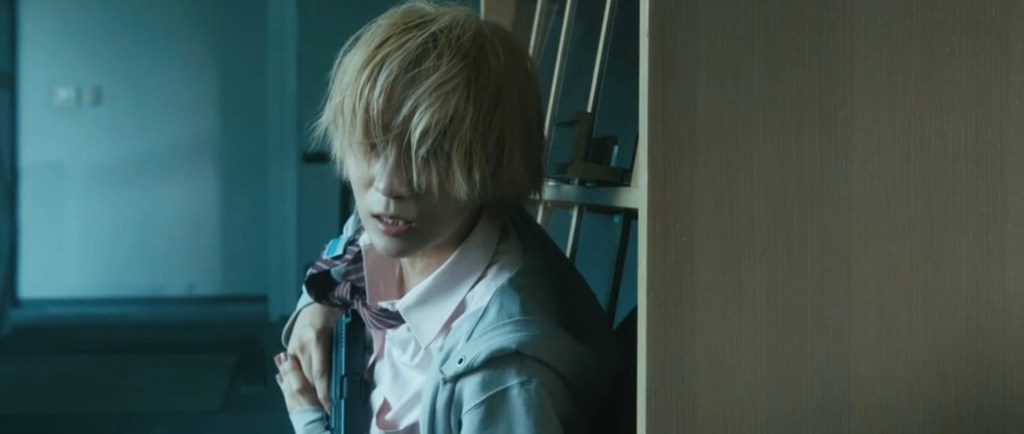
Chiefly, the baby assassins. Akari Takaishi and Saori Izawa feature in this movie as hit men who could easily be confused for their Baby Assassins counterparts. Izawa is quiet and serious while Takaishi bounces off the walls – but is way less serious than Chisato. While it was delightful to see a little bit more of those two in my personal doldrums between 2 Babies and Nice Days, it was only disappointing in retrospect that I couldn’t see the actresses try something different. Obviously, A Janitor being released a few months before the original Baby Assassins meant that it was, if anything, a dry run for Chisato and Mahiro, but it’s almost like Yugo Sakamoto doesn’t know any other way. He knows what he likes and he sticks to it.
Suddenly, all the little quirks don’t feel like accidents. So what if he never saw Terminator 2? (I’m 1,000% sure he did). Maybe it’s time the action genre had some new, weird ideas. Genre exercises that don’t follow the recipe, remixes of old tropes to no actual end. If anything, A Janitor wasn’t Sakamoto enough. That’s right, let me complain about your movie for the entire review and then try to cover my ass. That teacher antagonized by the bully shows up later to protect him, and the story deals with some actual drama. Devastated by a life-shattering revelation, we watch as Fukami breaks down sobbing. Whoa! The film reads to me as an evolutionary step, transitioning from basic Hollywood tenets toward still unformed but more inspired filmmaking.

This one was solid. Aside from some of the issues cited above, it’s possible the only difference between this and Sakamoto’s other works is subject matter. At the close of A Janitor, when its final note takes us into the credits with a cool pop song by some probably cool-looking Japanese dude (not unlike our hero), I had this feeling of, “Yeah, that guy’s cool.” I like the Man with No Name and Le Samourai and the martial heroes of the Chang Cheh tradition, but you know, I love Chisato and Mahiro. I could watch a whole movie of them just sitting on the couch, bickering and spilling food everywhere, and I can’t say the same for an accountant, a beekeeper, or even a janitor.
PS. This is very important to me: they aren’t actually Chisato and Mahiro, just like Jason isn’t a Deadite. I could almost buy that they’re younger versions of those characters, being less experienced. In fact, I don’t even know what qualifies as an assassin in A Janitor. Takaishi gives her typical wildman performance, but that means she’s spraying bullets one-handed and traipsing through rather than navigating hostile environments. To be an assassin, you just have to have a gun.
 With Eyes East