
Directed by Kensuke Sonomura
Starring Hitoshi Ozawa, Akane Sakanoue, Katsuya Takagi
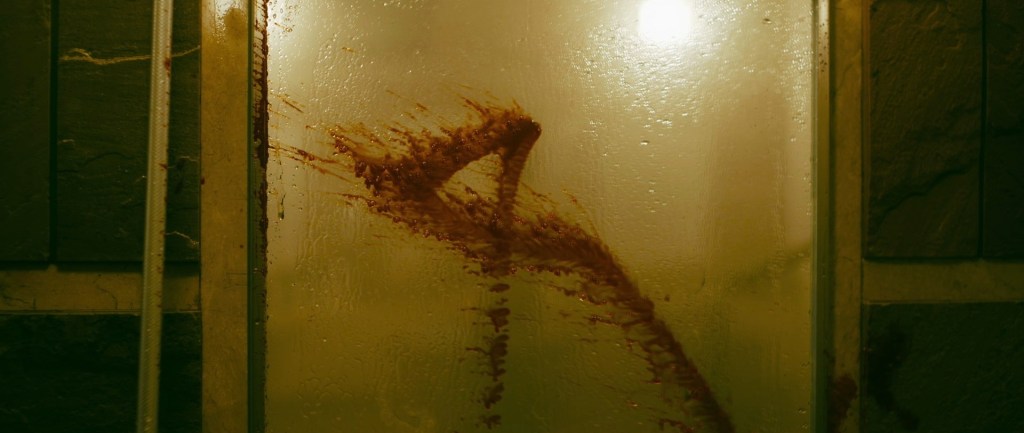
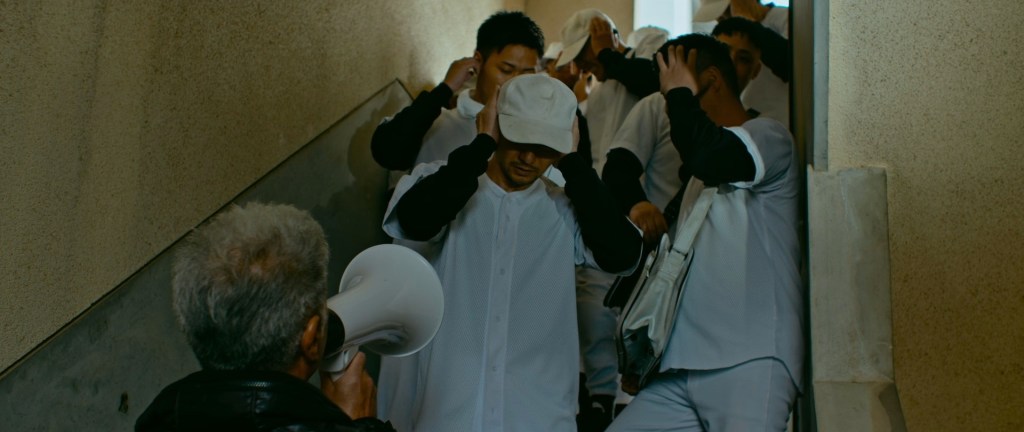
The year is 2022, and we’ve had decades of action movie innovation. The bare minimum has to be: “What hasn’t been done yet?” which must be how you get “megaphone as melee weapon.” In Bad City, a white-haired badass squares off against a group of thugs disguised as a baseball team, and after shouting at them through the megaphone at point-blank range, beats them with it to the peculiar rhythms of director Kensuke Sonomura’s light-speed fight choreography. After clobbering several bad guys, he tries to use the megaphone again as intended and finds it’s broken. Already, this is a marked improvement on Sonomura’s previous film, the bewildering Hydra. Inexplicably presented, that movie would’ve benefited from a simpler script guided by cliché, and so it was, initially, a relief that Bad City acquits itself with a police investigation, corrupt politicians, and evidence stored on a USB stick.
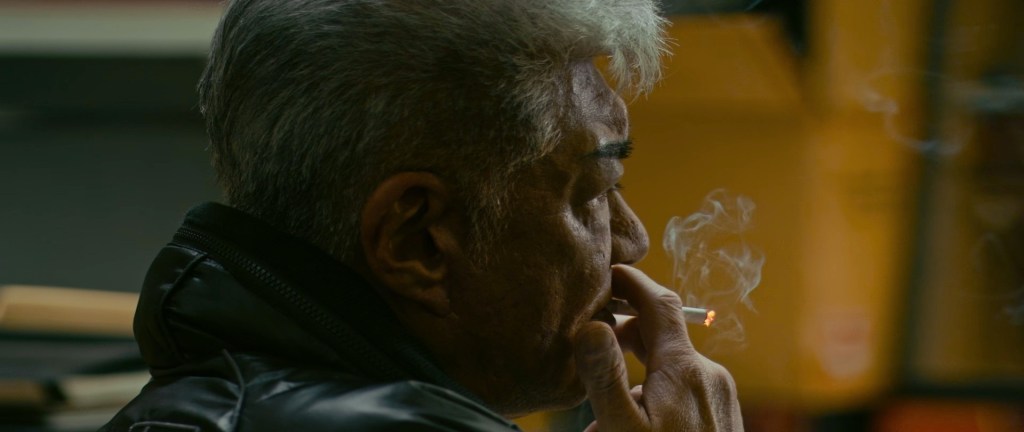
It’s all functional but nothing special, surely the underside of the achievement of cliché. There are shades of Takeshi Kitano here, even Don Lee movies, but none of the flavor. The white-haired badass is Torada, and played by Hitoshi Ozawa, he looks the part and sounds the part, but is actually a pretty straight-laced cop. We first meet him in prison, told that he’s a detective who murdered a gangster. He’s released in order to join a secret task force made up of his former team and, for some reason, a rookie, to investigate a yakuza massacre. Over the course of the investigation, Torada stirs the usual reactions out of his superiors. “Uncuff him,” he says of a captured suspect, to which the captain says, “What?!” He’s not exactly gonna follow your rules, lady. But that’s about as rogue as he gets. We also learn it was a frame job; he did not, in fact, murder that gangster.
Because he’s still technically a convicted murderer, Torada isn’t allowed to use guns. This is a bad city, and you have no weapons of any kind? As such, he relies on his fists, and I do like that he adds a brawling edge to the fighting style. Lots of big swings. I’ll take any spice, because I admit I’m starting to feel the Sonomura fatigue I’ve heard about online. I think the problem is that his choreography is so specific, and therefore doesn’t lend character to the combatants when everyone – from the rookie to the Korean businessman – uses the same style. It also never looks entirely practical, only working in select scenarios. So far, my favorite Sonumura fight is the bank robbery in Baby Assassins: 2 Babies, where Chisato and Mahiro beat up two unskilled opponents in a whirlwind of fists and phones and a binder. They’re showing off and having fun, and it makes sense.
The Sonumura fight tends to be weakest at the climax, with no “hook” on the assumption of dramatic weight. No gimmicks, no angle, no environment, just pure fighting, which only works if we care about the outcome. In this case, why do I hate this Kim Seung-gi guy? Because he had Detective Kuma killed? Who’s Detective Kuma? And then there’s Gojo, who’s redeveloping some part of the city with residents I’ve never met – and putting in a casino? Look, I don’t want to go all “You don’t know what a bad city really is, man,” but the year Bad City was released, my home state of Massachusetts legalized sports betting, using apps and pushy commercials to enable countless gambling addicts. This is when a conscious retro throwback is a bad thing, because the criminal conspiracy is also outdated.
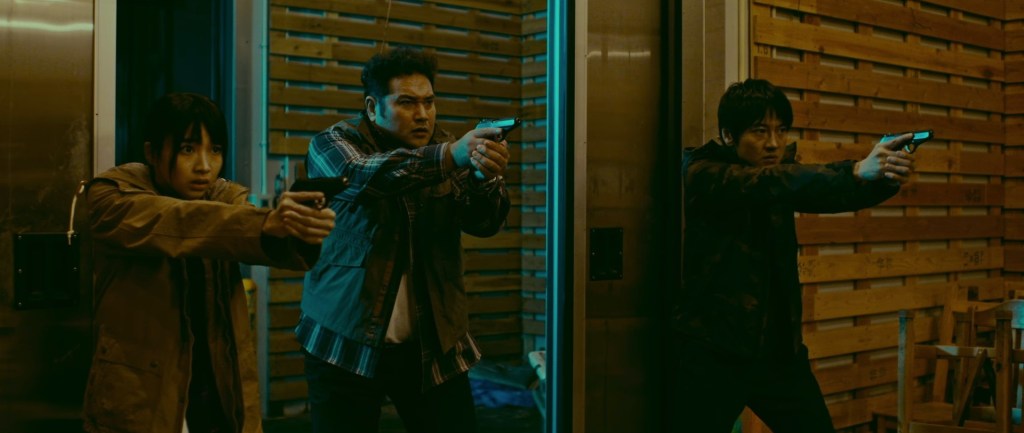
More to the point, while the genre exercise gives Bad City a structure, meaning fewer narrative pitfalls, it also requires enough chaff to ultimately extend the runtime past the 90-minute mark. The rookie cop has to learn how to be a better cop, sort of, gangsters betray gangsters, I guess, the corrupt politician holds press conferences. Honestly, an action movie with a plot this involved is a sign of care on the part of the filmmakers, but the plot isn’t the point, guys. It’s meant to be a springboard. A good movie, action or otherwise, is made up of compelling story beats expressed in interesting scenes. I needed more megaphone.
As a director, Sonomura isn’t making the best use of the tools at his disposal to orchestrate moments. As an audience, we aren’t delivered along a roller-coaster ride to each new thrilling set piece, but rather doing calculations trying to piece together cascading conspiracies presented out of chronological order. Bad City has the appearance of a gritty crime drama, even a chassis, but nothing under the hood – nothing awesome, which continues to astound me given the uniqueness of Sonomura’s action. The movie climaxes with a big brawl where dozens of police and gangsters clash like two medieval armies on a battlefield, and the fight choreography, so much about focus and a dance-like exchange, reaches a zenith of implausibility. Standalone spectacle, with a basic movie around it. Action can be so much more.