

Directed by Kensuke Sonomura
Starring Akari Takaishi, Mario Kuroba, Masanori Mimoto
Action maestro Kensuke Sonomura finally nails it as director on his third attempt – with a little help from his friends. After a baffling debut, Hydra, and its unremarkable follow-up Bad City, I’d have to be a real sucker to stick around for whatever came next. Well, “Akari Takaishi” is always a compelling argument, the ex-idol actress with a fairly standard career – TV dramas, manga adaptations, animation voiceovers – but for the occasional Baby Assassins title, which intervene on her filmography like a running joke. In fact, it’s Ghost Killer that comfortably proves her participation in Baby Assassins wasn’t a one-off (or a four-off, to be fair). Equally crucial is a script by Yugo Sakamoto, the creative braintrust behind, well, Baby Assassins. As a screenwriter, he may be rough and tumble, but his work here is surprisingly disciplined. Ghost Killer may be the most technically sound accomplishment between either filmmaker.
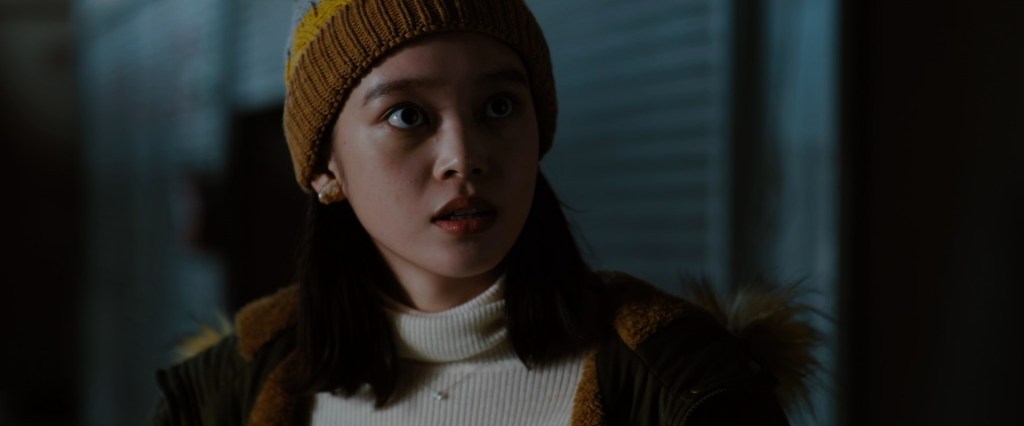
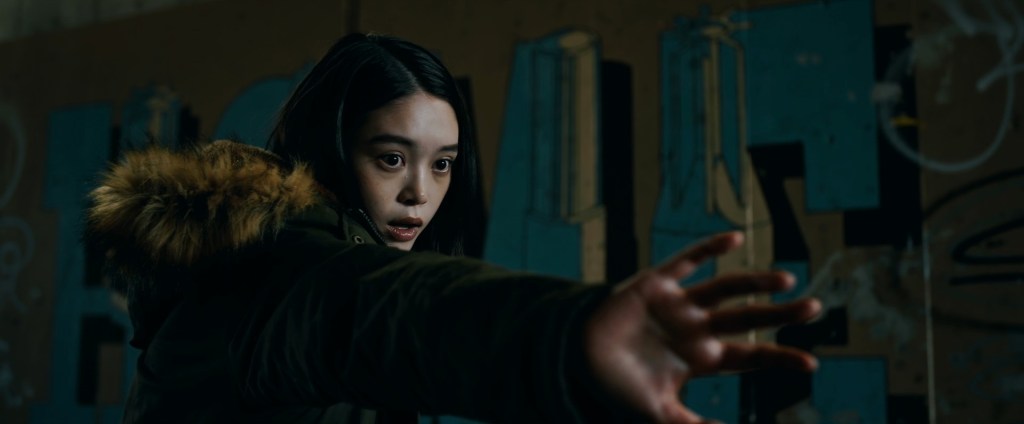
We’ve got a high-concept setup, with Takaishi’s ordinary college student Fumika being possessed by the ghost of a recently murdered hit man played by Sonomura standby Masanori Mimoto. What’s surprising – and maybe not so surprising – is that this premise is played pretty straight. It’s not even what I’d describe as an action/comedy. I mean, we end things in the expected gangster warehouse, so I’d say this is less like a Freaky Friday with guns than it is a typical modern Japanese action movie with a slight twist. Mostly, the humor derives from Fumika’s early navigation of the ghost part – running away from the ghost, not understanding the ghost rules, looking crazy because no one else sees the ghost, and so on. In these scenes, Fumika shares some of Chisato’s mania, Takaishi’s character from Baby Assassins. I don’t know if that’s Takaishi’s instincts or Sakamoto’s, but she’s sputtering and fluttering and the words erupt out of her like a volcano.
For Sonomura, this character exhibits something novel: interiority. He knows when to punch in on Fumika’s face, and Takaishi does the rest. We see that she’s already harboring violence inside even before her fateful ghost encounter, assailed by the usual indignities of modern womanhood. Her friend Maho is a victim of physical abuse by her boyfriend, which leads us to a telling sequence, the sort of prescriptive moment when Fumika accepts her great powers (and great responsibilities). So, she’s running away from the ghost, Hideo Kudo – or trying to, as he keeps reappearing in front of her like a video game companion – when she stumbles onto a scene of Maho being abused. It’s a basic but still effective setup, enough to where we know what happens next. In her intervention, she’ll be overwhelmed, so when Kudo possesses her, she turns the tables. Right?
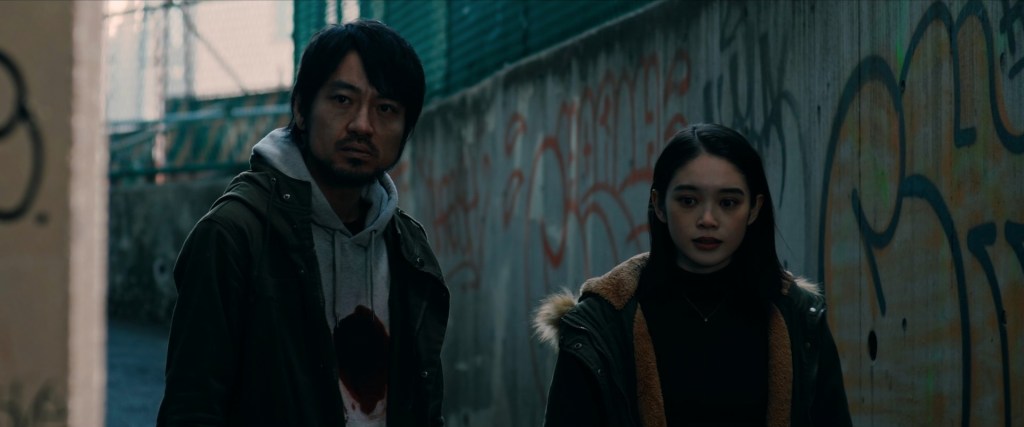
Not exactly. She does confront the abusive boyfriend, who just leaves and takes Maho with him. Kudo appears behind Fumika and asks, “What are you going to do with him?” He offers his services, but she refuses. “Don’t you want to kick his ass?” he says. She walks away, only to turn the corner and witness further abuse. Now she accepts, by way of Predator handshake. That is so inefficient. It also requires the somewhat awkward reiteration of the boyfriend abusing Maho, like he stops and then starts again. The only real benefit I can divine is that it allows Fumika more agency in the decision? I’m actually kind of shocked by some of the movie’s gender politics, though that’s always been a Yugo perk. Later on, Kudo will argue for Fumika to allow him to possess her in order to take revenge on his murderers, and cites her choice to intervene on the boyfriend situation, but I didn’t need to see her verbally articulate the choice to understand she’d made one.
Fumika’s first instinct, however, is exorcism, in a world where it’s easier than you’d think to convince people that ghosts are real. This is some efficiency, then, doubling as expository – “Why doesn’t she just get rid of him?” – and placing a “point A” pin on the character arc, at the far end. Unfortunately, Fumika doesn’t exactly stretch to eventually place point B, rounding back to the “I don’t want to do this” refrain after every possession. Her ultimate motivation is more of a punchline, as the college kid/ghost story gives way to our usual gangland punch-’em-up. As Fumika fades to the background (though not entirely), a conflict emerges between Kudo and his former protégé, Kagehara, which hovers on the melodramatic territory of A Better Tomorrow, rather than, say, A Better Tomorrow II. In other words, it’s effective, and almost poignant.
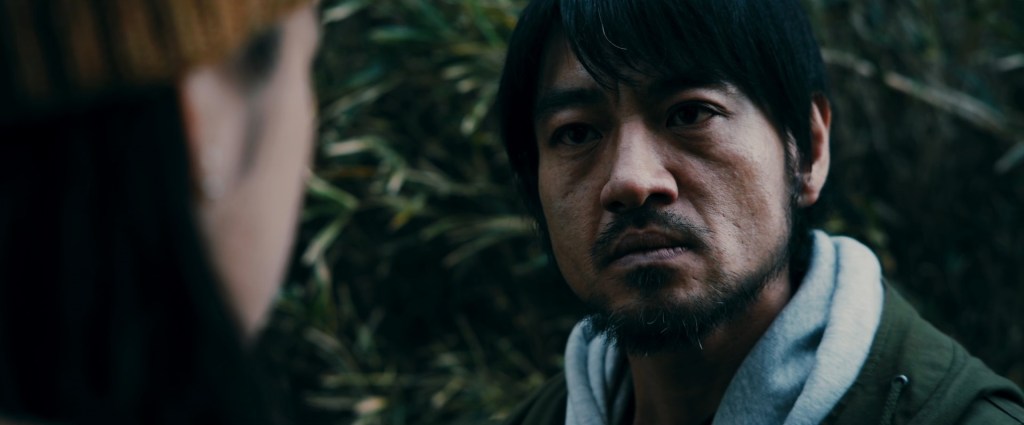
Most importantly, by the time we have the only climax Sonomura and Sakamoto can ever come up with – a one-on-one fist fight in a bare room (no items, Fox only, Final Destination) – I’m fucking there. I’m actually there. Kudo/Fumika’s opponent isn’t any more developed than Mad Dog (either the Hard Boiled or The Raid version), but he’s that familiar psycho henchman guy. In his introduction, he wipes out an entire gang off-screen, including another Sonomura/Sakamoto standby, Yasukaze Motomiya. Come on, guys. Dude is way too hot to waste like that, but I assume he just bums around these sets along with everyone else in the clique. It’s that we understand Kudo’s motivation enough, despise the villain enough, and Masanori Mimoto is convincing when Kudo tells Fumika that he won’t let her die (leading to the film’s few supernatural gags, like literal ghost recon).
Mimoto shades an otherwise archetypal badass with funny petulance and even tenderness. I can see how Fumika and Kudo are learning from each other as they go. Of course, Takaishi is the star of the show, often playing two parts simultaneously – in addition to the light-speed fight choreography. It’s a very physical performance that requires good face acting if we’re to believe that she’s toggling between frantic Fumika and focused Kudo and that, you know, she’s genuinely determined to beat up three would-be date rapists. When she slowly tilts her head up to answer Kudo “yes,” it’s very persuasive. She’s also incorporating some of those deadpan punchline deliveries I liked so much in Falling Student and Irresponsible Teacher. This shift of priorities to a performance-forward film is clearly to Sonomura’s benefit, showcasing a subtle directorial hand.
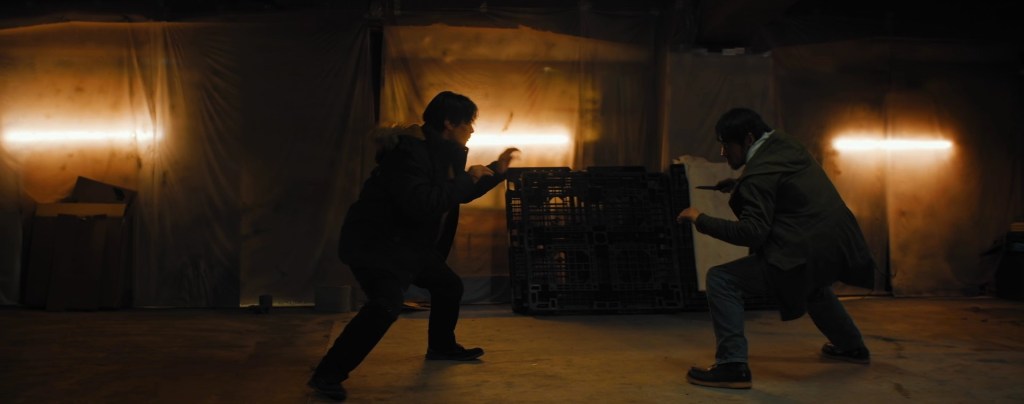
It’s a step in the right direction, for sure, as Sonomura and Sakamoto bring out the best in each other, but Ghost Killer nevertheless suffers from their individual quirks. Like all of their movies, excepting possibly Baby Assassins: 2 Babies, it’s kind of hideous to look at. Sonomura isn’t super interested in camera composition, always choosing the functional over the expressive – not a crime, exactly – but it’s the colors, man. The colors are muted, the blacks are crushed, the fills are blown out, and it’s all offset by a half-hearted attempt at neon accents which, I know, are the style at the time. The production design favors obscurity, with shadows and, like, bedsheets pulled over light sources? Unlike the key complaint I had with The Shadow Strays, though, there is a nod toward visual iconography with Fumika’s jacket and knit cap. Character design – it’s important even outside of animation and video games.
We’ve also got that stop-start rhythm characteristic of the Baby Assassins movies, though those were less concerned with having a plot; it’s a bit more problematic here. Ghost Killer runs at an hour and 44 minutes, unlike the 77-minute Hydra and the two-hour Bad City. When you’re working with material this formulaic – again, not a crime – deviations off its established 90-minute sweet spot signal strange pacing. Scenes which go too long, repeated character beats, you name it. Judging a movie by its runtime is, I’ve found, sadly useful.
PS: After Baby Assassins, Baby Assassins: 2 Babies, and now Ghost Killer, I don’t know why Takaishi isn’t more involved in the hand-to-hand finishers. I get that she’s a little bean sprout, only years removed from teenagerhood, but there are always workarounds. Her fisticuffs in this movie are brutal, crunchy – as a whole, Ghost Killer scored a lot of audible “oohs” from me – but I guess I’ll cross my fingers for Baby Assassins: Nice Days next month.
 With Eyes East