The Furious follow-up, the politics of “dumb fun”
I posted a review for The Furious one week ago, and haven’t been able to stop thinking about it – not the movie but the review. And not just because it was a brilliant piece of film criticism, but because the apparent dichotomy between its near-perfect star rating and the more negative text of the review indeed represents a confusion I’m still processing. To go back, it wasn’t too long before my learning about The Furious and hearing the swell of excited reactions out of the festivals. This was the next Raid, and unlike the other Raid-likes over the years, it was coming to U.S. theaters. That had to mean something. Then the trailer releases online and, in addition to being phenomenal, is filled with enthusiastic, superlative sound bites. “One of the best action films of the decade” (in a decade which includes RRR, John Wick 4, and for me, Baby Assassins 3). I click around on Reddit and read similar opinions, though one person comments that the trailer pretty much gives everything away. “How could that be possible?” I huff. Well, one punch at a time, and I think this was a huge part of my reaction.
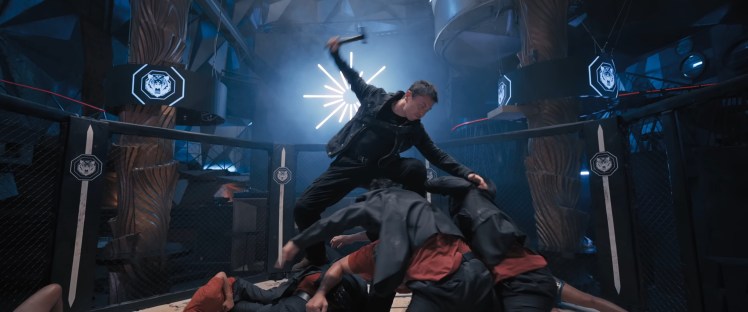
Because I watched that trailer a couple of times (plus a few more), I saw every location and every set piece, in chronological order. My experience of watching the actual movie was, “They’re sitting in the hair salon and I know the daughter’s about to be kidnapped because he was wearing this shirt in the trailer when he’s chasing after the truck,” and “Oh, snap, when is he gonna smash the big dude with the sledgehammer like in the trailer?” The only surprises held back were Jeeja Yanin (seen only in a photograph) and the extent to which Brian Le’s character keeps returning from the dead. This sounds minor, but we’ve all been around long enough to have some aspect of a movie spoiled by our modern, extra-long trailers. I remember closing my eyes through several showings of the trailer for Civil War, and as a result, was amazed by the end sequence in Washington, D.C. I had no idea we’d even see a battle.
My initial assessment of The Furious leaned on its relative lack of gore, but I did some “research” and found it was something else. I love Kensuke Sonomura, but he has a much different rhythm than what’s seen in The Raid and The Night Comes for Us, which I believe were choreographed by Yayan Ruhian and Iko Uwais respectively. A classic Sonomura fight scene is both intricate – with missed jabs and swirling reversals – and protracted, where the fights in The Raid: Redemption are hit-and-runs. As a point of comparison, I watched my favorite scene, the drug lab, and found that my “oohs” and “ews” didn’t come from extreme gore but something like finishing moves. It’s when a kick lands at full power or a guy gets swung face-first into a pillar. On purpose, Sonomura fights don’t really have these punctuating moments. And matched up with Kenji Tanigaki, that hasn’t changed for The Furious. The fight scenes are crazy and athletic and creative (the man pyramid is truly awesome), but they’re also kind of shapeless and lacking oomph. Unlike the other great fight coordinators across time and space – Lau Kar-leung, Yuen Woo-ping, Sammo Hung – Sonomura is the only one who can be too much of a good thing.
So, I was trying to express two ideas at once with that review: The Furious is 100% worth seeing in theaters, and it was a little frustrating. It might earn that extra half star from With Eyes East’s top critic because of the sheer technical excellence of its action set pieces, but again, I have to emphasize that action movies are more than that, which we might have forgotten lately. Real quick, though, it also occurred to me recently that Joe Taslim is in his 40s, and while there’s no age cap on action stars anymore, he has no business moving like that (even mid-30s, I’d barely believe it). My own issues with the movie aside, the important thing about The Furious is that it’s making great use of the kind of talent which goes typically overlooked (read: Asian). I’d rather see Taslim here than as the villain in a vehicle for some third-rate Hollywood guy, which could describe a lot of Iko Uwais’s stateside career. And frankly, between the legitimate dramatic acting in Warrior and the spectacle of Mortal Kombat, Taslim’s making all the right moves. Very rarely is he in something I’d skip altogether, like Star Trek Beyond.
Ultimately, my own sound bite for The Furious, remembering the police characters and the boring “they kidnapped my daughter” premise, is that it’s a mediocre movie with best-in-class action. And the daughter thing, it’s surely cliche, used to power equally mediocre thrillers like Taken and The Man from Nowhere, but it utterly deletes the main character. Now, I appreciate an action protag built completely on the fly. No flashbacks, no backstory – pointed, in this case, like Derek Kolstad wink-wink metafiction – just 100% synchronicity with the audience. For example, Chev Chelios in the Crank movies. He’s gonna die if he doesn’t do whatever, so he’s running around doing whatever and colliding into crazy set pieces. And he’s being an asshole while he does it because he’s impatient by necessity, and that’s a compelling character whose very presence makes every scene electric with fun potential. Wang Wei is caught in the grey zone (“grey” like drab) between someone who’s fun to watch even when standing still like Chelios, and an actual exploration of a dad fighting to rescue his daughter from sex traffickers. Like, that’s a lot of emotion, but I don’t feel his panic or anger or stress, only some of his sadness. And to the point of this post, I violently reject that I don’t need to feel these things.
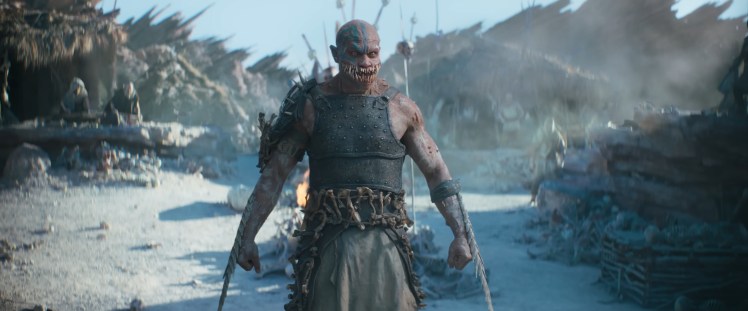
In some reviews of The Furious, and in Internet chatter around Mortal Kombat II and the 2026 Street Fighter, I’m noticing a trend of praising these movies for being brainless or outright stupid. With the two video game adaptations, it’s a recognition that, unlike with past incarnations, these new ones aren’t taking themselves too seriously. But I don’t want us to make the mistake that if the primary language of a movie is “fists,” then it’s automatically as meatheaded as the archetypal action movie as defined by true stupidity like the Rambo sequels, Seagal movies, and Commando, and that’s before you get into the mask-off xenophobia of Chuck Norris’s bottom-of-the-barrel catalogue. Mortal Kombat especially taps into a cinematic tradition – the Hong Kong wuxia film – which has produced such thoughtful movies, with verbose philosophy and deconstructions of heroism. There’s a beauty to the hero’s journey in The 36th Chamber of Shaolin, a beguiling revisionism in The Blade, and spiritual transcendence in A Touch of Zen. It’s true that this year’s Mortal Kombat II was stupider than these three examples, but it embodies similar themes along with aping the visual aesthetics.
So, when something is “stupid,” be sure to know which part is stupid, as otherwise, I’m left to conclude that the claim comes from a place of insecurity. Because those ‘80s and ‘90s action movies were so stupid, the adolescent counterpart to the more intricate or politically charged “men on a mission” jaunts of the previous era, modern action movies are so goddamn insincere. I feel like this entire blog is just me reiterating that, or talking about K-pop, but they’re still doing it this way! I watched Sisu: Road to Revenge recently, and like Ballerina and the Nobody movies, it’s all so basic. They take the “Chuck Norris meme” aspect of John Wick and assume that’s sufficient characterization – for an action movie, let’s specify. It’s not that the guy in Sisu (who’s practically mute, like Wang Wei) needs sufficient characterization for a character study or a movie with machine-gun Aaron Sorkin dialogue (“She’s disrupting” lol), but when the crash-bang starts happening, I need to care.
Kenji Tanigaki tells the story of how Bill Kong called him up and said, “Let’s make the ultimate action movie, where there’s action in every scene,” and I think that’s great. Instead of making five movies with one action set piece each, why not try doing one with five? It’s the achievement of a thought experiment. The Furious being the result is very telling. Kong knows that American audiences are expecting fast, crunchy fight choreography to go along with a general “somewhere in Southeast Asia” setting, and that they’ll accept pretty much any excuse for a plot that delivers it. I find the plot and the action in The Furious to be somewhat at odds, where the desperation in The Raid was so much more palpable, the tragic brotherhood in The Night Comes for Us surprisingly more affecting, and the babies in Baby Assassins far richer. In the end, I don’t have any specific recommendations for Bill Kong and his Furious follow-up, but if its future trailer lands to cheering celebration of stupidity (and yet more comparisons to The Raid), I’ll be… what’s the word? Angry!


The reference to Baby Assassins 3 made me rewatch the trailer, which not only looks like a quirky indie American streaming film with its fast shots of various action and wacky antics, but also includes my favorite shot of the knife slowly inching towards Mahiro while Chisato desperately clutches the sharp edge in an attempt to pull it away from her. That’s exactly the kind of emotional punctuation that transcends action flicks, when you have those moments of desperate violence enhanced by character dynamics and development. If anything, I think The Furious would’ve benefitted from a stronger bromance between Taslim and Xie Mao. Action movies are always made better by the protag being partnered with a homey, unless the MC is a totally unreachable psyche (see The Punisher).
LikeLike
I love that trailer, but I’m so glad I watched it after the movie, because the knife thing was SUCH an amazing moment.
Bromance is the right prognosis though, and it gets at something I was trying to express with the review (without being too gatekeepery or contrarian): this is a movie made for American audiences. All the bad ADR (possibly AI-assisted) and the fact that the main character is mute, it’s just too suspicious. I like his relationship with Taslim, but yeah, that would’ve been the thing to push it into the GOAT conversation
LikeLike