A Cyborg Manifesto
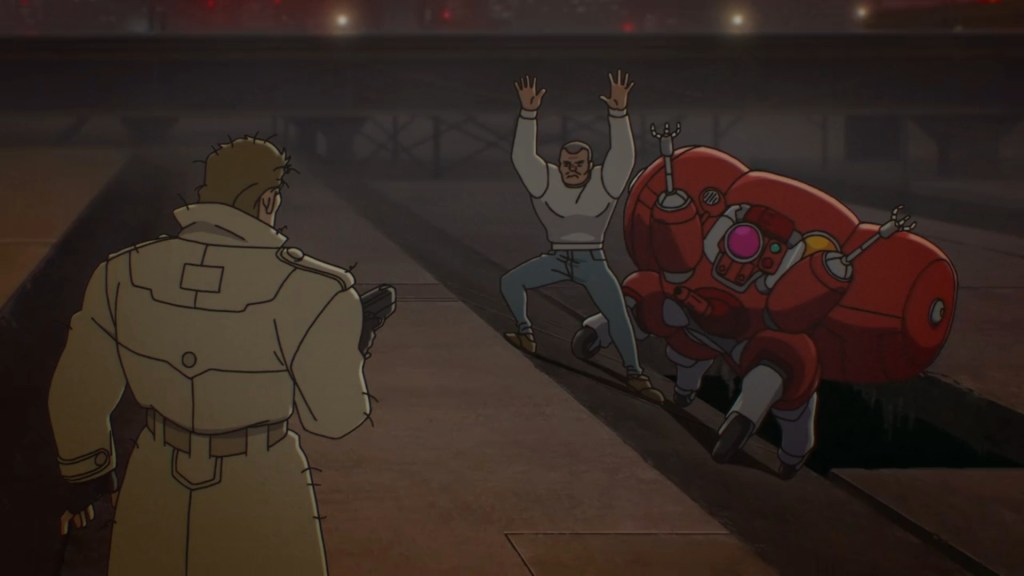
Ghost in the Shell 2! It’s Ghost in the Shell 2! Now, dear readers, how long will I make it into this post without mentioning Ghost in the Shell 2? Oh, I see. Let’s call this the elephant in the forest, because Mamoru Oshii’s 2004 sequel undoubtedly colored my experience with the fourth episode. Both pull from the “Robot Rondo” chapter in the manga, all three dealing with a potential robot uprising, like something out of a pulp sci-fi novel, as Batou notes here. It seems that even in 1989, this was well-trodden territory. And while Ghost in the Shell 2: Innocence retains several key elements, like an attack in an alley (and Batou’s Power Glove), a yakuza connection, and even the doomed shipping inspector, it adds a layer of techno-philosophy derived from the writing of Donna Haraway atop the basic science fiction setup. In the end, we’ll learn that child trafficking victims being “ghost dubbed” into sex robots were sabotaging the machines to lash out and attract police attention, a morally grey solution to yet another instance of systemic child abuse that Masamune Shirow views with distance. Innocence Batou’s chief objection, however, is that the sex robots had ghosts, too, a conclusion which helps him accept the Major’s mysterious, transformative fate.
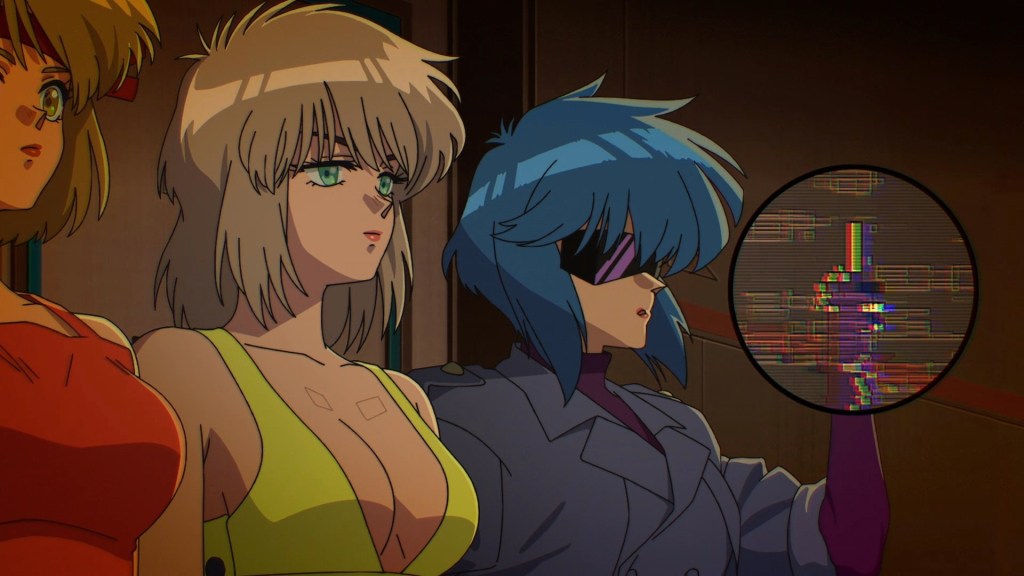
Back in The Ghost in the Shell, the Major is alive and kicking (cyber butt). Oshii’s adaptation, too, was transformative, a dark follow-up to the Puppeteer storyline which applied his spirituality to the cold, gunmetal world of the manga. Episode four’s “Robot Rondo,” somewhat miraculously, then, doesn’t feel like it’s missing any pieces. It’s entirely consistent with the series’ funny, freaky tone, and benefits from being a self-contained story with a beginning, middle, and end for multiple characters. In light of Ghost in the Shell 2, its joys are found elsewhere, beginning with the presence of the Major as the Major, who lends her snide commentary and flip-outs to what’s more so Batou’s story. What’s the Major like when she’s simply part of a police procedural? There’s a feeling of relaxation, then, as The Ghost in the Shell appears to settle into itself, incidentally with that most formulaic of television story structures.
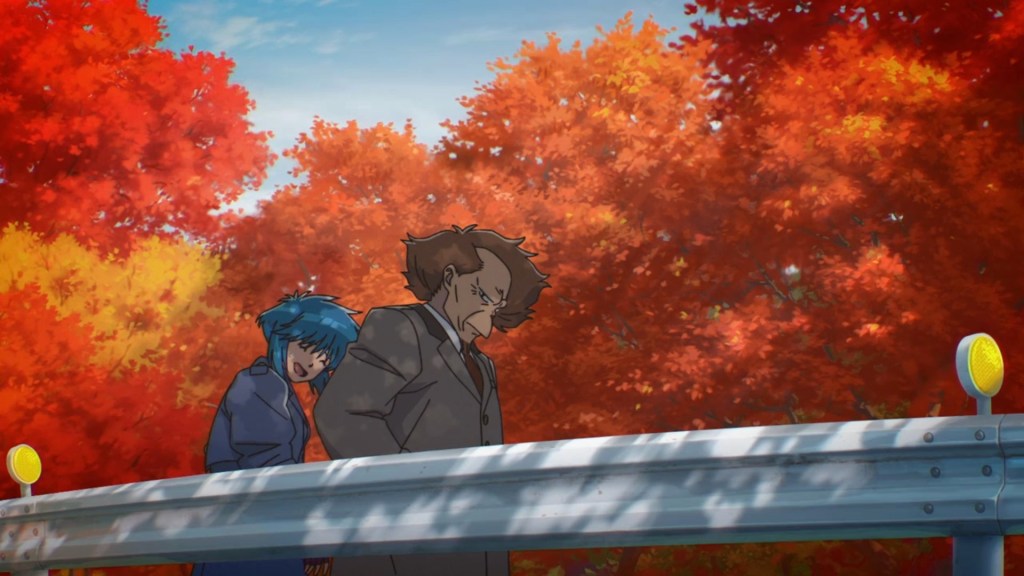
It’s something that even Stand Alone Complex struggled with, assuming that the police procedural makes room for character dynamics. Early on, Batou chides Togusa for deceiving him into going after an unrelated target, grabbing the “newbie” by the collar and yelling, “I pulled a lot of stupid crap in my younger days, but I never foisted crap jobs off onto my senior officers,” until the Major slips into the car. With those cool-as-hell sunglasses and a neutral tone, she issues Togusa an order, and the implication for Batou is clear. Whereas Stand Alone Complex Batou and Togusa were goofy best friends with a pretty healthy ability to communicate, the meaner world of Shirow’s Ghost in the Shell introduces conflict between them, something we wouldn’t see until the OVA movie Solid State Society. Speaking of which, you might remember this episode’s Colonel Tonoda from the earlier film. The difference is that the OVA Colonel Tonoda was on his deathbed, and his gynoids didn’t have the big ‘80s hair.
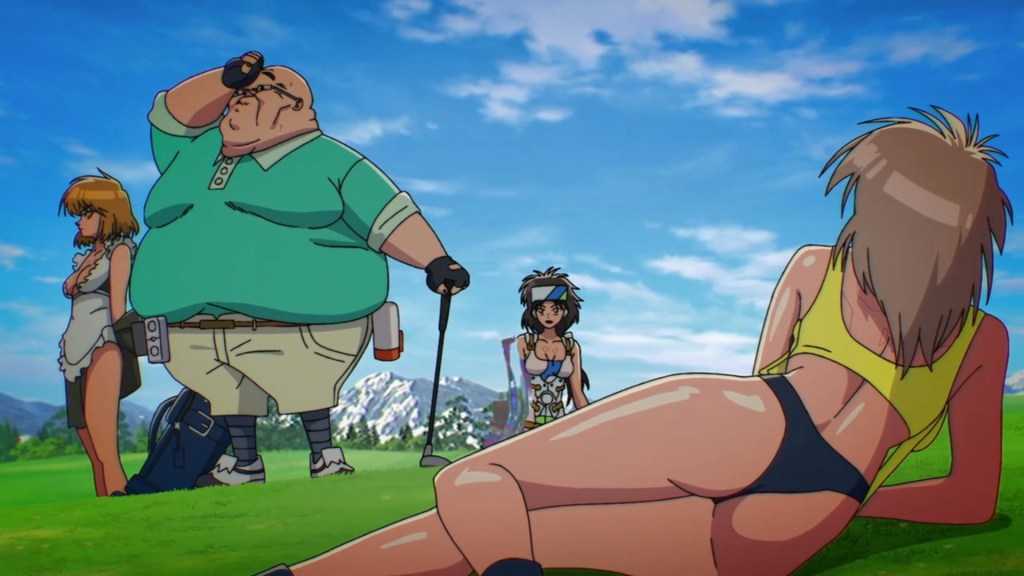
Even the rich can only do golf simulators in dense New Port City
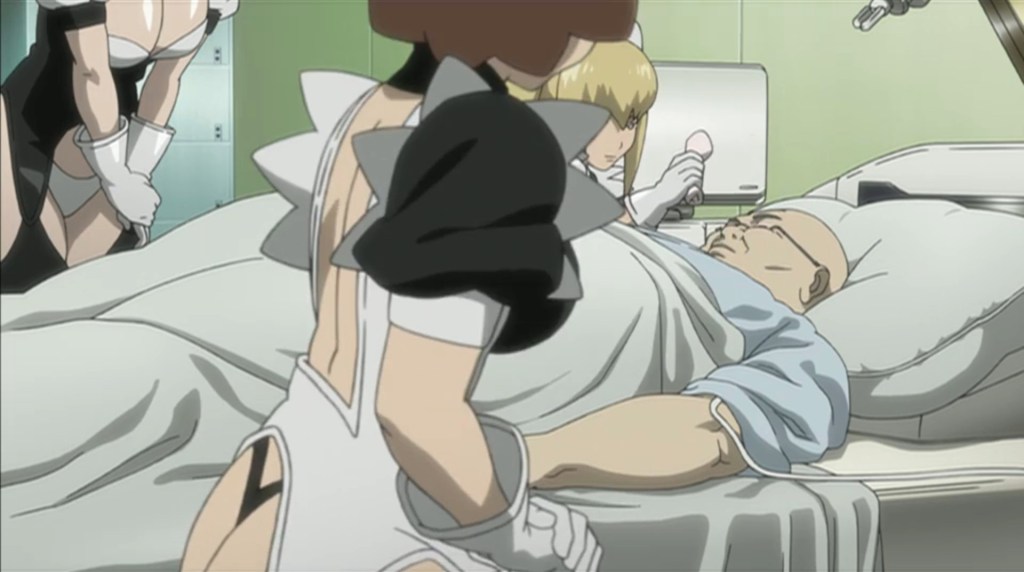
Ghost in the Shell: Solid State Society (2006)
On the road between the crime scene and the police station – where the guy at the desk is informed over the phone about Shell Squad’s ultimate authority – the Major muses about the braying crowd. “Corpses don’t have rights, but machines have their own advocacy groups?” she says. “Life sure comes cheap these days.” Much like how, in the previous episode, she expressed the primary philosophical thrust of the 1995 Ghost in the Shell with a shrug, this gesturing at the eventual themes of Ghost in the Shell 2 is a minimizing inversion. It is not a setup for future deconstruction; the Major soon exits the episode until the coda, and Batou doesn’t have any big revelation about the value of nonhuman life. It begs the question, if “Robot Rondo” isn’t imbued with the meaning Mamoru Oshii introduced, what is it about? Is it, like “Junk Jungle” and “Megatech Machine,” a charcuterie of ideas crying out for radical adaptation?
Unfortunately or not, I think for now, shy of a more truly serialized narrative, this is the aim of The Ghost in the Shell. Better balanced as a procedural than Stand Alone Complex, it is nonetheless equally as ambitious as one. In this episode, the dramatic resolutions are satisfying character beats, like Batou saving Togusa’s life from the sniper, even after they’d been bickering about their hierarchy in Shell Squad, not to mention Togusa popping into the final area like a total dork. This is not so cerebral or mind-blowing, but it also doesn’t disrupt the characters or the world to the point of no return. There’s an undeniable comfort in the familiar rhythms of a procedural, or in episodic storytelling generally. For a series that’s always either ending or beginning, it’s nice to feel “in the middle.” This is despite the dental torture and bleak outlook which, we might find, was maybe well-observed back then and prescient today.
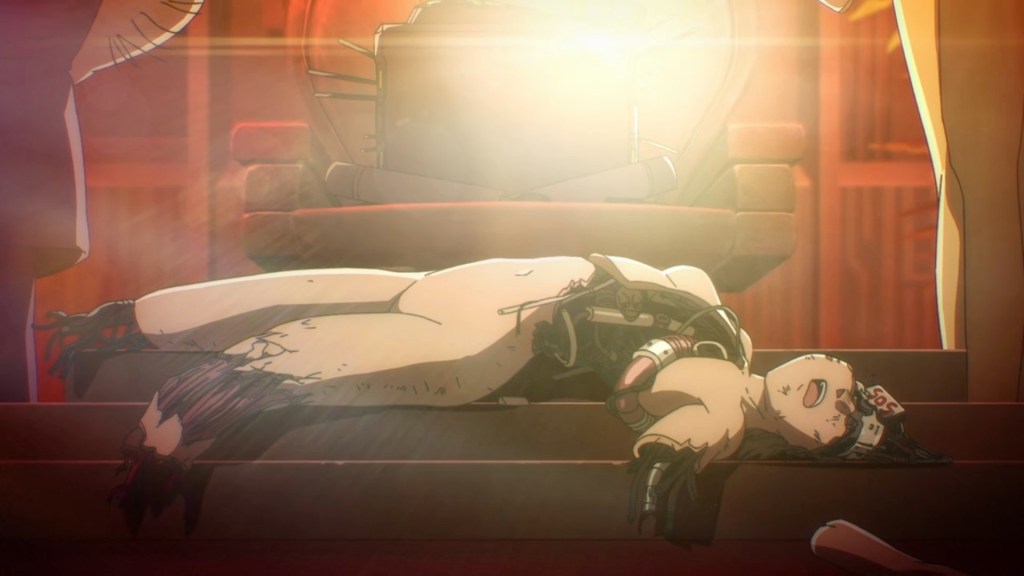
The criminal plot involves Hanka Precision Instruments (a name nicked by the Hollywood movie for its monolithic cyborg tech company) and its president, embedded inside the grey box of a Jameson-type body (whose dynamic with a human-shaped underling was borrowed by the Stand Alone Complex episode “Missing Hearts”). He learns about Chief Inspector Kubonuma’s sabotage as the information is pummeled out by a large female cyborg likely inspired by Rocky IV’s Brigitte Nielsen. I could be wrong, but I feel like she was one of those pieces of American iconography which stuck in the Japanese imagination of the ‘80s, like Blade Runner and Streets of Fire. Two of the trafficked girls, Link and Adam, had asked Kubonuma to “rig all 23 units to go berserk with an SOS in them,” thereby causing the chaos and Colonel Tonoda’s near-assassination. Unlike Locus Solus’s Jack Walkson, however, this was not an altruistic act. With eyes bulging and sweat pouring down his face, he says, “In return, the girls let me…”
After all these years, I’m still not sure what to make of Masamune Shirow, but more than anything, I think I can say he’s honest. Drawn to the seedier aspects of our speculative future, where rich, lecherous old men are protected by RealDolls with combat augs, and to which the coolest, most badass police soldier is indistinguishable, he nevertheless sees the line. Extrapolating from the manga’s earnest instances, Mokochan directs with horror movie language, including unnatural green colors and flashes of butchered bodies. As Ghost in the Shell 2 was less concerned with the humanity of the human trafficking, and the “Idolator” episode of Stand Alone Complex was more purely sci-fi in nature, this is the series’ most disturbing illustration of “ghost dubbing” which is, truthfully, quite horrifying.
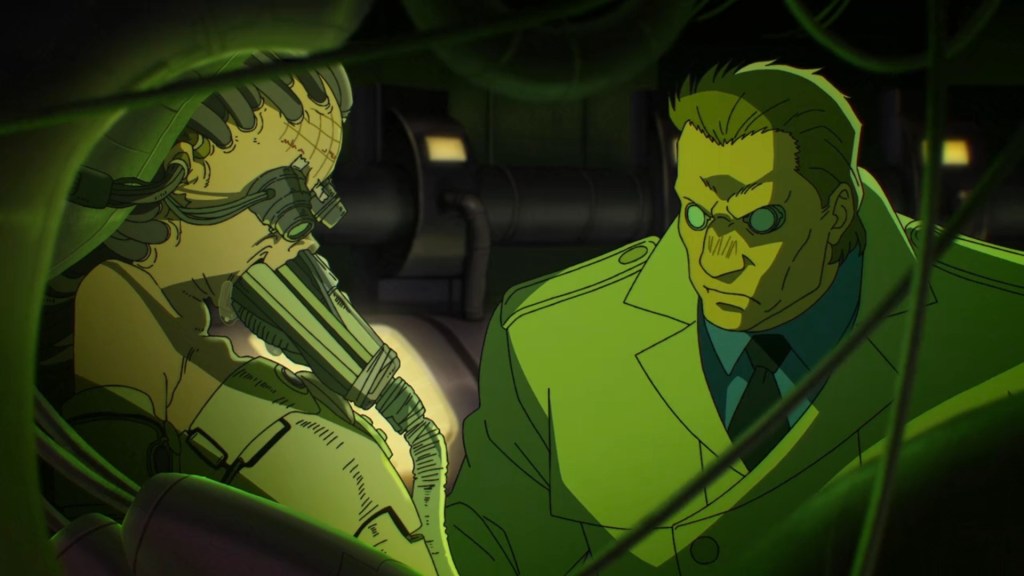
In the end, we’re left to wonder about the vigilantism of trafficking victims, as an idea presented rather than as alley-oop to a more different idea about the definition of humanity. We’re treated to one final Stand Alone Complex deep cut, with fleeing criminals mistaking Section 9 for yakuza – what’s the difference, really – before the Jameson president takes a tumble into murky harbor water and the day is saved. The Major returns for Aramaki’s coda, deducing Tonoda’s culpability. “Always start by investigating the money and the women. You taught me that.” For the chief, Colonel Tonoda was a mentor – the older man even calls him “Daisuke-kun” – but his new mandate as head of Shell Squad means reckoning with the corruption of men in high places, including old colleagues. The Major might not appreciate the gravity of his predicament, but it’s a fascinating and all too rare dimension of the police procedural.
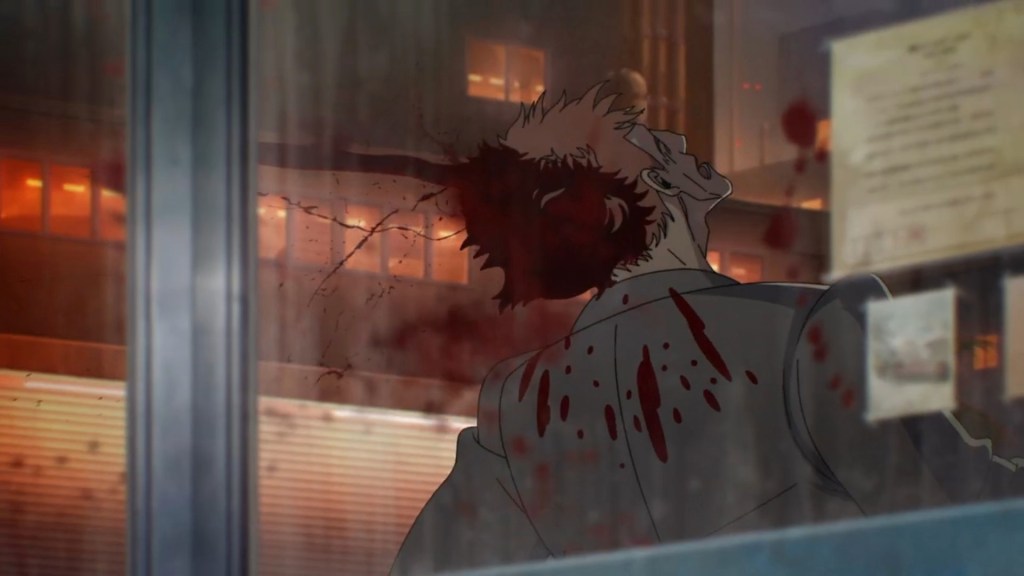
PS. The gore in this episode is pretty extreme, possibly settling the debate about whether or not a later physical release of The Ghost in the Shell will be uncensored. I think the mosaics are a stylistic choice: