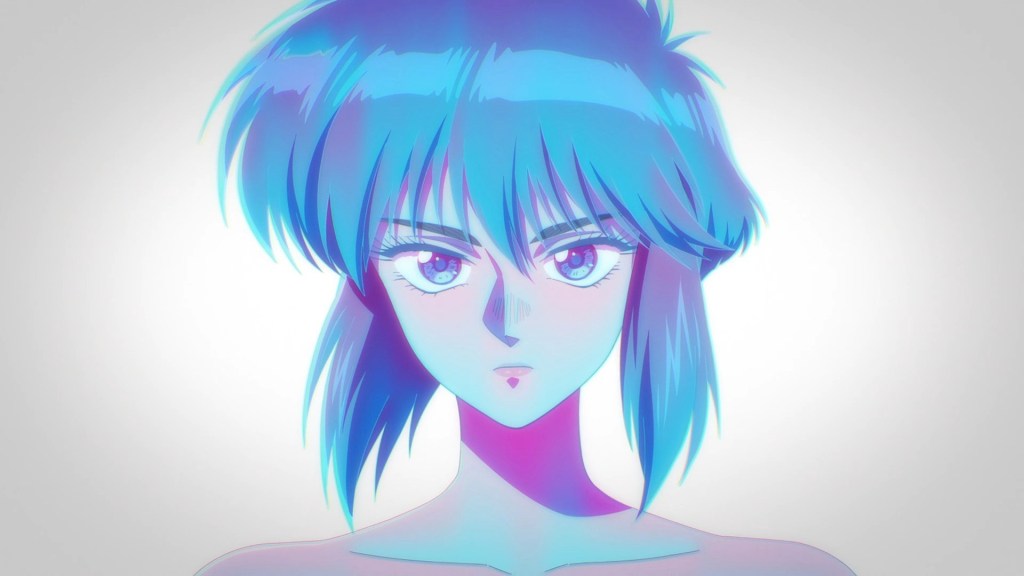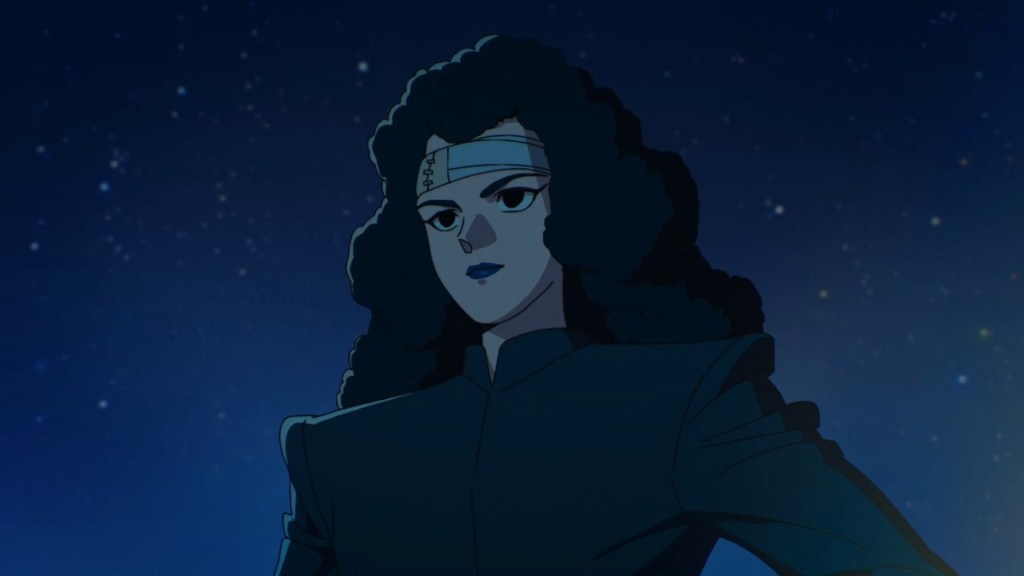
She’s incredible math
Here we are at the end of a journey which began back in early July, almost two months ago exactly, ten episodes later and a whole lot of up-and-down opinions. I remember David Simon, co-creator of The Wire, expressing frustration at the somewhat nascent practice of TV criticism (maybe as we’d identify it today) going episode by episode. If his show was broadcast that way by necessity in the era before streaming, it was meant to be so consumed but not assessed, as you wouldn’t dismiss an entire novel based on a few chapters (unless you were me). The Ghost in the Shell has been both a television series and a novel – of the graphic variety – and my earliest criticism was to do with pacing, or more accurately, how each unit of story was being divided, something that wouldn’t matter with a “binge” viewing. I didn’t like the start-stop rhythm, I didn’t like how it shaped the narrative against dramatic payoffs. And yet, there was always a sense that we were building up to something, and after a few more instances of delayed gratification, we’ve got one last chance in our finale.
A last chance for what, exactly? I don’t know, but I’m reminded of two things. One, the difference in anticipation for the movies Avengers: Endgame and Star Wars: The Rise of Skywalker, both enormous blockbusters released around the same time. With Endgame, we really wanted to know how the Avengers were gonna defeat Thanos and, I suppose, avenge half the universe. With Skywalker, there was literally nothing. No questions, no plot threads. In fact, this final episode introduces its trilogy’s villain and grand plan. Two, as far as Masamune Shirow manga goes, I do prefer Appleseed to The Ghost in the Shell. Aesthetically, I like the more heightened science fiction world, as well as the greater emphasis on military hardware. It’s not as heady, but really, part of my problem with The Ghost in the Shell is that I never fully understood it. I’ve dedicated a lot of time to the movies and Stand Alone Complex – I’m the proud owner of one of the earlier Ghost in the Shell 2 video essays on YouTube (please don’t watch it, I was like 22) – but as has been well-established by this series of reviews, the manga was something to be shunned, not embraced.
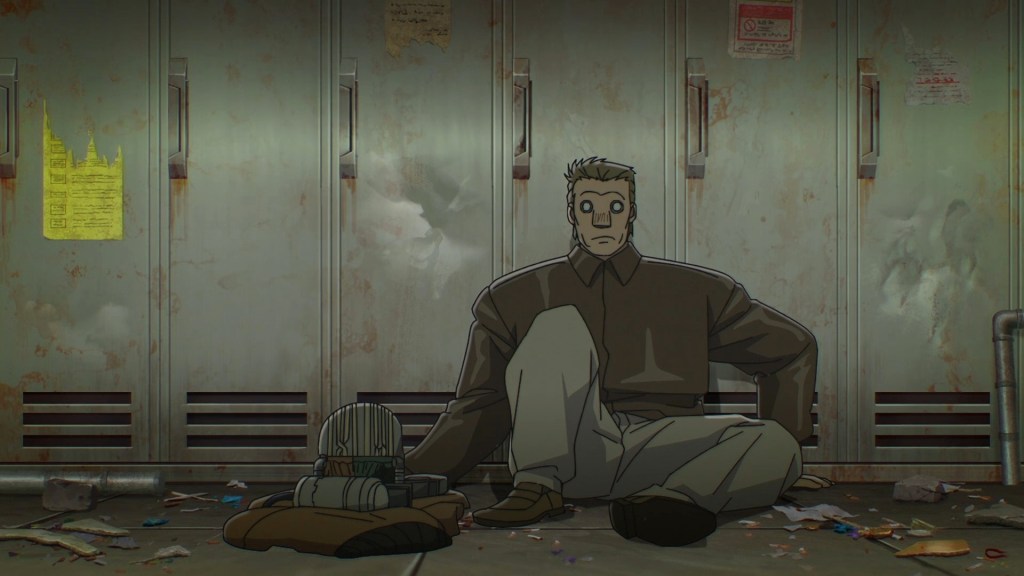
This anime is a ghost come back to haunt me. I’ve now got to do the work I put off for almost twenty years, and as these reviews have fallen apart over the past few weeks, it’s clear that I’m coming up short. Even if I was able to sift through the ending, and its layers of possibly misapprehended speculative metaphor, I couldn’t then connect it – as the Puppet Master connects to the Major – to what the show has otherwise been about. This final episode, as well as the seventh, has been an abstract meditation on the nature of life in a future of blurred boundaries, where cybernetic and Internet technology is made up of building blocks like our own DNA, and that sort of transcendence stuff is perfectly in line with the Japanese sci-fi of the ‘70s and ‘80s, itself influenced by Clarke’s Childhood’s End and 2001: A Space Odyssey. But then there’s that harsh streak of cyberpunk cutting through, and these optimistic ideas about what humanity might become were less interesting, I think, to William Gibson and Philip K. Dick. They were more horrified and cosmically paranoid, respectively.
Arguably, Mamoru Oshii is relatively positive about humanity’s future. He retains the Major’s conclusion, reformed as a fugitive from the legal and technological restraints of her violent world, and finds the beauty in the cyber-monstrousness in Innocence (along the way complicating our relationship with the net in Avalon). Of course, Oshii is content to let others drift into the vast net while he stays behind and plays with his dogs and Fallout 4, which is still one of the strangest– it’s not even a particularly well-received Fallout game. I figure it’s about the same in the 2026 anime, though the decision-making behind the Major’s fusion with the Puppet Master is less clear. I don’t know who this character is or what she wants, beyond her spoken-aloud carnal interests. Why this sudden turn toward the dazzling electrons of post-humanity?
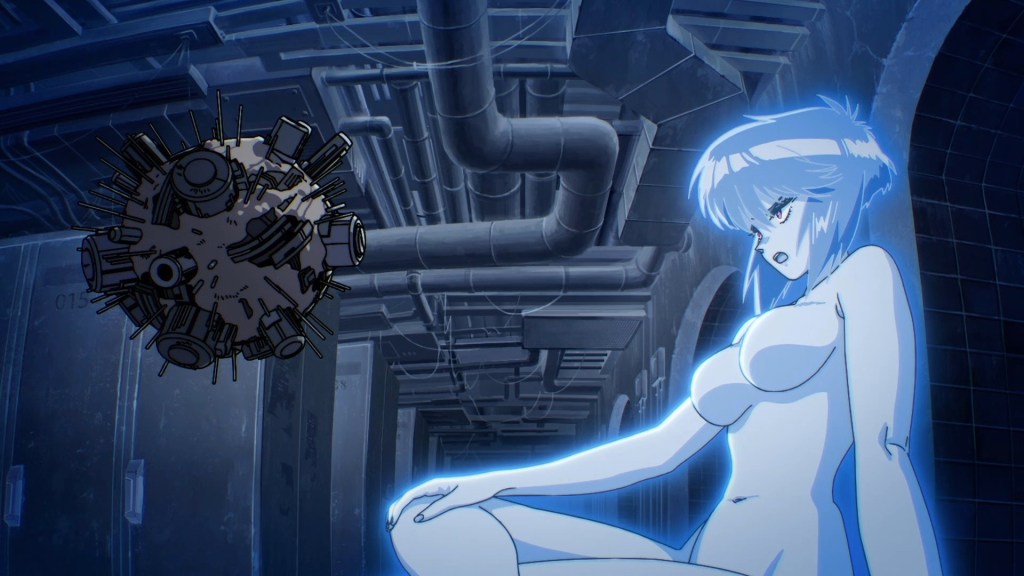
I mean, I’m kind of forgetting here that her physical body was obliterated as the climax of a conspiracy by Japanese industrialists and the Ghorantl government, so it might have been pure necessity. She’s a naked brain case switching to low-power mode to save battery (when the batteries go, she’ll be “busy” being dead), so when the Puppet Master reemerges with this offer, her chief desire to explore new sensations overrides any fear she might have (which, as the Major, she does not). It’s less about self-actualization than the old adage about black ops and the highest levels of government: “Hey, you play in the dirt, you get dirty.” Maybe it’s another test of the Major as a police officer, that even in a state of quasi-death, she remains steadfast and resourceful. Even more so, it’s an opportunity for Batou’s character, whose more sensitive side is nevertheless tainted by a violent glee. He actually murders eighteen people, and steals one of their bodies. Usually, that’s the character in the sci-fi movie who learns a lesson when the murder-and-body-stealing is turned around on him, and he has to go on the run. Here, it’s just a fact of life.
The guiding question for this final episode has been, unfairly or not, what the hell has this whole story been about? Sometimes, there are clues within a story’s very origins, and it’s undeniably important that this literal adaptation is a work from 1989, with an entire history of the Internet ahead of it. The Ghost in the Shell is an artifact, presented as-is to an anime audience for whom 1995’s Ghost in the Shell isn’t even a foundational text but something rediscovered if at all. Like, how much do the kids today even care about The Matrix? (They still like Harry Potter, I can tell you that much, that fucking four-eyed little cunt. Can you honestly imagine anything more stupid and boring than “racist wizard school”? I seriously question the taste and judgment of my own generation who grew up with that noxious shit and made it everybody else’s problem, too. Now it’s this irreversible cancer on global pop culture. You fucking people should be ashamed of yourselves. Enjoy the new show, dipshits). Ultimately, I still don’t know.
For a broader discussion on The Ghost in the Shell, stay tuned for a podcast episode with Donovan…